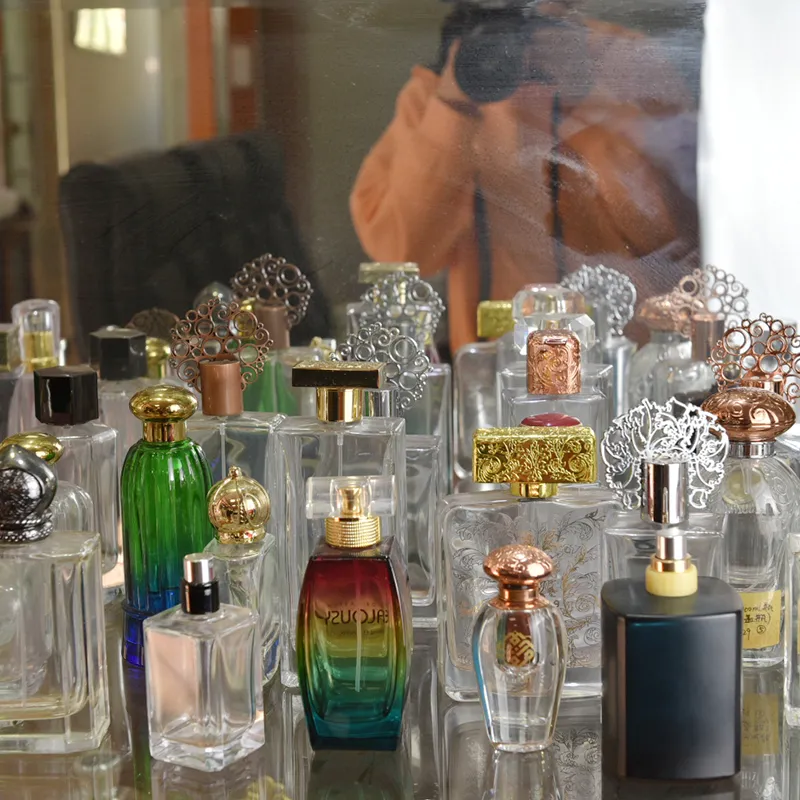
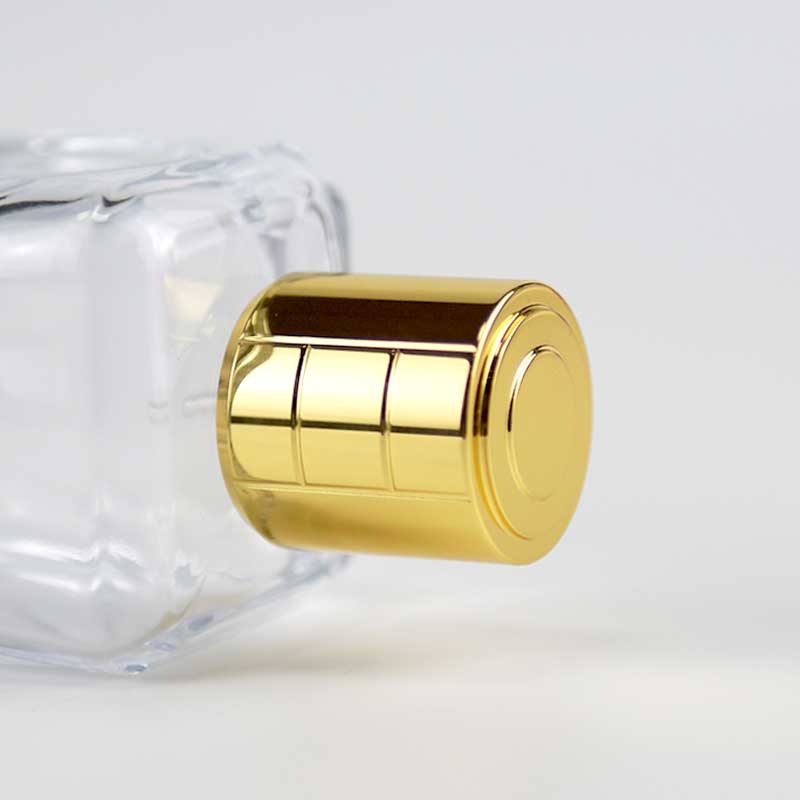
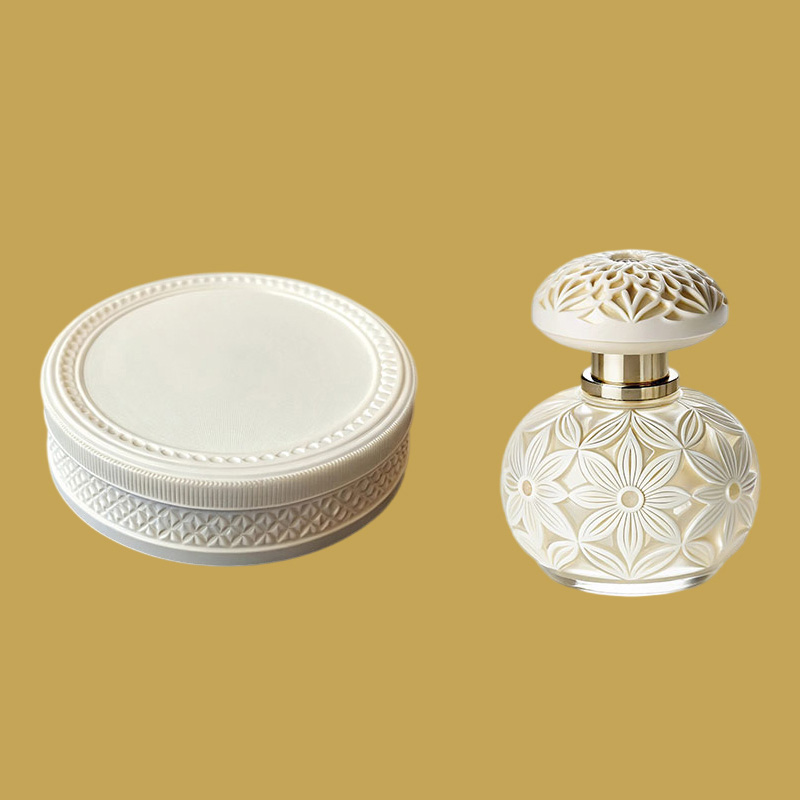
The metal nameplate and ring-shaped shoulder sleeve on a perfume bottle weigh less than 5 grams, yet they still need to withstand three tests: bottle assembly, repeated handling, and alcohol exposure. Once the design file arrives, the first step is to check whether the part can actually be die-cast. Then the LOGO process and surface finish are selected. Thin-wall die casting, surface finishing, and LOGO execution must be evaluated together.
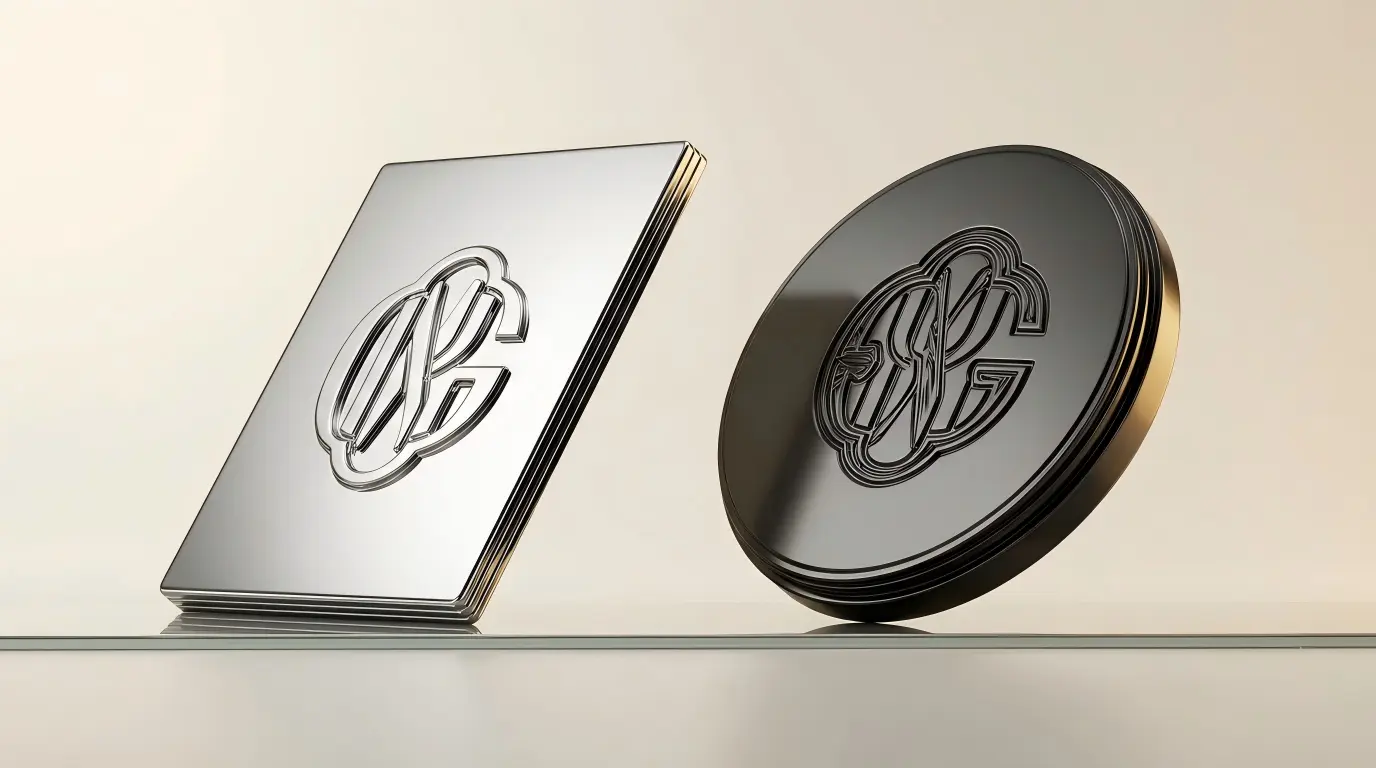
What Perfume Bottle Nameplates and Shoulder Sleeves Are—and Why They Deserve Separate Tooling
Nameplates and shoulder sleeves are two of the most underestimated metal parts on a perfume bottle. Standard metal components in this segment usually include the cap, neck sleeve, shoulder sleeve, nameplate, and bottle base. All can be made by zinc alloy or aluminum die casting. The neck sleeve fits around the bottle neck and, like the shoulder sleeve, belongs to the bottle-body transition zone.
They justify separate tooling for practical reasons. The main wall thickness of a bottle cap is typically 1.2 mm or more, while nameplates and shoulder sleeves are often made at 0.5-0.8 mm. One mold can’t optimize the gating system, cooling time, and draft angle for both. These two parts are also the ones most often revised in a design update. Making them separately means a LOGO change doesn’t require changing the bottle cap mold.
Selection Matrix: 5 LOGO Processes Across 6 Decision Factors · The right LOGO process isn’t the most premium-looking one. It is the one that fits the brand language and the flat or curved surface condition.
| Factor ↓ / Process → | Recessed Engraving | Embossed Relief ★ Default Recommendation | Laser Engraving | Screen Printing (Flat) / Pad Printing (Curved) | Plated Color Filling (Groove Paint Fill / Enamel) |
|---|---|---|---|---|---|
| Dimensional Effect | Low | High | Medium | Flat | Medium |
| Visual Effect | Refined and understated | Bold and dimensional | Fine micro text | Rich color range | Metal-and-color contrast |
| Durability | High | High | Medium | Medium | High |
| MOQ Friendliness | High | High | Medium | High / Medium | Medium |
| Best-Fit Applications | Premium minimalist brands | Classic luxury/liquor bottles | Micro text / serial numbers / QR codes | Flat multicolor graphics / curved-surface LOGO | Vintage badges / family crests |
| Common Failure Point | Gradient effects can’t be achieved | Side embossing needs slides, which raises mold cost | Looks weak on matte surfaces | Using screen printing on curved surfaces fails | Soft and hard enamel are often confused with baked paint |
Source: Internal research by Wbmetal (2026)
Thin-Wall Die Casting: How 0.5-0.8 mm Plate-Like Parts Are Made
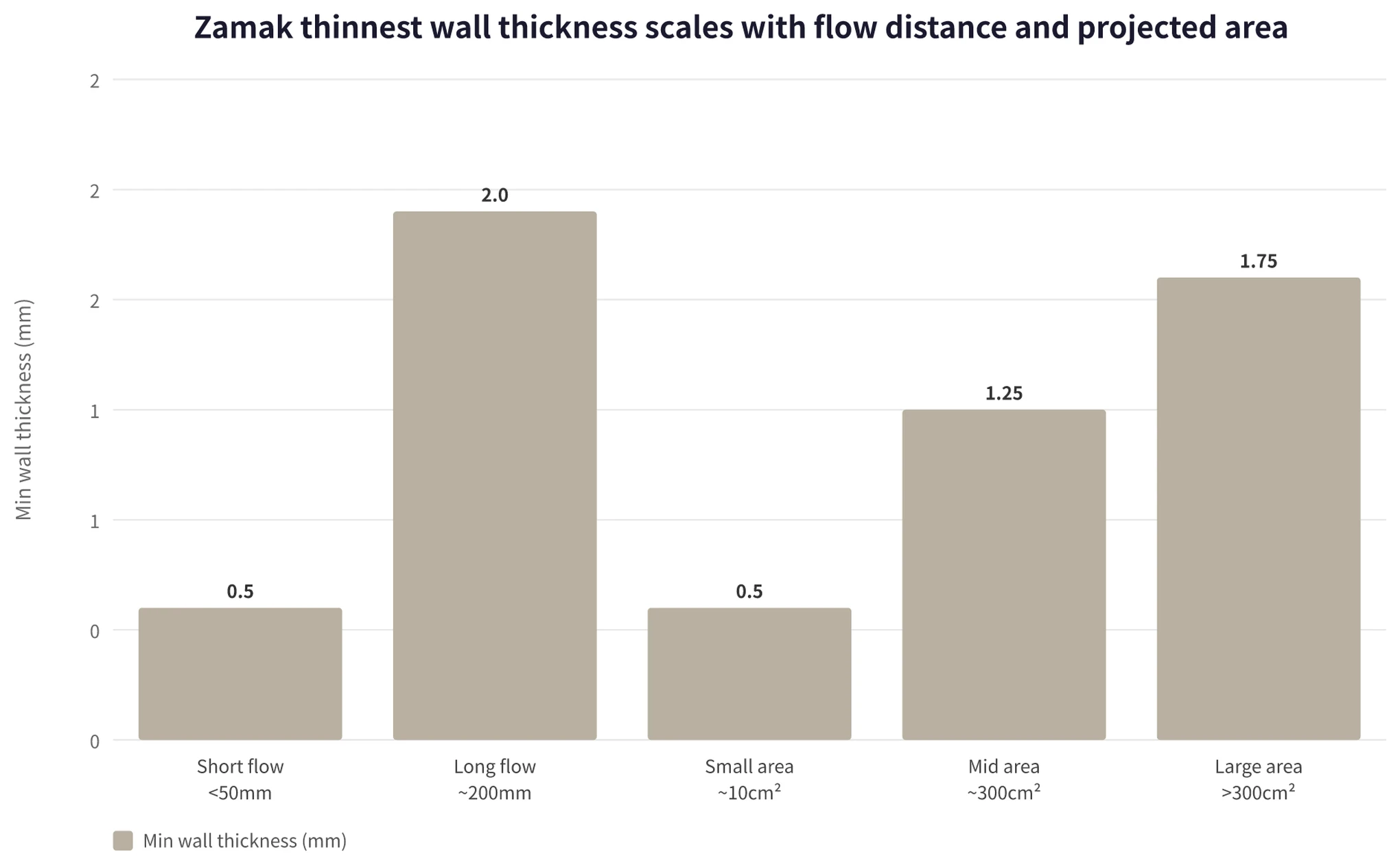
For nameplates and shoulder sleeves, 0.5-0.8 mm is a mature and proven process window, not a risky limit case. The International Zinc Association design rules give a clear range. For small parts with a projected area of about 10 cm², the minimum wall can reach 0.5 mm. For medium-sized parts around 300 cm², the typical range is 1.0-1.5 mm. Above 300 cm², wall thickness needs to increase to 1.5-2.0 mm. NADCA gives the same 0.50 mm reference for small zinc alloy parts.
Flow distance determines whether a thin wall can fill completely. Within a 50 mm flow length, the wall can be below 0.5 mm. At about 200 mm flow length, wall thickness needs to rise to about 2 mm. Most nameplates and shoulder sleeves fall into the short-flow category, but there is still a difference between “can be made” and “can be made well.”
If two streams of molten zinc meet at an insufficient temperature, a cold shut forms. A seam remains below the skin. Spray coating may hide it, but electroplating later will cause blistering. Gate location and flow direction need a manufacturability review first. Thin sections cool fast, while thick sections shrink more slowly. A large thickness difference leads to warpage. The International Zinc Association gives a flatness rule of thumb of the longest diagonal × 0.33%. On a thin plate with a 50 mm diagonal, warpage can reach 0.17 mm. CNC correction is often needed. A perfectly flat part is actually the most expensive option. Fine texture or a slight crown usually makes the surface more stable.
Standard draft is 1° on internal surfaces, 0.5° on external surfaces, and 0.1° for round holes. A 0° draft isn’t impossible, but it requires slides, the moving half, and square ejection. That pushes mold costs up clearly. In material selection, Zamak 3 is the mainstream choice. It offers stable dimensions, sufficient flow, and good plating performance. When thin walls or complex LOGO details don’t fill completely, Alloy 7 can be specified as a special option. Its magnesium content is reduced from 0.02-0.08% in Zamak 3 to 0.005-0.02%, which improves flowability. Unit cost is slightly higher.
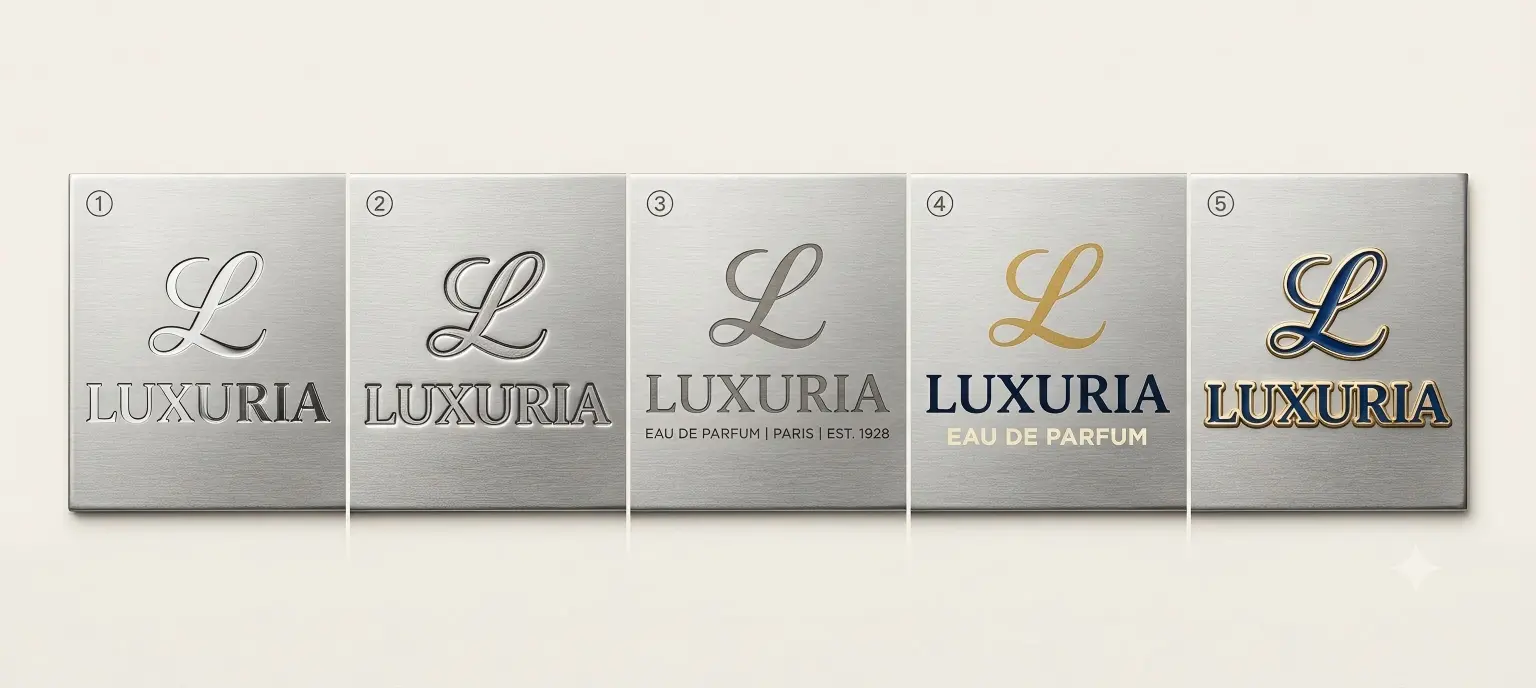
LOGO Process Selection: Recessed Engraving, Embossed Relief, Laser Engraving, Screen/Pad Printing, and Plated Color Filling
There is no single “best” LOGO process. The right choice depends on whether the surface is flat or curved, whether the design needs dimension or color, and what surface finish comes afterward.
| Process | Dimensional Effect | Visual Effect | Durability | MOQ Friendliness | Best-Fit Applications | Common Failure Point |
|---|---|---|---|---|---|---|
| Recessed Engraving | Low | Refined and understated | High | High | Premium minimalist brands | Gradient effects can’t be achieved |
| Embossed Relief | High | Bold and dimensional | High | High | Classic luxury goods, liquor bottles | Side-embossed LOGOs require slides, so mold cost is higher |
| Laser Engraving | Medium | Fine micro text | Medium | Medium | Micro text, serial numbers, QR codes | Looks weak on matte surfaces and strong on bright surfaces |
| Screen Printing (Flat) / Pad Printing (Curved) | Flat | Rich color range | Medium | High / Medium | Flat multicolor graphics, curved-surface LOGO | Using screen printing on curved surfaces will fail |
| Plated Color Filling (Groove Paint Fill / Enamel) | Medium | Metal-and-color contrast | High | Medium | Vintage badges, family crests | Three filler grades are often confused |
For a die-cast LOGO, embossed relief is the default first option. Both the International Zinc Association and NADCA consider raised lettering more economical than recessed lettering. Recessed text requires reverse machining in the cavity, and molten zinc erosion can degrade the detail more easily. Raised lettering should have a minimum line width of 0.25 mm, a side draft no less than 25°, and a height no greater than the line width. Fine serif details and very thin strokes tend to wash out.
Laser engraving suits very small characters. Standard character height starts at 0.15 mm, while high-end equipment can go down to 0.05 mm. Bright nickel or gold plating creates strong contrast. Matte surfaces or dark oxidized finishes weaken the result. Final judgment should be based on test engraving. Flat nameplates use screen printing, with a minimum line width of 0.2 mm and 6 pt (2.84 l) text size. Shoulder sleeves and the bottle shoulder transition area are curved, so they must use pad printing. The practical lower limit in production is 0.1 mm.
Color filling in recessed text is not the same as electroplating. Electroplating applies nickel, chrome, gold, or rose gold to the whole surface. Color filling puts soft enamel, hard enamel, or baked paint into the grooves. Soft enamel has a textured raised-and-recessed feel and lower cost, which suits the mid-to-high-end market. Hard enamel produces a flush surface, the best scratch resistance, and the highest cost. It fits flagship or limited editions. Baked paint gives full color saturation and works as a lower-cost alternative.
For the process-order risk between laser engraving and electroplating, see FAQ-3.
How Surface Finishing Should Match the LOGO: Electroplating, PVD, and Anodizing
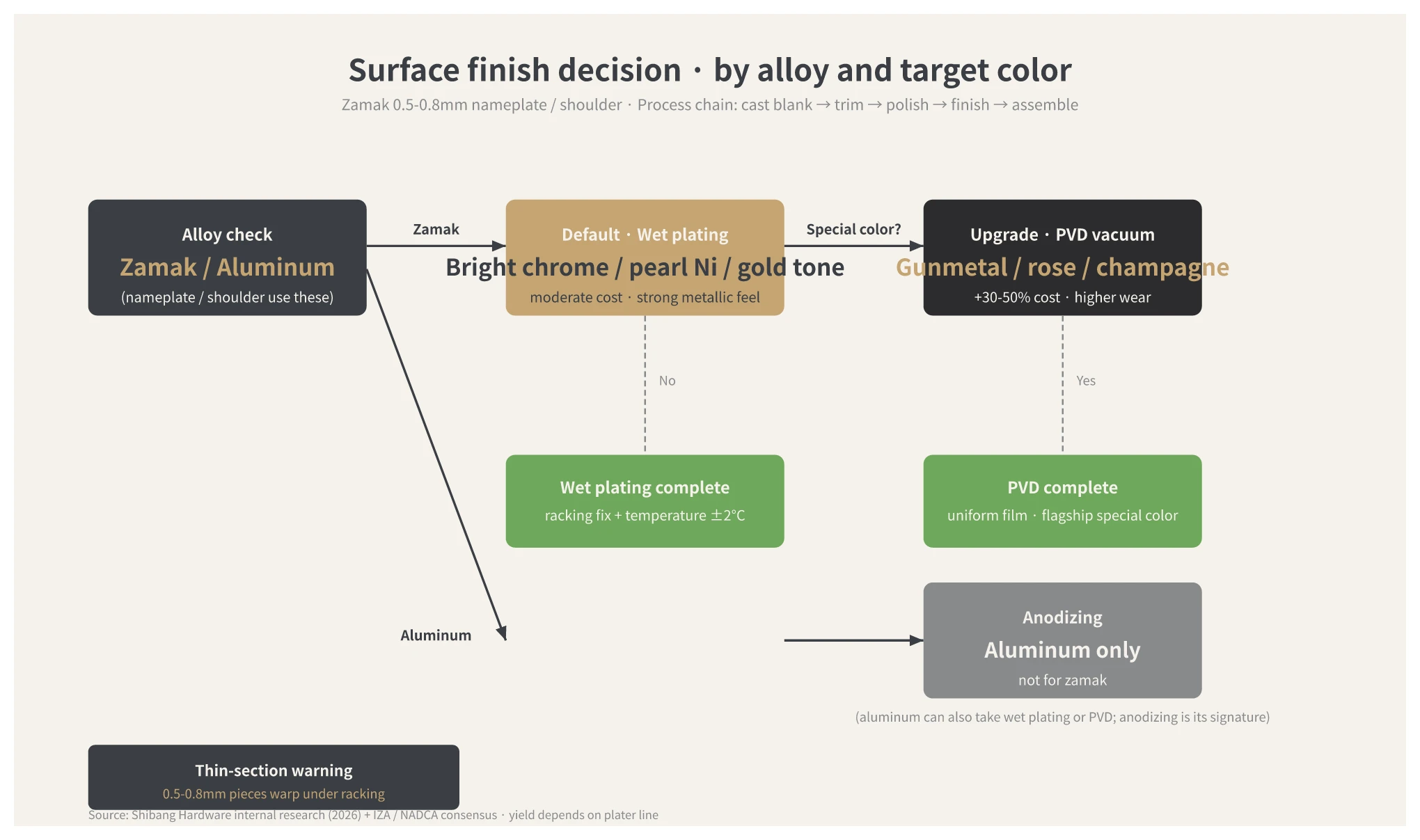
Surface finishing determines the background on which the LOGO finally appears. Aqueous electroplating delivers high brightness, a strong metallic effect, and moderate cost. But thin parts can warp because of rack clamping, plating bath temperatures of 50-60 °C, current impact, and internal coating stress. Point-contact or line-contact racks, elastic sleeves, temperature control within ±2 °C, pulse plating, or cathode movement are all practical improvement methods. Actual yield still depends on current shop-floor results at the plating supplier.
PVD deposits a metallic film in a vacuum. It gives higher hardness and can produce special colors such as gunmetal, rose gold, and champagne gold. Unit cost is usually 30-50% higher than aqueous electroplating, or about $4.44-$7.41 when a comparable plating cost baseline is taken as $14.81. Anodizing applies only to aluminum parts. Mid- to high-end projects usually choose aqueous electroplating. Flagship products or special colors can consider PVD. Anodizing is only for aluminum nameplates.
What Brand Owners Need to Decide Before Sending Drawings
If one specification is missing from the drawing package, sampling may take another week. Before sending files to the factory, make these seven items clear:
- LOGO file and line width. Embossed relief needs a minimum line width of 0.25 mm. Laser-engraved characters start at 0.15 mm. Vector artwork is preferred. Bitmap files should be traced first.
- Flat or curved surface. Flat nameplates use screen printing. Curved shoulder sleeves use pad printing. The curvature of the arc should also be marked.
- Surface effect. Specify bright or matte finish, gold, silver, gunmetal, or rose gold, as well as brushed, satin, or sandblasted effects.
- Tolerance. Zinc alloy die casting linear tolerance is CT4-CT6 under GB/T 6414-2017 and ISO 8062-3. Wbmetal measures actual CT4 capability. CT4 is already the best precision level for die casting. It can’t be judged by CNC machining expectations such as ±0.02 mm.
- Bottle neck diameter. Common sizes are 15 mm and 18 mm, with tolerances of ±0.15-0.30 mm. The inner diameter of the shoulder sleeve and neck sleeve must be checked against the actual bottle.
- MOQ and lead time. Wbmetal’s standard MOQ is 5,000 pieces. Sampling takes 15 days, and mold making takes 25 working days, for a total of about 6-8 weeks. If volume is low and the design is unique, use 3D printing first to validate the appearance. If the LOGO is generic, check existing public molds first.
- Assembly method. Nameplates commonly use double-sided adhesive tape or press-fit assembly. Shoulder sleeves commonly use snap-fit or press-fit assembly. Snap-fit structures need elastic claws and slides in the mold, which raises tooling cost.
Frequently Asked Questions
Why should the nameplate and shoulder sleeve use separate molds?
The main bottle cap body is usually 1.2 mm or thicker, while the nameplate and shoulder sleeve are thin parts at 0.5-0.8 mm. The gating system, cooling time, and draft angle can’t be optimized together in one mold. These parts are also revised frequently. Splitting them out for separate LOGO work allows design iteration without changing the cap. This fits overall planning for Perfume Caps accessories.
How fine can the LOGO details be?
Die-cast raised lettering needs a minimum line width of 0.25 mm. Laser-engraved characters are typically 0.15 mm, and high-end systems can reach 0.05 mm, but the final result depends on test engraving. Screen printing needs at least 0.2 mm line width and is limited to flat surfaces. Curved surfaces must use pad printing, with a practical lower limit of 0.1 mm.
Should laser engraving be done before or after electroplating?
Engraving before plating is the safer sequence. During electroplating, the coating can partially level the laser-engraved recesses. The plated layer itself already acts as a protective layer, so separate passivation isn’t needed. If plating is done first and engraving comes later, the base metal is exposed, and passivation must be added. Otherwise, salt spray performance is hard to qualify.
What is the difference between soft enamel, hard enamel, and baked paint?
Soft enamel has a raised-and-recessed tactile feel and lower cost, which suits mid-to-high-end products. Hard enamel has a flush surface, the best scratch resistance, and the highest cost, making it suitable for flagship or limited-edition products. Baked paint delivers rich color and lower cost, but its scratch resistance is lower than enamel.
How should Zamak 3 and Alloy 7 be selected?
Zamak 3 is the mainstream option. It offers stable dimensions, adequate flowability, and good plating performance, so Wbmetal uses it by default. Alloy 7 has lower magnesium content and better flowability. It fits thin walls, complex details, and parts that need sharper logo definition. Its unit price is slightly higher, and it usually requires special ordering.
Can a mirror finish be produced directly by die casting?
No. A zinc alloy die-cast blank always has a slight surface texture. A mirror finish must be built through secondary CNC machining and polishing. The actual process chain is die-cast blank → CNC finish machining → polishing → optional chrome plating for added brightness.
Can tooling be opened for an MOQ below 5,000 pieces?
Yes, but the tooling cost allocated to each part will be high. If volume is low and the design is unique, use 3D printing first to validate the look. If volume is low and the LOGO is generic, existing public molds can be considered. For a private mold, 5,000 pieces is usually the more economical balance point. For related metal packaging development, buyers often review broader Fragrance Packaging options from Wbmetal.
Choosing a LOGO process is not about picking the most premium option on paper. It is about choosing the one that matches the brand language: embossed relief creates presence, recessed engraving creates restraint, and plated color filling creates a vintage look. Thin-wall die casting, surface finishing, and LOGO execution work as one system. If the brand sends line width, surface curvature, finish, tolerance, bottle neck size, MOQ, and assembly method up front, the sampling path is far less likely to be revised midway.