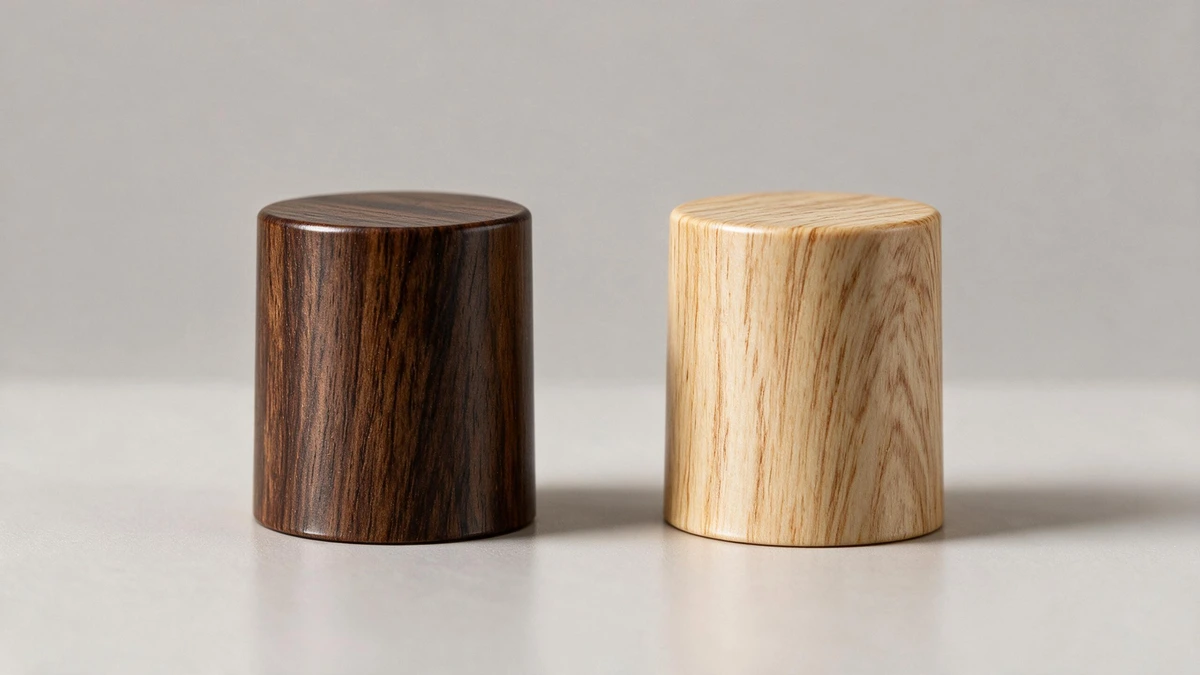
When designing perfume packaging, water transfer printing is one decorative process to consider if you want a wood-grain appearance while keeping the weight of a metal cap. The cap remains zinc alloy. The wood grain comes from patterned ink transferred onto its outer surface afterward.
How does a flat wood-grain pattern wrap around the top and sides of a cap? To understand the process, first look at the film on the water, then at how the cap enters it.
What is water transfer printing, and what does the water do?
The water transfer printing discussed here is hydrographic printing, also called hydro dipping. The part is dipped into water so that a pattern wraps around its outer surface.
The wood-grain pattern is first printed onto a water-soluble film. A common carrier material is polyvinyl alcohol, or PVA. It holds the pattern before transfer, making the film easy to store, cut, and lay on the water. The ink pattern on the film is what transfers to the cap.
In a common process where the film is activated after being laid on the water, the changes occur in three stages:
- Lay the film on the water. The water gradually softens and hydrates the carrier, while the water surface supports the entire pattern.
- Spray on a compatible activator. The activator liquefies the patterned ink layer so that it can flow and conform to the part’s contours.
- Move the prepared part through the pattern. As the part descends, the water pushes the activated pattern against its contours. The ink transfers from the water surface onto the part.
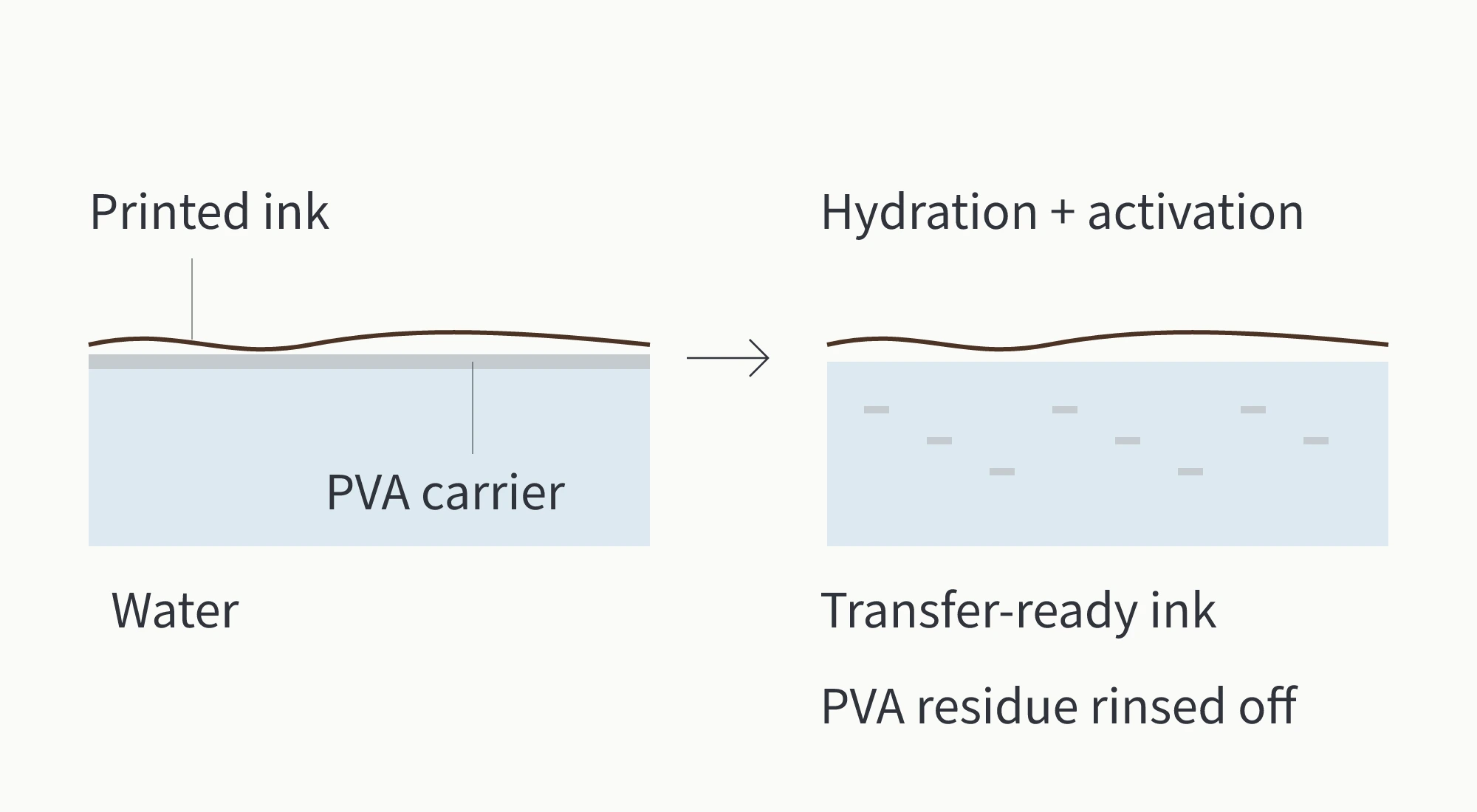
Water supports the pattern and helps it conform to a three-dimensional surface. Whether the pattern stays firmly attached to the metal cap also depends on surface preparation and compatibility between the underlying coating and the ink. After transfer, the remaining PVA must be rinsed off, followed by drying and a protective coating.
The finished cap therefore does not retain an intact sheet of plastic film on its surface. What remains is the transferred pattern layer and the clear protective layer applied over it.
How does wood grain transfer onto a cylindrical cap’s top and sides?
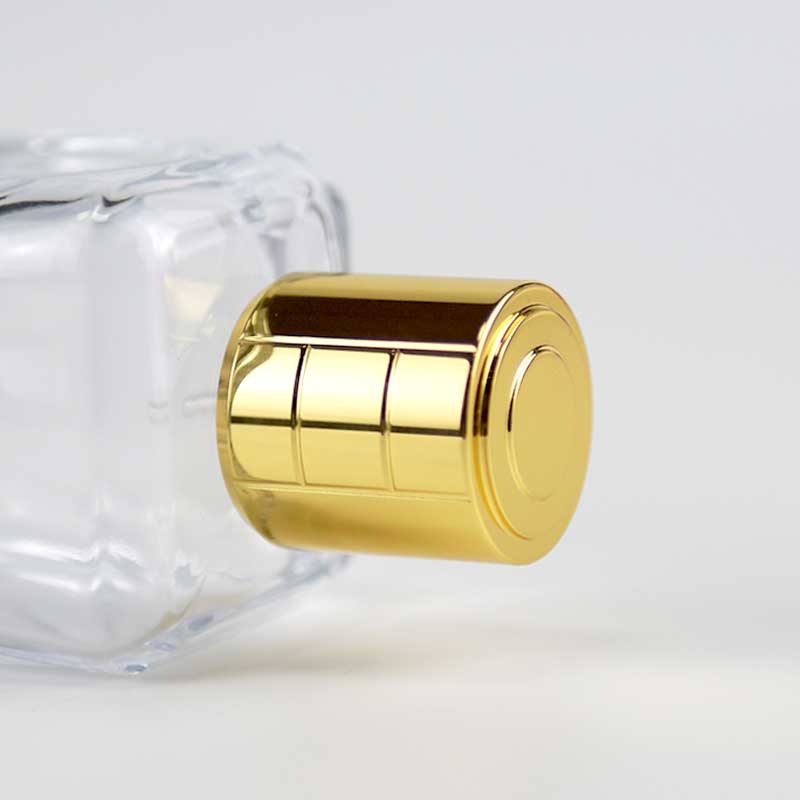
The example below uses Wbmetal’s cylindrical zinc alloy perfume cap concept model V01. In its normal position, the closed top faces up, the opening faces down, and a separate liner fits inside. For this example, the shell is turned over so that its closed top faces the water. It then enters at an angle, with the top touching the pattern first and the opening entering the water afterward.
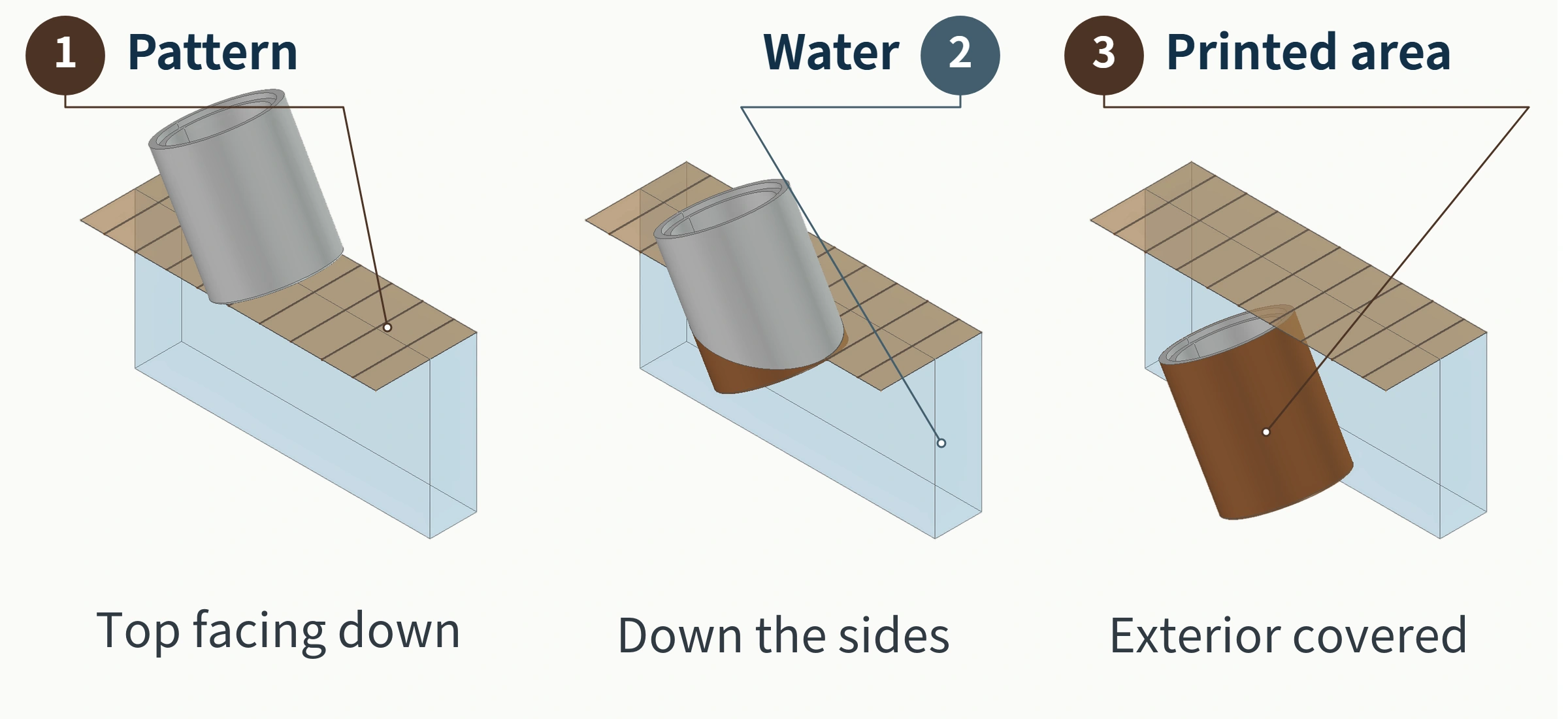
As the cap approaches the water, one edge of its tilted top touches the pattern first. As it descends, the contact area spreads across the top, passes over the top edge, and continues down the sidewall. Each part of the cap contacts the ink as it passes through the water surface. The wood grain, originally spread flat, transfers along the cap’s outer contours.
The entry position affects whether air can escape. If a broad, flat surface presses onto the water all at once, air can become trapped between the pattern and the part. This prevents ink contact and can leave unprinted areas. Progressively establishing contact from one side helps air escape from the other side, which has not yet touched the pattern. The actual angle, speed, and holding method need to be determined from the cap shape, pattern, and trial results.
This example decorates only the shell’s visible exterior. For the model’s adhesively bonded liner, one possible sequence is to decorate the shell first and install the liner afterward. The internal adhesive application areas and mating surfaces should be protected to keep the decorative coating away from areas needed for bonding or fit. This is a teaching arrangement for this concept model. The specific masking and fixtures still need to be established through process trials.
What treatment does a zinc alloy cap need before and after transfer?
Transferring wood grain onto the cap is only one stage. A die-cast zinc alloy cap first needs a metal surface suitable for coating, followed by an underlying coating that can accept the pattern. Cleaning and protection are still required after transfer.
First address burrs, defects, and contamination on the cap surface
After die casting, trimming, and finishing, inspect the cap’s visible surfaces for burrs, pits, pinholes, and obvious machining marks. Water transfer printing adds a pattern; it cannot replace the work needed to address these surface problems.
Polishing wax, oil, dust, and oxides also need to be removed, and the cap must dry thoroughly after cleaning. Contamination left between the metal and the coating can cause poor adhesion or peeling, even if the pattern is complete. Porous castings also need attention to any retained moisture or solvent, which could cause surface defects during subsequent heating.
Use pretreatment and an underlying coating suited to zinc
After cleaning, the pretreatment and underlying coating system must be chosen to suit the zinc alloy surface condition and the coating materials used. The International Zinc Association’s guidance on painting zinc die castings lists options such as chemical pretreatment and suitable etch primers. Their purpose is to establish a sound foundation for paint adhesion. The specific option must also match the requirements of the hydrographic coating system.
The underlying coating must also be compatible with the activator and ink. Simply wiping the metal clean or spraying it with an ordinary paint does not establish that it is suitable for the water transfer printing that follows.
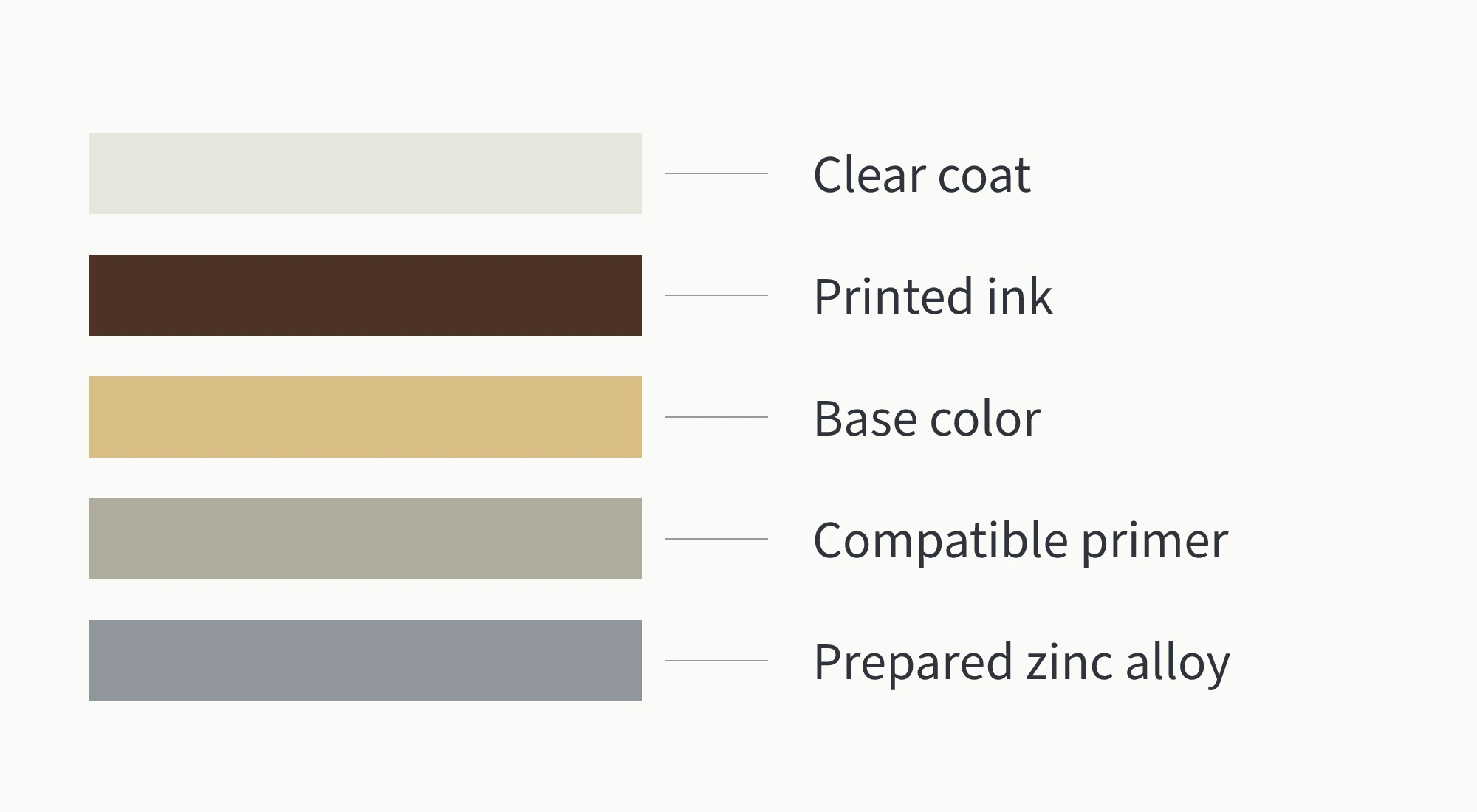
The roles of primer and base color also need to be distinguished. Primer mainly promotes bonding to the substrate, while the base color contributes to the color you see. Some systems use separate coatings for these functions; some specialized coatings serve both roles. The coating names alone do not mean every cap needs an additional coat.
The base color shows through the pattern and changes the wood-grain appearance
Many hydrographic patterns have translucent areas. Light passes through the pattern, making the base color underneath visible too. The same wood-grain film can therefore look lighter, darker, or different in tone over different base colors. When developing a wood-grain finish, evaluate the film sample together with the base color.
After transfer, rinse, dry, and apply a clear coat
After the pattern transfers to the cap, rinse off the remaining PVA and let the part dry thoroughly. Then spray on a compatible clear protective coating, or clear coat, and cure it as required by the system used.
The clear coat covers and protects the pattern. It also determines whether the surface has brighter reflections or a softer matte appearance. The film defines the grain, the base color affects its color, and the clear coat changes the final gloss. Together, these elements create the cap’s appearance.
Water temperature, film hydration time, activator quantity, and curing conditions should be established using the film, coating materials, and cap trial samples together. Properties such as abrasion resistance and resistance to perfume contact need to be verified on the actual coating system. They cannot be inferred from a wood-grain design image.
What patterns are possible besides wood grain?
Changing to a film with a different preprinted pattern lets the same cylindrical cap take on a stone, imitation carbon-fiber, or camouflage appearance. Wood grain itself can vary in color, grain size, and direction to create different styles.
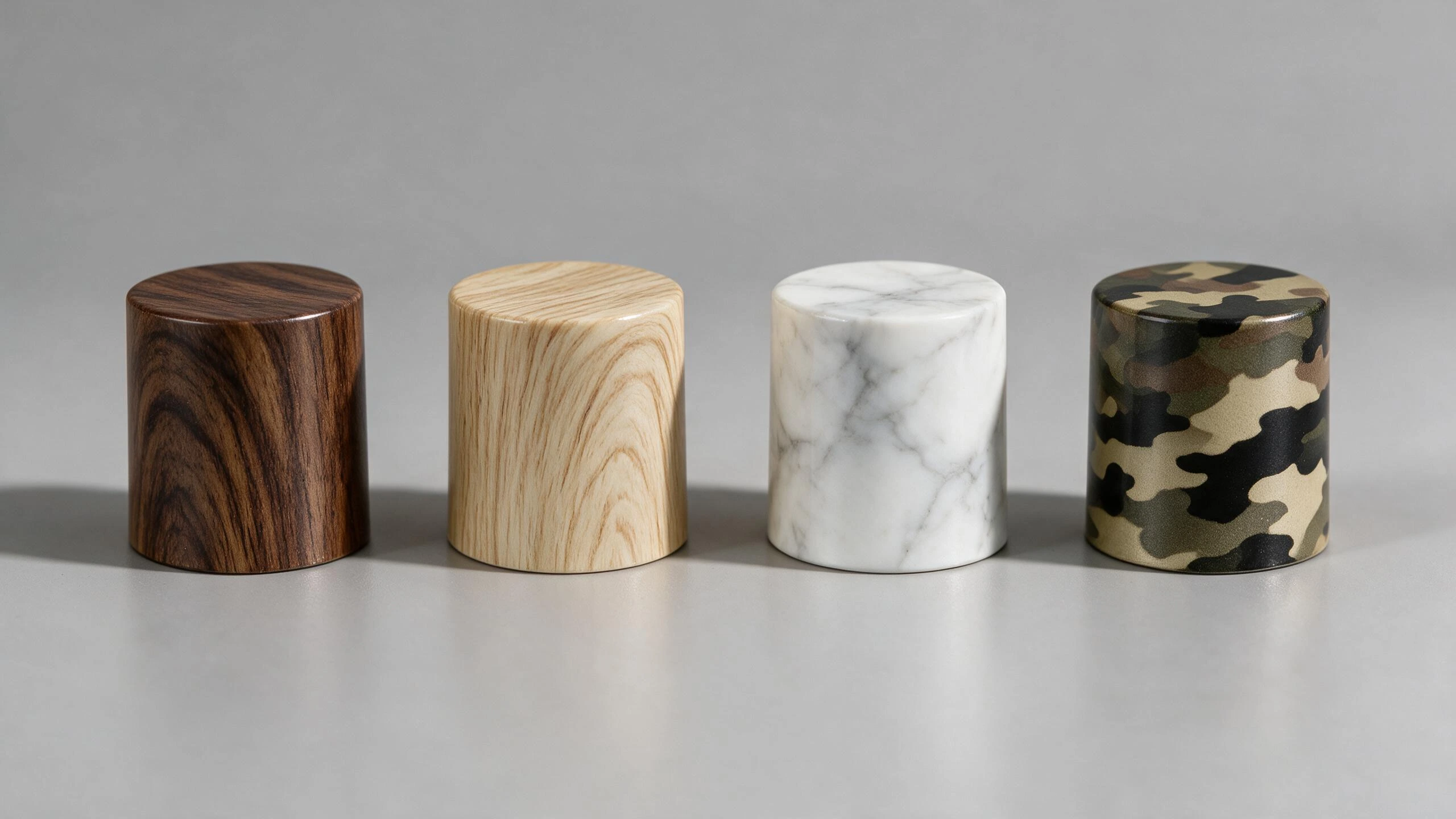
These finishes change the pattern on the cap surface. The material beneath the wood grain is still zinc alloy, and an imitation carbon-fiber pattern does not turn the cap into a carbon-fiber composite.
As a flat pattern wraps around a three-dimensional surface, it stretches as it flows. Pattern direction or spacing may change where the top turns into the sidewall or where parts of the pattern meet. Pattern scale, dipping direction, and seam placement also affect the final appearance. Once a film sample looks right, it still needs to be transferred onto the actual cap shape so that the top, sidewall, and corners can be assessed.
When developing Wbmetal’s zinc alloy perfume caps, the cap shape and surface decoration need to be considered together. Radii, transitions, and the arrangement of visible surfaces affect how the pattern spreads. Evaluate the cap shape, pattern, base color, and gloss together on the same sample to see how they combine.