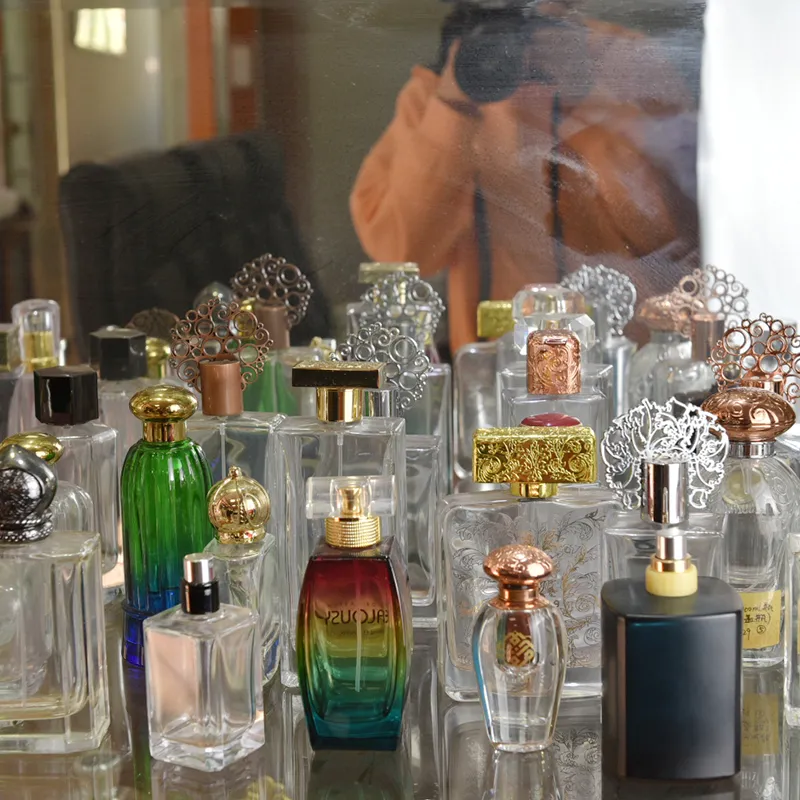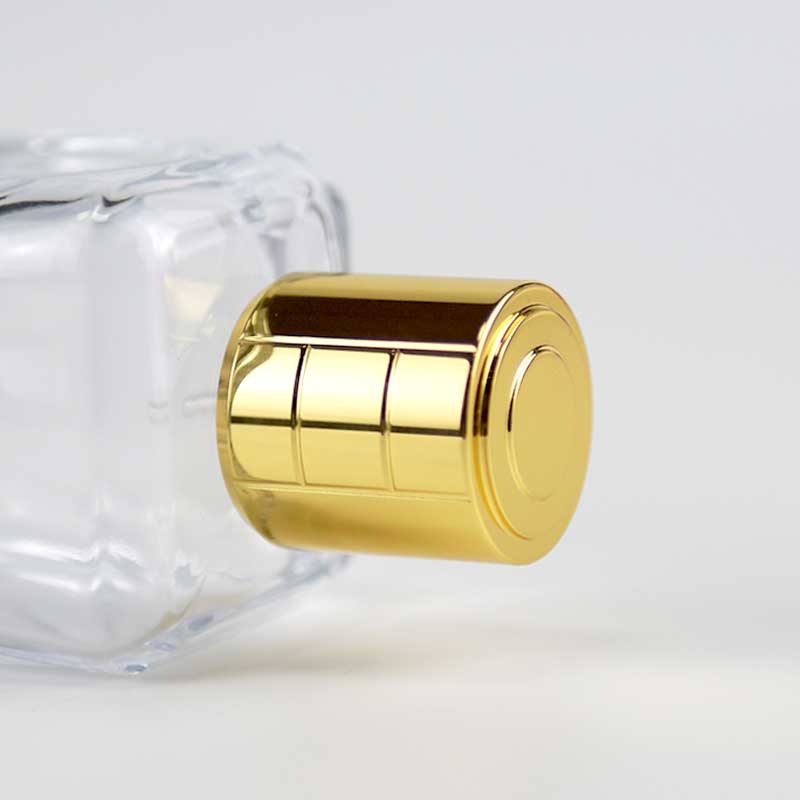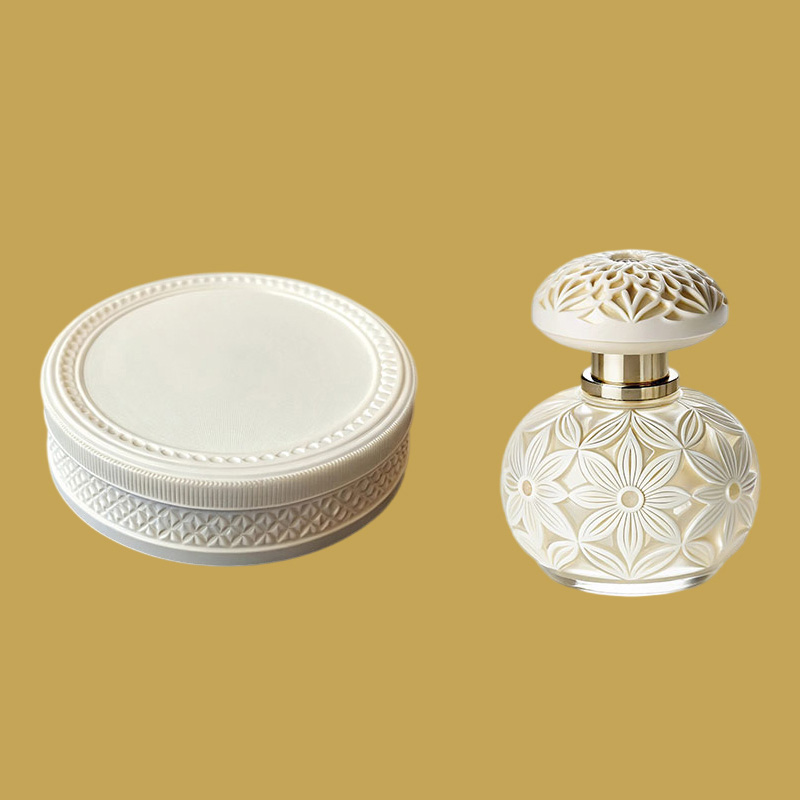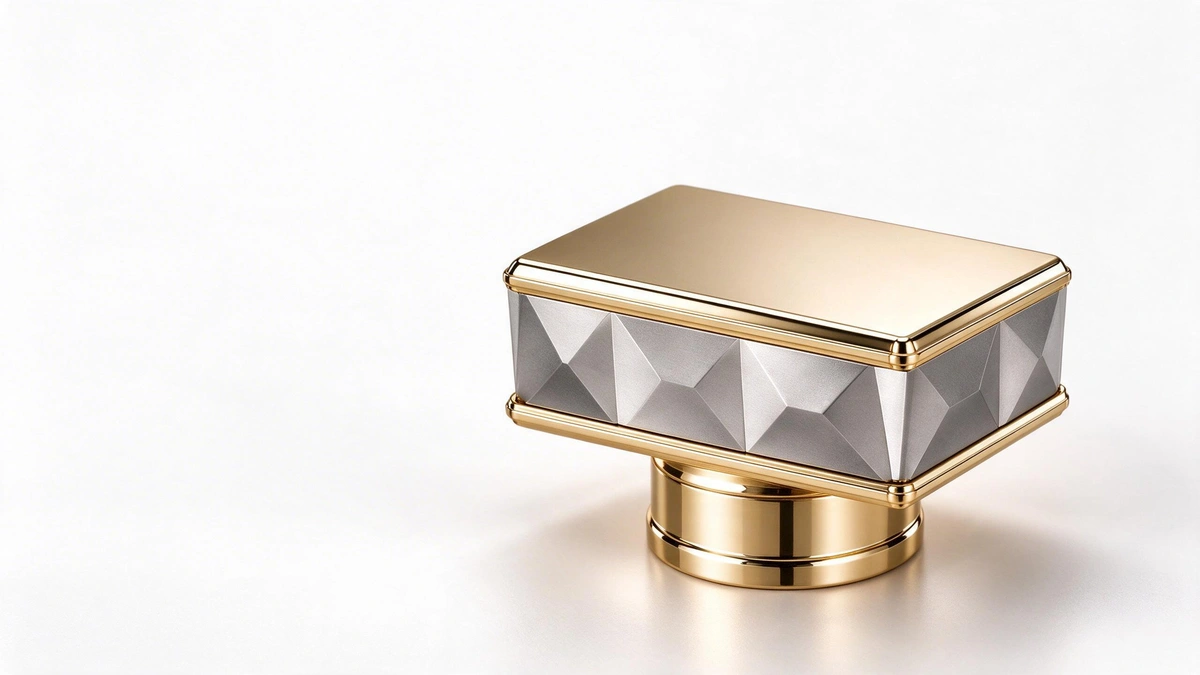
If you want to develop two-tone Perfume Caps with a gold-tone frame and a silver-gray faceted body, you can make the areas requiring different plated finishes as separate parts. Plate them individually, then assemble the complete cap. This is what we mean here by plating separate parts.
For Wbmetal and other manufacturers of die-cast zinc alloy perfume caps, the part layout needs to be settled before tooling is made: where the colors divide, where the joints sit, and how the plated parts will be aligned and secured.
From Separate Die-Cast Parts to a Two-Tone Cap
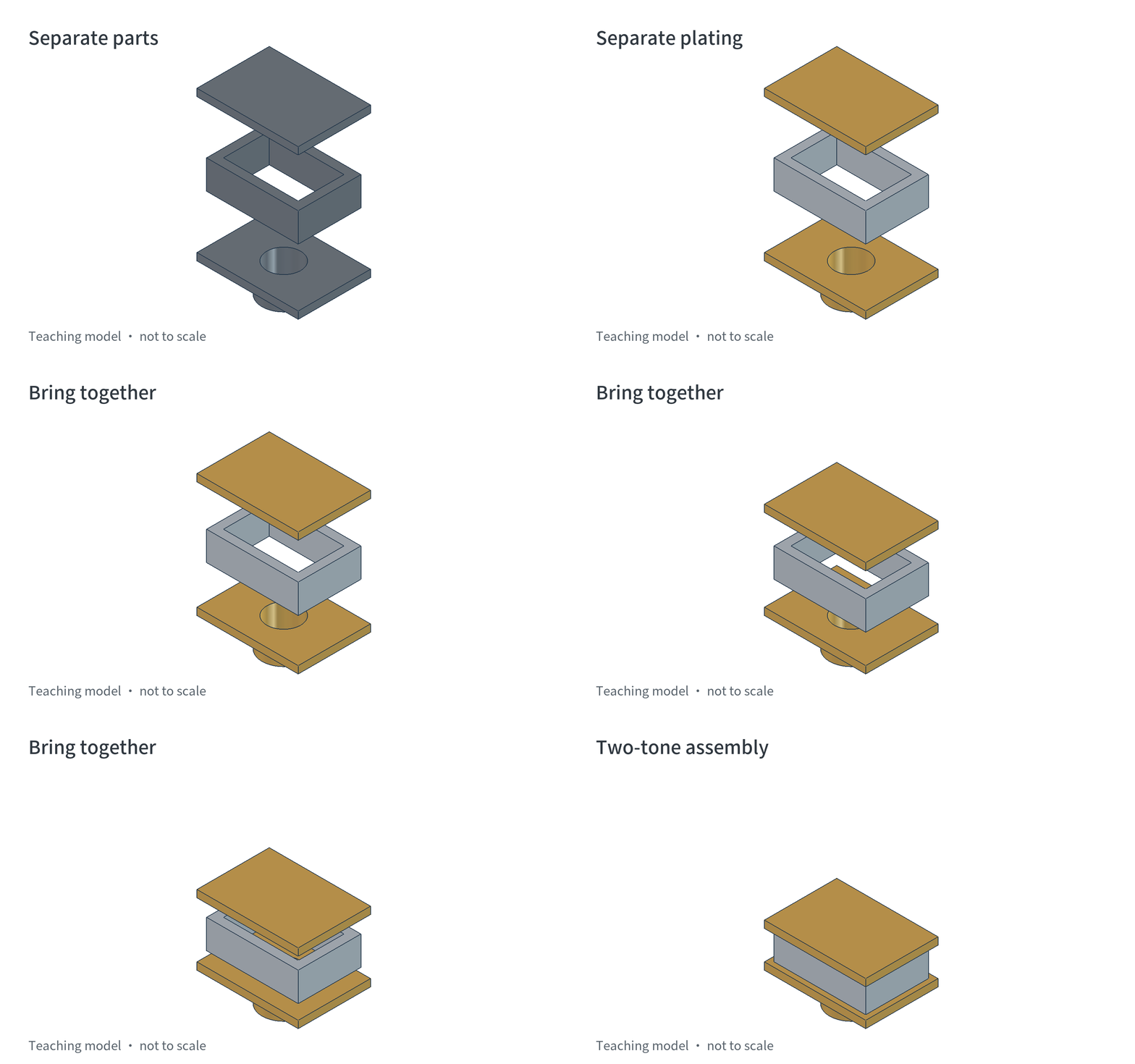
1. Design the separate parts and allow for the plated fit. Make the areas that need separate finishes into individual parts, and define the joints and locating surfaces. Electroplating increases external dimensions and reduces bore dimensions. When both mating surfaces are plated, the clearance decreases further, so dimensions before plating alone cannot tell you whether the parts will fit.
2. Die-cast, trim, and polish each part. Inject molten zinc alloy into the die cavity, remove the casting after it solidifies, trim off gates and burrs, then grind and polish to meet the appearance requirements. Machine holes or mating surfaces where required. After polishing, remove the polishing compound and grease, then carry out activation as required by the plating system to remove residues and surface oxides that interfere with adhesion.
3. Rack the parts separately for their respective finishes. Attach the parts to conductive racks. Apply a suitable underlayer to support adhesion of subsequent deposits, then apply the decorative finish. Electroplating uses electric current to deposit metal onto the surfaces being plated in the bath. Finishing the gold-tone frame and silver-tone body separately lets the part boundaries define the color boundaries.
Rack contact points need reliable electrical contact and should avoid the main visible surfaces wherever possible. Recesses also need to vent air and drain solution to prevent poor local coverage or trapped chemicals.
4. Inspect the plating, then locate and secure the parts. After plating, rinse and dry the parts, check the appearance and mating dimensions, and assemble them as designed. Locating surfaces align the parts; fastening features keep them connected. For example, adhesive bonding joins mating surfaces through an adhesive layer, while snap-fitting uses interlocking catches. The fastening method needs to be designed together with the separate parts. The animation shows how the parts come together.
Protect visible surfaces during assembly to prevent scratches from tools, fixtures, or parts rubbing against one another. After assembly, check for even joints, loose components, and surface scuffing.
If a part does not need a metallic plated finish, spray painting can be used instead to meet the appearance requirements. Finish its surface before assembly.
Why Not Mask and Plate a One-Piece Cap?
A one-piece part can also be selectively electroplated. Cover the areas that should remain unplated with a masking lacquer, tape, or protective material compatible with the bath, then process the part. With uneven shapes and numerous gaps, consider both whether the mask can seal properly and whether recessed areas can receive an even deposit.
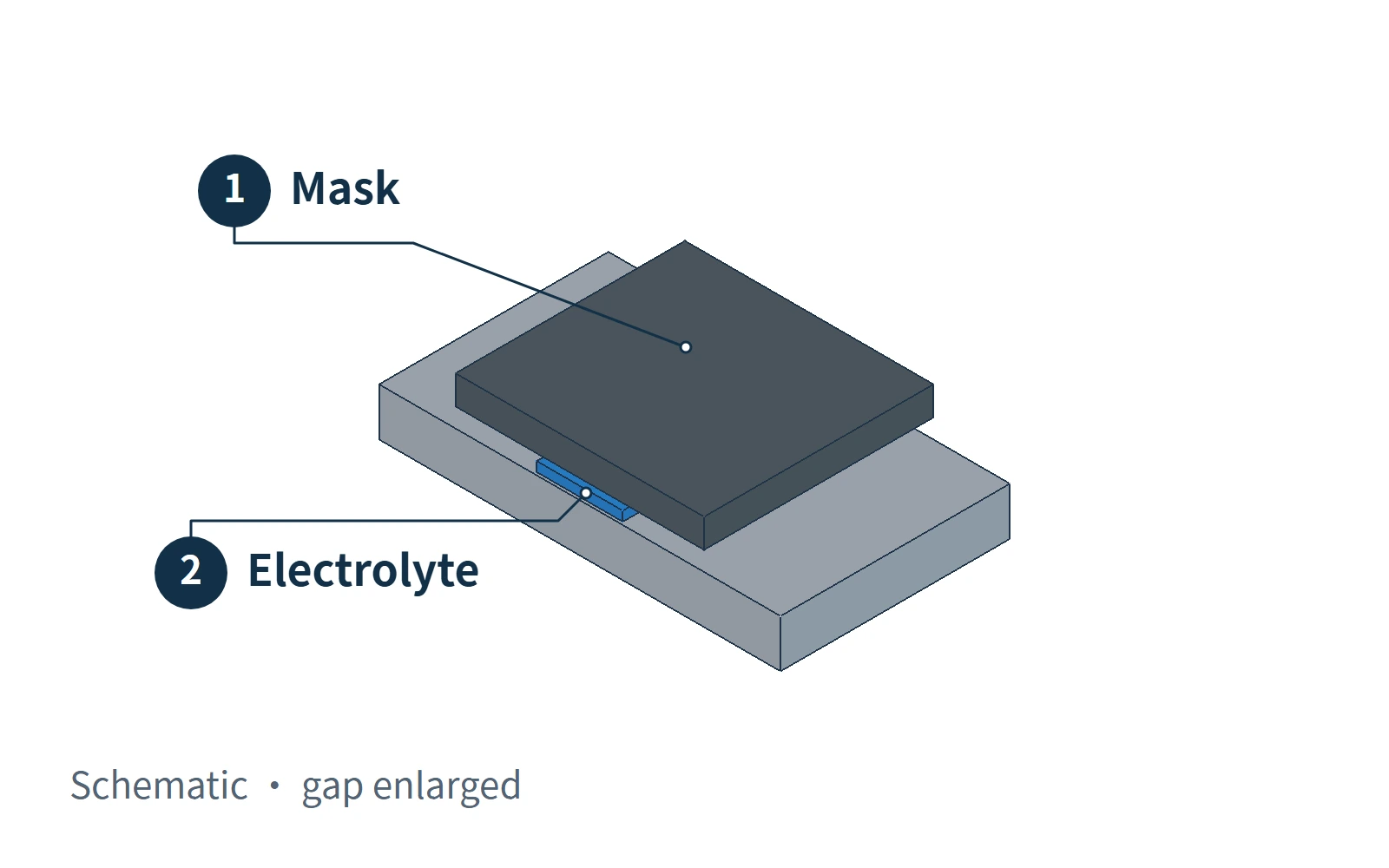
If the mask edge does not seal against the part, solution can seep underneath and cause unwanted deposits or contamination in an area that should not be plated.
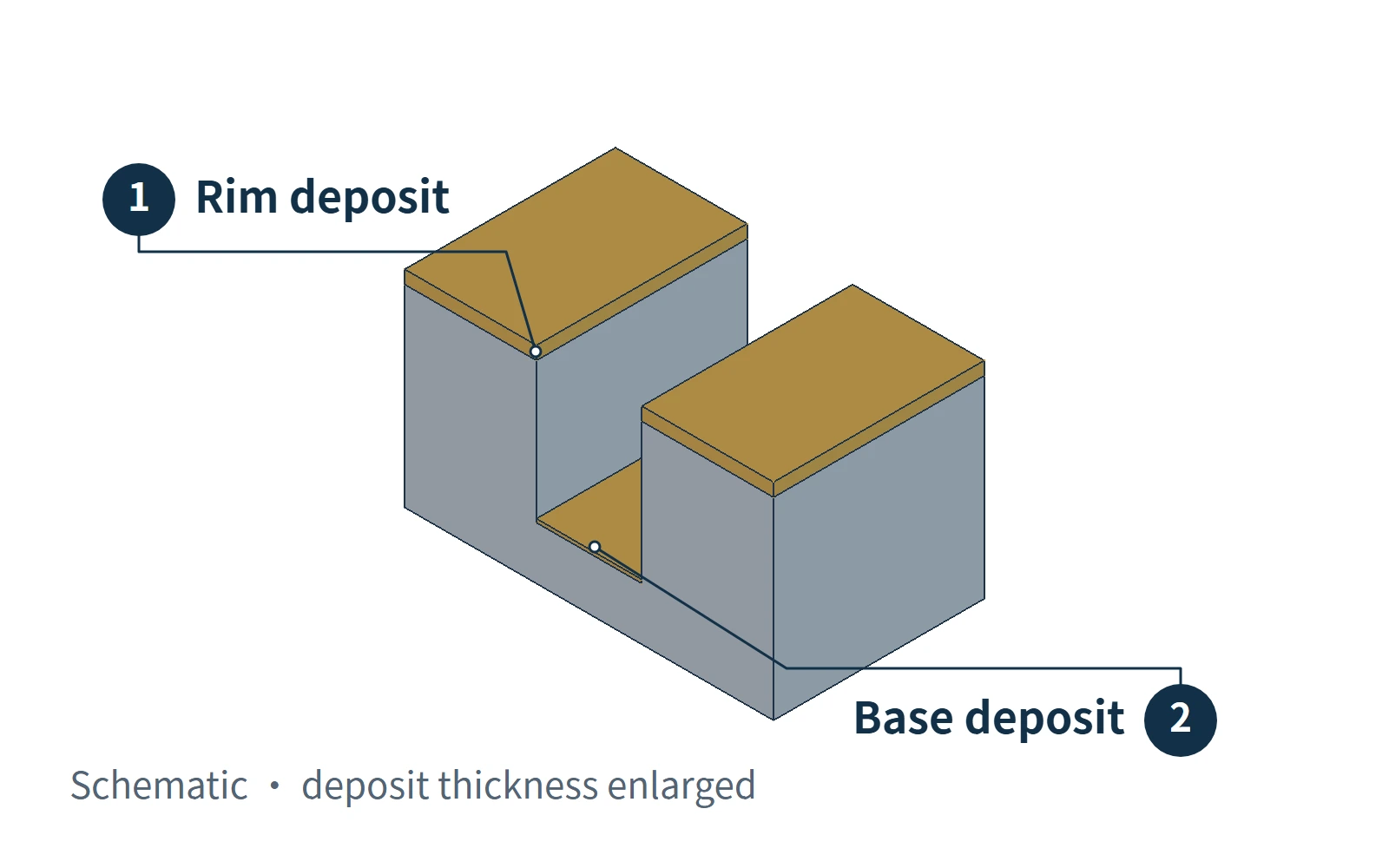
Thin plating in a deep recess is a different issue, related to current distribution and other factors. Deposits tend to build up on raised edges and external corners, while recessed areas are harder to plate to sufficient thickness. Splitting a design into parts only helps polishing, electroplating, and cleaning when it exposes previously hard-to-reach areas. Deep recesses that remain after splitting can still plate unevenly.
| Cap design or requirement | Approach to evaluate first |
|---|---|
| Flat boundaries between finish zones, with masking material that is easy to apply and remove | Keep a one-piece structure and use selective masking |
| Different areas need different plated finishes, with difficult masking boundaries | Make separate parts, finish them individually, then assemble |
| Splitting the design exposes previously hard-to-reach recesses | Evaluate whether separate parts improve polishing, electroplating, and cleaning |
A multi-part design adds part manufacturing, locating, and assembly work and leaves joint lines. Whether it costs less depends on masking, rework, and actual production yield as well. The added assembly operations alone do not settle the cost comparison.
How Does Masking Differ Between Electroplating and PVD?
Electroplating takes place in a liquid bath, so masking must keep the solution away from protected areas. The masking material needs to withstand the actual bath, and edges and gaps need to be sealed. Ordinary tape or plugs cannot be treated as universal solutions.
Physical vapor deposition (PVD), a vacuum coating process, can use a shadow mask to block the path of deposited material. The distance between the mask and the part, along with the deposition direction, affects the boundary. The mask still needs to suit the specific shape.
A multi-part or one-piece design determines how the components are organized; electroplating or vacuum coating determines how the surface coating is deposited. Start with the perfume cap appearance you want, then coordinate the part layout, surface finishing, and assembly.