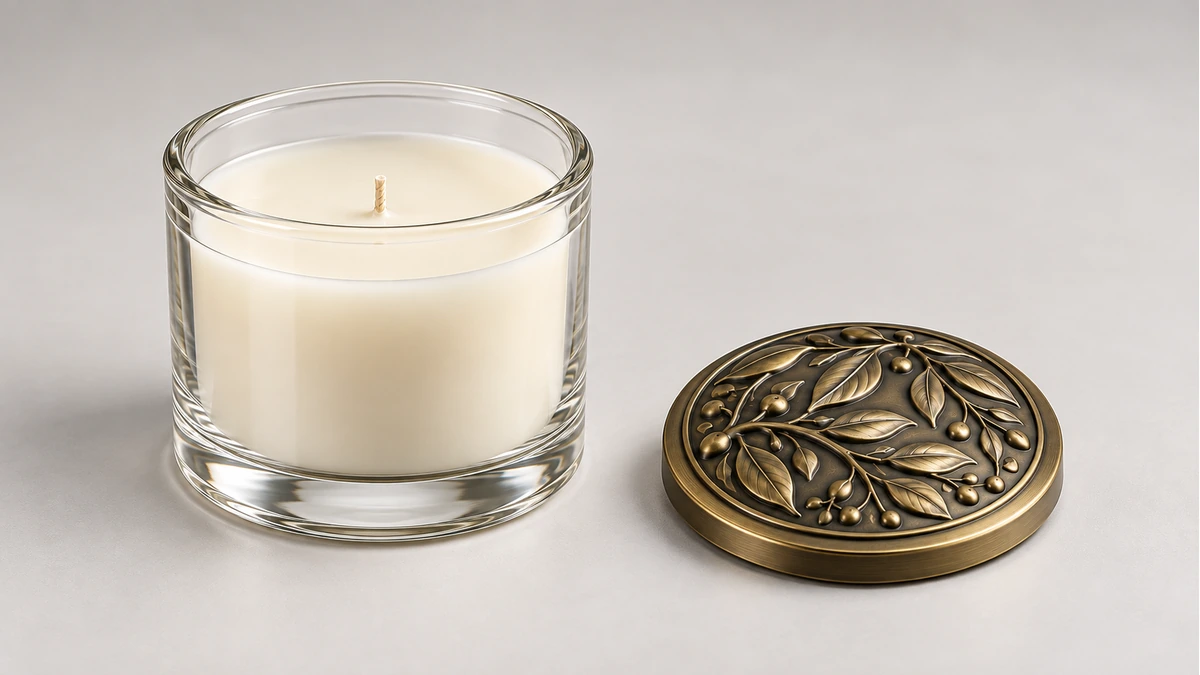
Figure: A relief-decorated metal lid and glass jar show how the lid design works with the container’s appearance.
By Wbmetal
A glass jar’s capacity, opening, and filling process may already be established. When a brand wants to give that jar a different identity, the lid offers room for change: a substantial feel for a gift set, a recognizable seasonal theme, or a design suited to hotels, home fragrance, and wedding gifts. A metal lid closes the jar, but it is also a component the brand can redesign.
From Wbmetal’s metal-packaging development perspective, appearance, and jar fit belong in the same design discussion. Relief on the top helps identify the brand. The lid body and finish affect how it feels in the hand. Its internal structure determines how it seats on the opening. Define the selling point first, then bring the shape, finish, and actual glass jar together during sampling.
Build different collections around the same glass jar
An established jar design has practical benefits: an available supply, predictable capacity, and familiar filling and packing processes. Candle-container producers, glass suppliers, fragrance brands, and gift-set buyers can often manage development risk more easily by retaining a proven jar than by developing a new glass container for every collection.
Similar glass jars can also make different brands look alike at first glance. The lid offers a component that can be redesigned to distinguish them. One base jar can support several collections:
| Collection | Selling points the lid can provide | Suitable applications |
|---|---|---|
| Gift sets and premium fragrance | A substantial feel, relief branding, metallic sheen, coordination with other metal details | Seasonal gift sets, hotel fragrance, brand collaborations |
| Home fragrance and repeat-purchase collections | Understated colors, resistance to everyday handling, consistent opening and closing, continued container use | Home fragrance, member purchases, refill systems |
| Seasonal and limited editions | Seasonal symbols, botanical patterns, animal or architectural outlines, limited colors | Christmas, weddings, regional themes and collaborations |
| Collections for different markets | Changes to color, lettering, or selected patterns within a common decorative design | Launches across countries, channels, and audiences |
Here, “standard” describes the underlying jar. It does not mean the lid must be an anonymous flat cover. With a consistent jar interface, the top, sidewall, texture, color, and selected details can be developed into different collections sharing the same jar.
What zinc die casting brings to lid design
Zinc die casting forces liquid alloy into a mold cavity, where it solidifies into the lid body. The mold can form relief on the top, the sidewall contour, and an internal shoulder together. This allows substantial contours, raised branding, curved surfaces, and internal locating features to be combined in one lid.
A stamped sheet-metal lid starts with a metal sheet. Cutting and drawing operations form the top and edge, and embossing can add a pattern. The distinction is how the shape is formed: sheet metal suits a relatively thin shell, while die casting makes it easier to combine three-dimensional contours of varying thickness with an internal shoulder. A simple flat lid may not require custom die casting.
For product development, die-cast lids offer four main possibilities:
- A recognizable appearance. The top can carry lettering, an emblem, a botanical pattern, an architectural outline, or a collection number. The sidewall can use knurling, toothed detailing, shallow relief, or separate color areas. The lid’s silhouette and reflections contribute to the first impression before attention turns to the wax inside the jar.
- Weight and opening feel that express the product’s positioning. Body weight, rounded edges, and surface finish affect how the lid feels when lifted, opened, and replaced. These details can suit gift sets, displays, and unboxing, but a heavier lid is not necessary for every everyday candle.
- Different finishes on the same shape. Electroplating, vacuum coating, and spray painting provide different colors and gloss levels. Brushed, matte, and antique effects create other surface appearances. Compare them on the same design. Broad reflective surfaces need scrutiny for waviness and fingerprints; a slight curve, relief, or matte finish can be easier to maintain.
- Exterior decoration and internal locating features in one casting. An internal annular shoulder helps seat the lid. Exterior decoration need not be attached as a separate plastic or metal piece. Where fragrance retention or airtightness is required, an elastic component such as a silicone ring or insert usually provides the sealing contact. The metal shoulder alone is not a seal.
A casting does not emerge from the mold with a finished polished surface. After deburring, polishing or vibratory finishing can be arranged to suit the pattern and finish, followed by plating or painting. Vibratory finishing uses contact between the workpieces and finishing media to treat surfaces in batches. When reviewing samples, assess the shape and the repeatability of the surface appearance separately.
Wbmetal’s development capabilities as a Perfume Caps Manufacturer and metal-packaging provider are relevant to the shape and finish of decorative lids. A candle lid still needs its own fit design and samples based on the actual glass opening. Dimensions or test results from other packaging caps cannot be used directly as candle-lid specifications.
Match creative details to the setting
A relief pattern used for gift-set display and one used in everyday home fragrance may need different details. Start with the setting, then decide which surfaces should stand out and which need to withstand repeated handling.
Gift sets and premium fragrance: establish the first impression
Display and unboxing matter here. The top can use a brand initial, emblem, architectural outline, or shallow relief. Colors can coordinate with gift-box hardware, a jar nameplate, or metal details around the insert. A substantial zinc-alloy contour and metallic sheen can create a noticeable feel in the hand. A broad mirror finish also needs agreed criteria for fingerprints, cleaning, and visible defects.
Hotels, spas, and home interiors: consider appearance over repeated use
Products in shared spaces receive repeated handling. The lid needs to look appropriate beyond a product photograph. Matte black, gunmetal, satin, fine brushing, or subtle relief can make everyday marks less prominent than a highly reflective flat surface. Include the cleaning method, frequency of handling, and any need to refill or replace the contents in the sample evaluation.
Seasonal, wedding, and regional themes: vary the lid around one jar
The glass jar can stay the same while a new top or sidewall theme creates another design. Botanical motifs, stars and moons, architecture, seasonal symbols, or a wedding date can be expressed through relief, recessed engraving, selected colors, and texture. Check release direction, pattern depth, clarity, and retention through finishing before committing to the tooling. Fine lines may become blurred after polishing.
Reusable containers and refills: account for continued opening and closing
If a brand wants people to retain the jar, the lid’s durability and opening feel become part of the repeat-use experience. The aim is not maximum weight. The lid, insert, jar opening, cleaning method, and refill routine need to work together.
A friction fit between a silicone insert and the jar opening does not establish a load-bearing connection. A lid that feels tight to remove should not be treated as a handle for lifting the whole jar filled with wax. If the product needs that lifting function, develop a reliable fastening structure and verify its load capacity separately.
How the shoulder and silicone component fit the jar
A distinctive lid still has to fit the opening. Stable seating does not establish airtightness, and metal cannot automatically compensate for variations in the glass.
An annular step inside the lid can locate it, limit how far it moves down, and help prevent tilted seating. This locating feature is a shoulder. To reduce air exchange after closing, a silicone ring or insert generally needs to be compressed against the jar at a defined contact surface. Seating and airtightness are separate results to verify. Openings from different glass producers or batches may vary in diameter, roundness, and local rim height. A rigid metal shoulder cannot fill every variation in place of an elastic component.
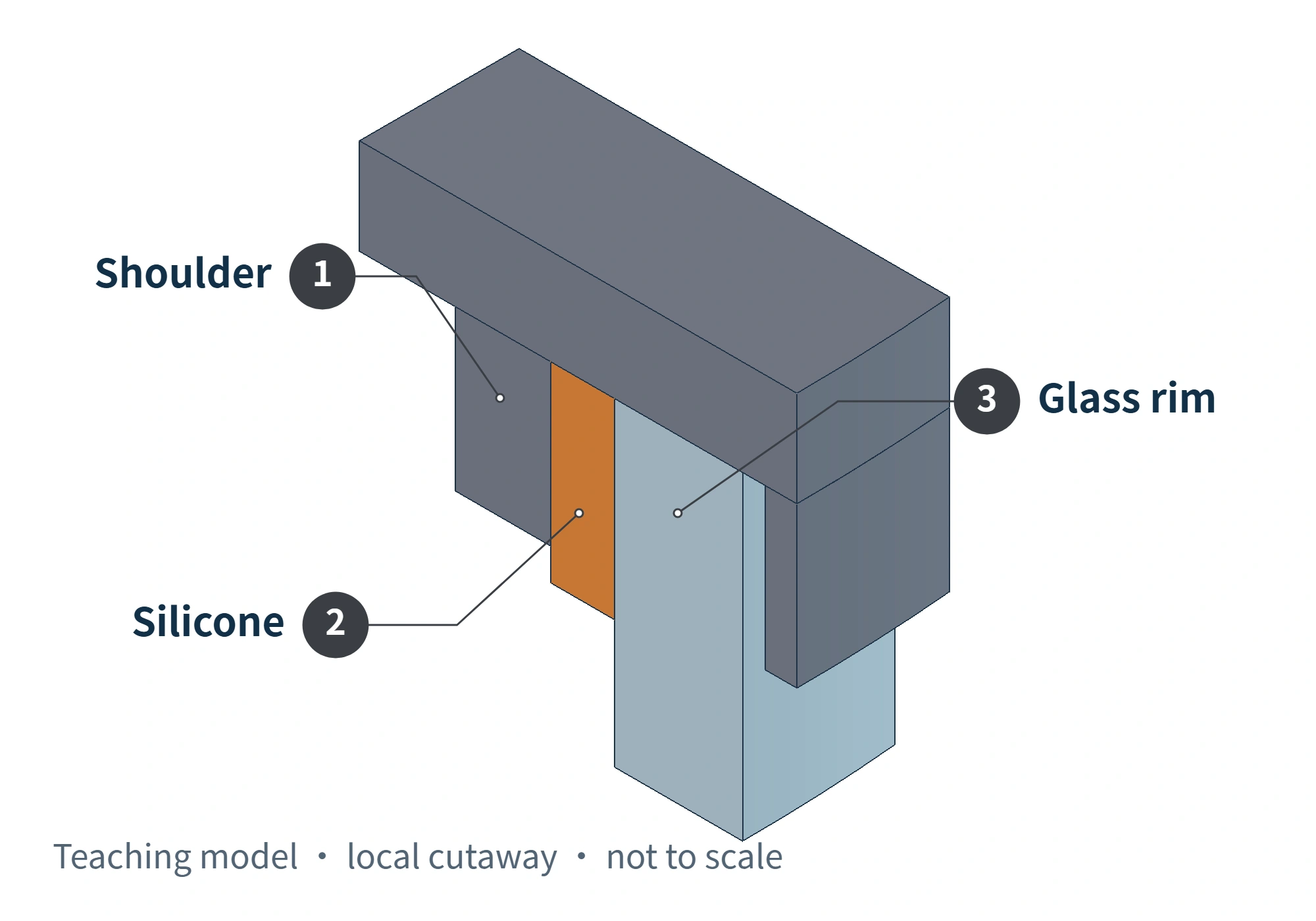
Figure: A teaching cutaway shows the metal internal shoulder, silicone component and glass jar opening.
Depending on the design, the silicone component can contact the inside wall of the opening or compress against the top of the rim. Define the metal lid’s locating position and the silicone contact position separately, then check whether the opening provides a continuous, consistent contact surface. The figure shows one teaching arrangement; other lid designs need assessment against their own jar and elastic-component geometry.
The lid’s outside diameter does not tell you how much the silicone component compresses. For a component contacting the inside wall, compare its outside dimensions with the measured inside diameter of the jar opening. For a gasket pressing on the top rim, examine axial compression after closing. These contact directions differ, so one nominal diameter cannot establish both.
Before trial fitting, measure the inside diameter, outside diameter, and top rim of several actual jars and record the variation. Use the loosest and tightest fitting jars to check for rocking, full seating, and any folding or damage to the silicone component. This helps establish whether the design accommodates the supplied openings. If airtightness is a requirement, carry out a separately agreed sealing test.
Review appearance and fit together in the sample
Once the contour is defined, check whether the pattern releases from the mold, remains clear after polishing, and produces the intended finished appearance. Relief and recessed details need more than a rendering: inspect fine lines, sharp corners, and deep recesses in the sample. Review finish samples alongside the glass jar, label, and gift box to judge color, reflection, and proportion together.
Development requirements can be grouped into body contour, decorative pattern, finish, and jar fit. The first two affect the mold. The finish affects surface preparation and coloring. Fit determines where the shoulder, silicone component, and jar meet. A change to one can affect another: additional polishing can alter fine-pattern edges, while finish thickness needs to be included when checking mating dimensions.
Wbmetal can provide development services covering tooling, die casting, CNC machining, polishing, surface finishing, and assembly from drawings or samples. The candle lid’s particular structure and finish determine which operations it needs. This service scope does not mean every lid passes through every operation. Appearance, opening feel, and sealing results still require confirmation for the actual project.
When the selling point justifies custom die casting
Assess three outcomes together: a clear difference in appearance, a sample lid that fits the real opening, and development costs that the expected quantity can support.
If the purpose is simply to add a metallic color, an available sheet-metal lid may already meet it. Custom die casting offers more scope when the design needs contours of varying thickness, three-dimensional branding, or a theme developed across several collections. At a smaller quantity, the one-time tooling expense increases the cost per lid. Finishing choices and manual surface preparation also affect cost; weight alone does not explain the price.
A lid turns a design idea into a deliverable product when its appearance, lifting and opening feel, suit the positioning, and it fits the actual jar consistently. For a metal-packaging developer such as Wbmetal, appearance, manufacturing, and fit should be confirmed in the same sampling round, so the decorated top and the everyday opening experience are developed together.