Choosing a finish for perfume caps means considering color and gloss alongside scratch resistance, service life, and processing cost. How do electroplating and PVD coating compare? This article starts with how each coating is deposited, then compares thickness, durability, and cost to explain when each process may be suitable.
Both processes need a prepared surface
The original part being coated is called the substrate. A zinc alloy cap is first deburred, with parting lines and surface defects dressed, before its mirror finish or texture is prepared. A thin PVD film follows the underlying texture, so visible pits should be dealt with before coating.
| Preparation | Electroplating | PVD coating |
|---|---|---|
| Surface cleaning | Degrease, rinse, and activate as required for the substrate | Clean and dry; carry out further cleaning in the vacuum chamber as specified |
| Preparing to receive the coating | Transfer to the appropriate bath for the metal being deposited | Some zinc alloy coating systems require electroplated base layers first |
Electroplating: metal ions deposit on the workpiece
Take copper plating as an example. The workpiece is immersed in a bath containing copper ions and connected to the negative terminal of the power supply, making it the cathode. Copper ions gain electrons at the workpiece surface and become metallic copper, gradually building up a coating.
The diagram uses a soluble copper anode: copper at the anode loses electrons and enters the bath as copper ions; copper ions at the workpiece gain electrons and deposit as copper.
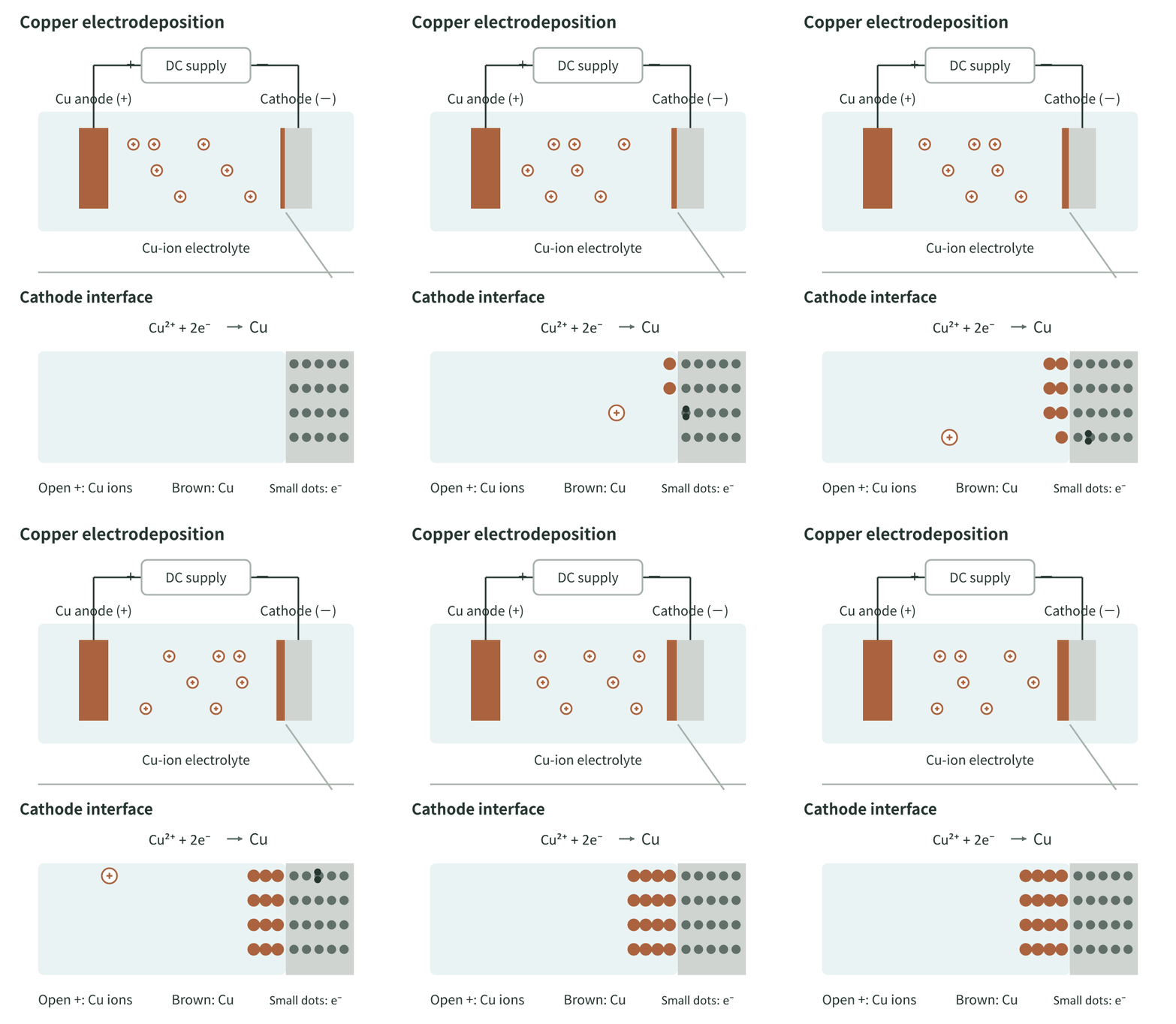
Example of copper deposition from a copper salt bath; particles and their speeds are not shown to scale.
Process: rack the parts → pretreat → electroplate → rinse and dry. For multilayer coatings, deposit each metal in sequence, rinsing between baths.
One common decorative chromium plating system for zinc alloy is copper–nickel–chromium. Copper and nickel lie beneath the outer chromium layer, and the layers work together to provide appearance and protection.
PVD: release particles from a material and deposit a film
PVD stands for physical vapor deposition. Source material leaves its original location through processes such as evaporation or sputtering, reaches the workpiece surface in a vacuum, and forms a thin film.
The example below shows magnetron sputtering. The solid supplying the coating material is called the target. Positive argon ions produced by the discharge strike the negatively biased target, ejecting target atoms. These atoms reach the workpiece and deposit, while the magnetic field confines electrons near the target to help sustain the discharge.
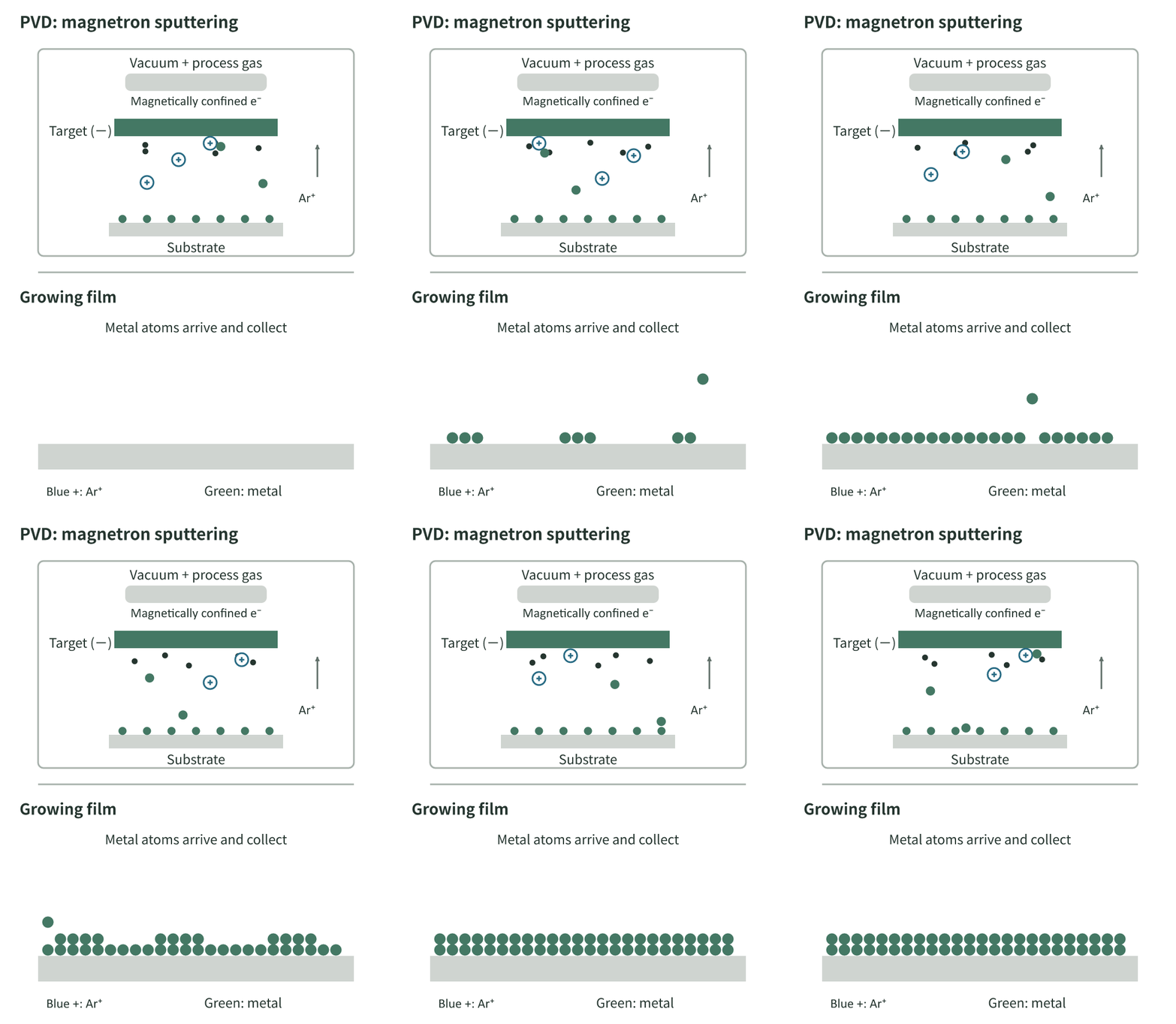
Example of a metal film deposited by magnetron sputtering; evaporation uses a different process.
Process: clean and load → evacuate the chamber → preclean as specified → deposit the film → cool and unload. Heating and precleaning conditions depend on the substrate and coating system.
A zinc alloy cap may be electroplated before PVD coating
Some decorative PVD systems for zinc alloy require electroplated base layers. The diagram shows one combination of copper, nickel, and chromium base layers with a PVD topcoat. PVD film thickness refers only to the outermost layer.
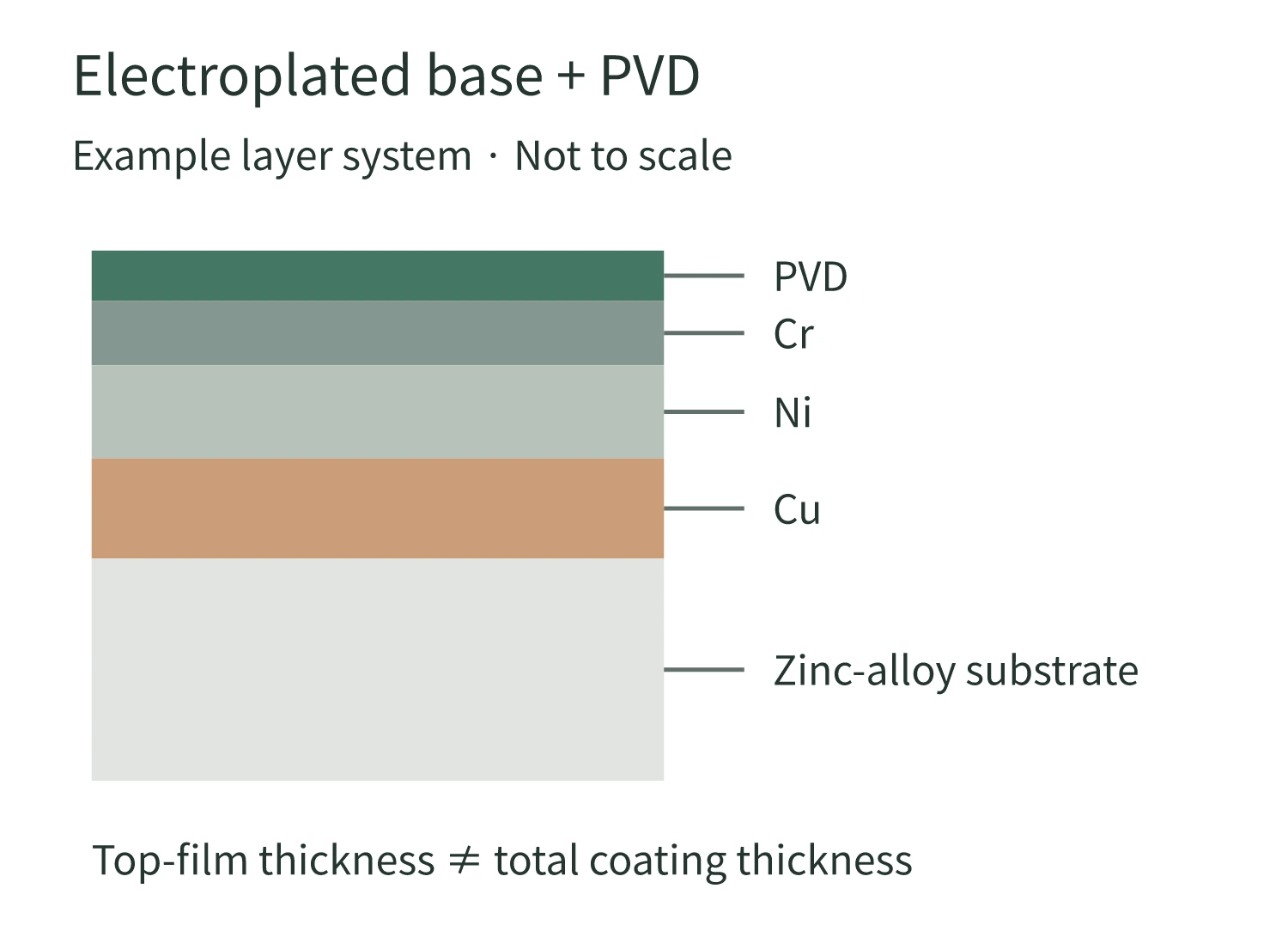
How do service life, thickness, durability, and cost compare?
Thickness: first identify which layer is being measured
The symbol μm means micrometer; 1 μm = 0.001 mm.
| Specific configuration | Thickness |
|---|---|
| ASTM B456-17, 2017 edition: one copper/fully bright nickel/conventional chromium configuration for zinc alloy under SC2 moderate service conditions | Copper ≥5 μm; bright nickel ≥20 μm; conventional chromium ≥0.2 μm |
| PVD topcoat | Specified according to film material, application, and deposition conditions; report the film thickness separately, excluding electroplated base layers |
The electroplating values above are an example from that standard configuration, not Wbmetal’s default specifications. The thickness of a PVD film cannot be compared directly with the thickness of an entire electroplated coating system.
Electroplating tends to build up more at projecting edges and less in recesses; PVD has limited coverage in deep recesses and shadowed areas. Both processes must account for the cap’s raised and recessed features.
Durability: scratching, wear-through, and impact damage differ
| Property | What to compare |
|---|---|
| Scratch resistance | A hard PVD topcoat is a candidate for improving scratch resistance; the film material matters |
| Wear resistance | Compare wear and exposure of underlying layers using the same rubbing material, pressure, and number of cycles |
| Impact resistance | Check for dents in the cap, cracking or peeling of the coating, and bonding between layers; a hard topcoat does not necessarily improve resistance to drop damage |
| Adhesion | Substrate defects, cleaning, and bonding between layers affect peeling; PVD cannot remedy poor adhesion in the base layers |
| Corrosion and chemical exposure | Evaluate salt spray, sweat, and perfume exposure separately; their results are not interchangeable |
Service life: look at damage from wear and corrosion
Neither process has a universal service life. Frequent rubbing may wear through the coating and expose underlying layers, and weak areas in electroplating may fail first; salt spray hours cannot be converted directly into years of use.
Appearance and cost
Appearance: the evenness of a mirror finish and the clarity of a texture depend on surface preparation; the coating materials and layer combination also affect the result.
Cost: electroplating followed by PVD includes the cost of both the base plating and the PVD process; polishing, part geometry, racking, and batch size also affect cost.
Which products use these processes?
| Product | Coating applications |
|---|---|
| Zinc alloy perfume caps and packaging hardware | Decorative electroplating, or electroplated base layers followed by PVD |
| Kitchen and bathroom hardware | Both decorative electroplating and decorative PVD are used |
| Door handles and marine hardware | Decorative PVD is used, with attention to friction and the service environment |
| Decorative parts for sporting goods | Decorative PVD is used; assess friction and impacts for the particular part |
| Automotive interior trim and buttons | Chromium plating or decorative PVD for color and surface appearance |
Which process should you choose for zinc alloy perfume caps?
- Electroplating already meets appearance and use requirements: keep it; there is no need to add PVD just for the process name.
- A specific PVD color or hard topcoat is needed: evaluate it together with any required electroplated base layers.
- Pits, scratches, or poor coverage in deep recesses are a problem: address the surface and coverage plan first; changing the coating process alone will not solve them.
For custom perfume caps, Wbmetal determines the finishing approach according to the shape, material, and intended use.