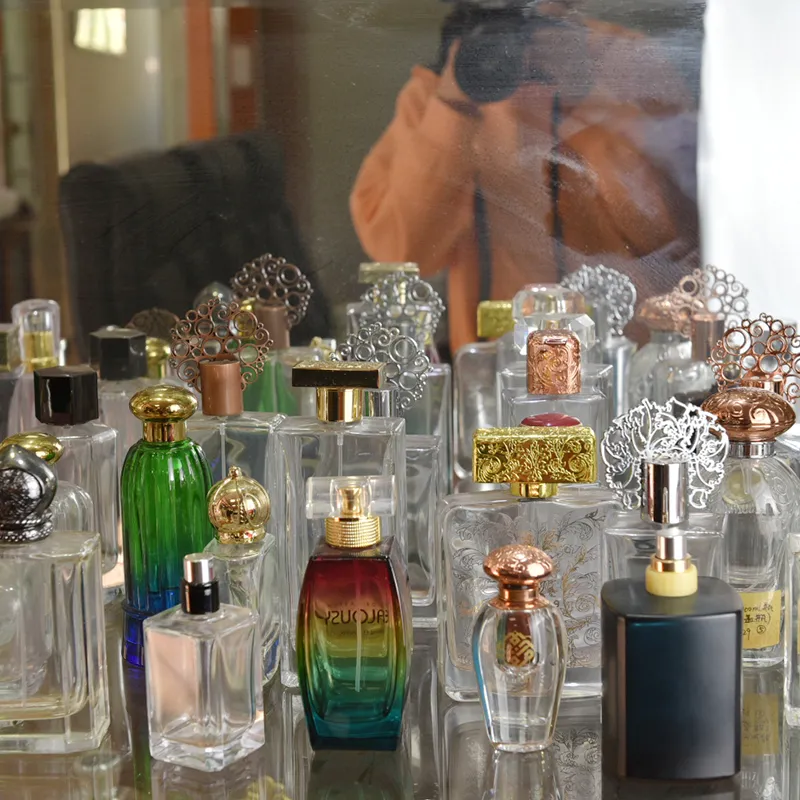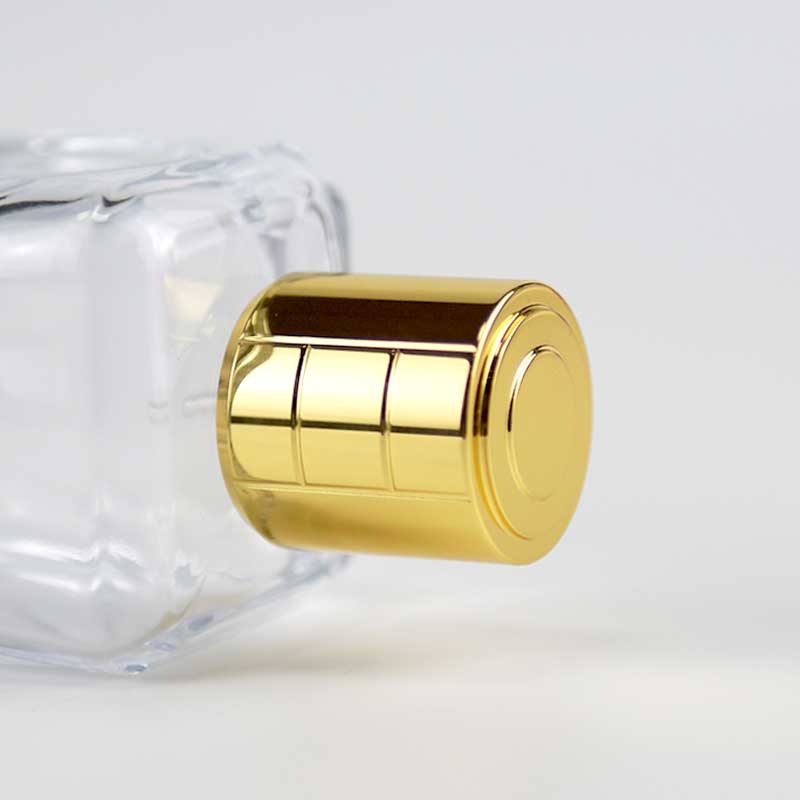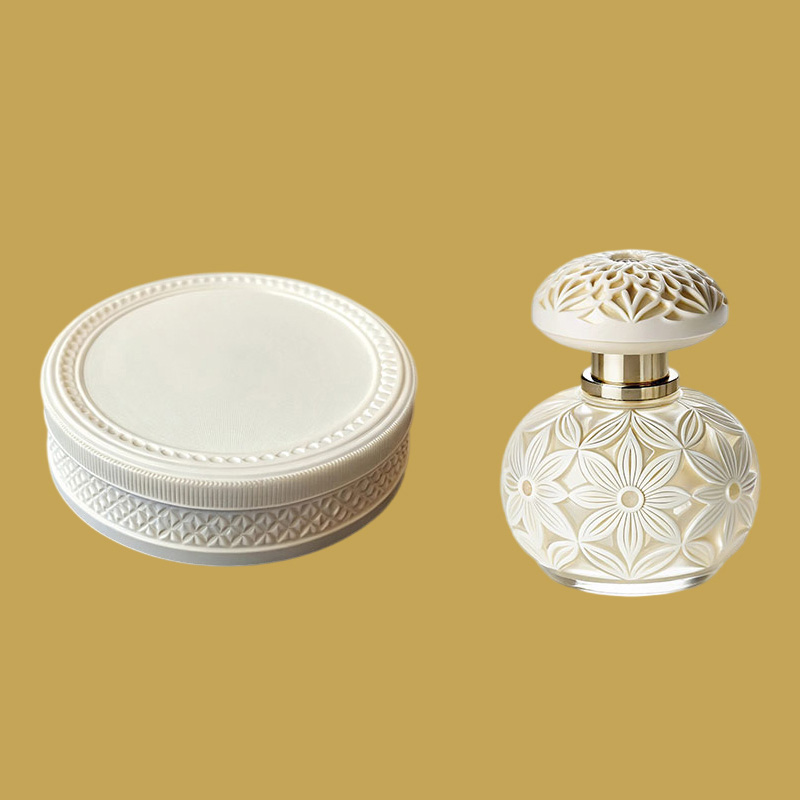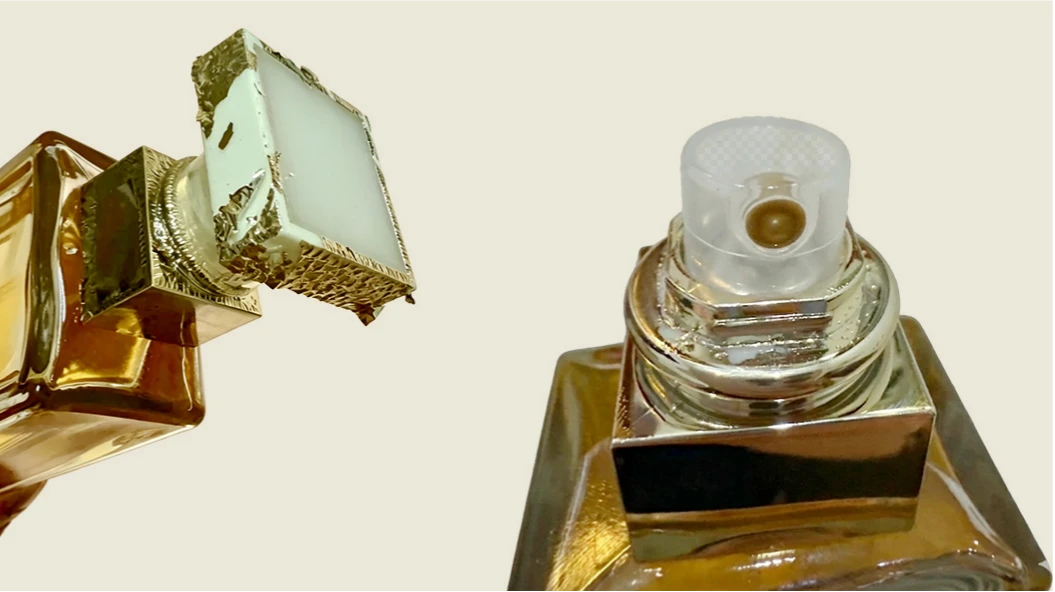
Recently, I spent some time researching Xiaohongshu and found many discussions about perfume caps. A number of consumers said that after buying luxury perfumes, they discovered paint peeling on the caps. Both zinc alloy and plastic caps can experience paint loss. Some show slight peeling right after purchase, some develop serious peeling within a few months, and some are almost completely peeled within half a year. Many consumers suspect they bought counterfeit products, even though the purchase channels were department store counters or official direct online stores. When they contacted brand customer service, they were told there was no problem and that the products were genuine. They were also told that the perfume liquid should not come into contact with the metal parts, because the metal areas are paint-coated, and contact with the spray may cause paint peeling.
Why Luxury Brands Choose Painted Coatings
As a manufacturer with many years of experience in zinc alloy perfume caps, Wbmetal understands the reasons behind this. Recently, as environmental requirements in China and overseas have become increasingly strict regarding traditional electroplating in areas such as heavy metals, wastewater treatment, and emissions management, the industry has been gradually shifting toward more environmentally friendly surface finishing processes. In this context, it is actually reasonable for luxury brands to choose painted coating processes.
However, from the consumer’s perspective, most people do not have much practical understanding of such processes. Under different countries, different regions, different environments, and different usage habits, the paint peeling rate of coated finishes naturally varies. Some people wipe the perfume cap dry after spraying perfume, while others do not have this habit. In addition, if the product itself has leakage issues, this will accelerate the contact between alcohol and the painted surface. As a result, some products may experience faster paint peeling or even show peeling immediately after unboxing.
How to Extend the Service Life of the Coating
1. Consider sealing performance at the perfume cap design stage
During structural design, sealing should be optimized as much as possible. The inner insert components should use alcohol-resistant plastic materials wherever possible, and the sealing ring should also use materials with strong alcohol resistance and corrosion resistance to reduce leakage. This is because when painted coatings come into contact with perfume, chemical reactions can occur and cause the coating to peel off quickly.
2. Choose coating materials with stronger adhesion and better alcohol resistance
Stronger adhesion can slow down the paint peeling rate to a certain extent.
3. Strengthen leakage inspection during the filling process
During the filling process, if the silicone sealing ring shifts position or if there are defects on the sealing ring surface, leakage problems may occur. If this stage can detect and eliminate abnormal products in advance, it can reduce paint peeling caused by leakage after the products enter the market.
4. Wipe the surface of the perfume cap promptly after use
After spraying perfume, wipe the cap with a tissue. This can reduce long-term alcohol retention on the surface and help delay paint peeling.
5. Remind consumers to pay attention to the storage environment
Perfume should be stored in a ventilated and dry place as much as possible, avoiding long-term exposure to humid, hot, or moisture-heavy environments, as these factors can also accelerate the peeling of painted coatings on perfume caps.
Comparison of Painted Coating and Electroplating Processes for Perfume Caps
| Comparison Item | Electroplating | Painted Coating / Water-Based Coating |
|---|---|---|
| Process Principle | A metallic coating is formed on the surface through an electrochemical reaction | A protective layer is formed by spraying a resin-based coating |
| Appearance Effect | Glossy surface, with a texture closer to real metal | Can also achieve a mirror-like effect close to electroplating, and colors can be adjusted |
| Process Complexity | The process is complex and requires high standards for equipment, chemical solutions, and environmental treatment | The process is relatively simple |
| Environmental Performance | Involves heavy metals, wastewater, and exhaust gas treatment, with greater environmental compliance pressure | Mainly based on water-based or spray coating systems, with relatively lower environmental pressure |
| Cost | High equipment investment, high post-treatment and environmental compliance costs, and overall more expensive | Relatively lower cost, making it a more common choice for many decorative components |
| Alcohol Resistance | Stronger, short-term contact with alcohol usually does not easily cause problems | Relatively weaker; long-term contact with alcohol is more likely to cause whitening, softening, or paint peeling |