Many brand owners face the same dilemma. They want to launch a fragrance brand and use zinc alloy Perfume Caps, but they don’t know whether to choose a public mold or a private mold. They also aren’t clear on the actual difference between the two. A public mold may seem too generic. A private mold requires a much larger investment. For a new brand, sales potential is still uncertain. That makes the decision difficult: use the supplier’s existing public mold or pay for a dedicated private mold? The question isn’t hard to answer, but it does require a clear understanding of what public molds and private molds each do.
What Is the Difference Between Public and Private Molds?
Public mold refers to a standard mold that the mold maker has already developed and made ready for production. Multiple buyers share the same mold for manufacturing, and the mold belongs to the factory. What you buy is the finished part, not the mold itself.
Private mold, also called an exclusive mold or custom mold, is a dedicated tool developed by the manufacturer based on your design drawings. You pay the mold fee, and after mass production, the mold theoretically belongs to the buyer, subject to the contract terms.
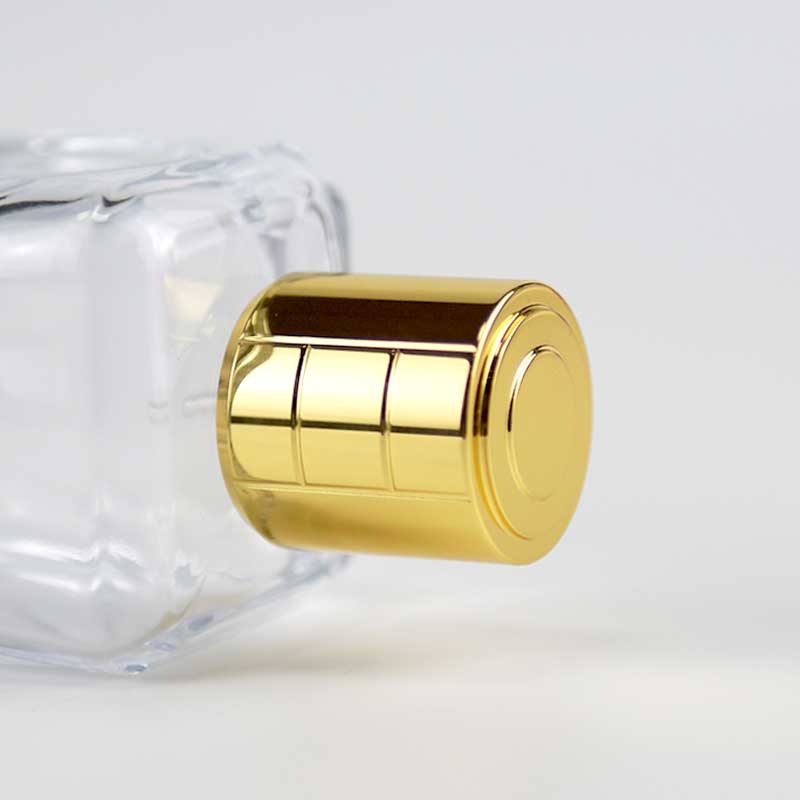
Zinc alloy perfume caps, or Zamak perfume caps, are naturally suited to both public-mold and private-mold programs. Zamak 3 has a density of about 6.6 g/cm³, roughly six times that of standard plastic. That weight is one of the main reasons premium fragrance brands favor metal caps. Zinc alloy hot-chamber die casting also reproduces fine details accurately on every part. Die-casting tolerances can reach CT4-CT6, with an accuracy of ±0.05 mm. That precision baseline is the same whether the cap is made from a public mold or a private mold.
The difference between public and private molds is not the material. It comes down to the following five factors:
| Category | Public Mold | Private Mold |
|---|---|---|
| Mold cost | Zero, built into the unit price | $2,222-$8,889, including mold making and machine setup |
| Minimum order quantity | 1,000-2,000 pieces | Starts at 5,000 pieces |
| Appearance exclusivity | None, the same shape can be used by other brands | Fully custom and exclusive |
| Time from order to sample | About 15-20 days | 25 working days for tooling plus about 15 days for sampling |
| Brand differentiation | Limited, but color and logo can be customized | High, with shape fully defined by the buyer |
Should You Start with a Public Mold or a Private Mold?
The main advantage of a public mold is a lower startup cost and a faster time to market. If you are a niche fragrance brand still testing the market, you need to ask whether customers actually want this product. When market response is still unproven, spending $2,000 or more on a private mold can be a heavy upfront investment, unless your company has ample funding and a clear premium positioning where uniqueness matters more than cost. In most cases, a public mold is the better starting point. There is no mold fee, the MOQ is lower, and if the product doesn’t sell, your losses are limited.
Public molds also work well for brands with limited need for structural differentiation and more focus on surface finishing. Electroplating in gold, chrome, or gunmetal black, PVD, UV coating, and laser-engraved logos can give the same public-mold shape a very different visual effect. If your brand language is expressed more through color, texture, and logo than through the cap shape itself, a public mold with custom surface treatment is often enough.
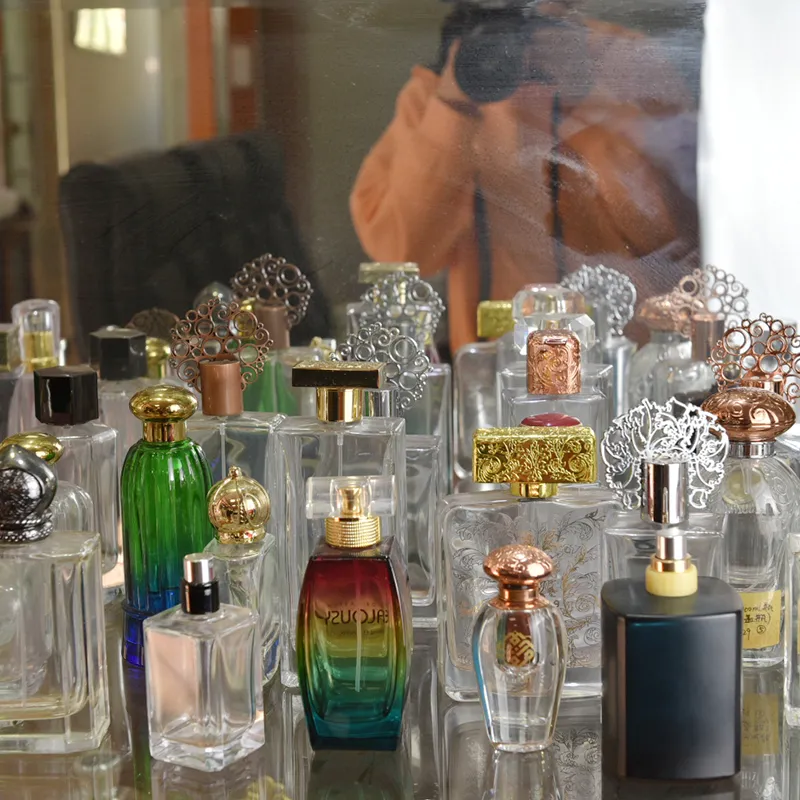
Wbmetal‘s public mold series covers about 20 standard styles, with diameters from ∅25.1 mm to ∅45.7 mm and weights from 24.2 g to 123.5 g. These styles can match most mainstream perfume bottle designs on the market. If the goal is to get samples quickly and control the initial investment, it is practical to start by selecting a specification from the public mold series that matches your bottle. You can then test several colors and surface finishes against the bottle to see what works best.
What Are the Limits of a Public Mold?
The main limit of a public mold is that the appearance cannot be truly unique. You cannot stop others from using it. You can, however, negotiate with the factory to buy out the design rights and convert it into a private mold arrangement. When you choose a public mold, any other brand can buy the same mold and produce caps with the same shape. In the mass market, that may not be a disadvantage. In independent fragrance, niche fragrance, and high-end custom fragrance, part of the value customers buy is brand identity. If the same cap shape appears across multiple lesser-known brands, the brand image weakens, and uniqueness and price premium lose their value.
Another issue comes up when your perfume bottle uses a special neck finish rather than a standard size. In that case, a public mold may not work because of fit tolerances. The factory may need to develop a custom plastic inner insert to match your bottle neck, which adds the cost of a separate insert mold for the perfume cap.
If your goal is:
- The shape must be exclusive and must not appear on competing products
- The bottle neck specification is non-standard and requires a custom fit
- The SKU is intended for long-term operation, with stable annual volume above 5,000 pieces
Then a public mold is no longer sufficient, and you should move directly to a private mold.
What Steps Are Involved in Opening a Private Mold?
Step 1 is the mold cost. Private molds for zinc alloy perfume caps generally fall into three cost tiers based on complexity:
- Simple, such as round or cylindrical shapes with no complex structure: about $2,222-$3,704
- Standard, with parting-line details, chamfers, and moderate complexity: about $3,704-$5,926
- Complex, with difficult release structures and multiple slides: about $5,926-$8,889
This is a one-time investment. The mold belongs to you, but if the product does not gain traction in the market, the mold fee becomes a sunk cost.
Step 2 is the timeline. From contract signing to an approved sample, a private mold for a zinc alloy perfume cap usually requires:
- Mold machining: about 25 working days, or about 5 weeks
- Trial molding and sampling: about 15 days
- Total: about 7-9 weeks
This is a normal timeline for custom tooling. If the product launch must align with a specific season or holiday sales window, mold development should be planned at least two months in advance.
Mold modification risk also needs to be understood early. After the initial tool is built, trial runs continue. If some areas of the part are still not right, time is needed to modify the mold. Once the project enters a mold-repair stage or requires cavity replacement, both lead time and cost increase.
Mold ownership terms are an easy detail to overlook. In the industry, some buyers have paid the mold fee in full but later found the mold withheld by the manufacturer because the contract wording was vague. The contract should clearly state that ownership transfers to the buyer once the mold fee is paid in full, and it should also define the mold storage location and maintenance responsibility.
Mold ownership terms deserve close attention. Other customers have reported cases where they paid the tooling fee to another supplier and later wanted to move the mold, only to be told the mold was not theirs or that they needed to pay extra to release it. The issue usually came down to unclear contract wording, and the mold ended up being held by the factory. The contract should clearly state that ownership transfers to the buyer once the mold fee is paid in full, and it should also define the mold storage location and maintenance responsibility.
Four Questions to Think Through
1. What is the annual purchase volume?
If it is below 5,000 pieces, use a public mold. If it is above 5,000 pieces, repeat orders are expected, and the product will stay in the lineup for several years; use a private mold. At that volume, the tooling cost can be absorbed over time.
2. Is the bottleneck specification standard?
If the perfume bottle is custom and uses a special neck finish, send the bottle neck dimensions to the cap factory first for fit testing. If a public mold can fit, it saves both time and money. If it cannot, then you need to open a dedicated zinc alloy cap mold.
3. Does brand differentiation depend on a unique shape?
If your brand story, price point, and customer positioning rely on the idea that this cap design belongs only to your brand, then a public mold conflicts with that positioning at the most basic level. No matter how refined the surface finish is, it will still be hard to build a strong brand tone, and it will be easier for others to copy.
4. Are you in the validation stage or mass-production stage?
Validation stage: use a public mold first and control risk.
Mass-production stage: once market demand and volume have been confirmed, move to a private mold.
Reference path: Most brands follow this route—public-mold sampling and market testing, then demand validation, then a switch to private mold for locked-in differentiation. A public mold keeps the initial investment low. If the market response is positive, the project can move quickly into the private-mold stage and scale up.
What Steps Does Wbmetal Handle?
Wbmetal provides the full production chain for zinc alloy perfume cap die casting—from shipment of ready-made public mold products to private mold custom development to post-casting polishing, plating, and quality control.
If you are in the testing stage, you can choose a suitable size from the public mold series and request samples directly, then check the actual fit and appearance on your bottle. If you already have custom requirements, send a 3D model drawing or a reference sample to the factory. The factory will provide a tooling proposal and a quotation.
For surface finishing, Wbmetal can provide electroplating, water plating, powder coating, spray painting, and more. Colors and logos can be produced to your requirements. Salt spray testing and other tests are also available.
Common Questions
Can a public mold include my brand logo?
Yes. Logos are usually added to public-mold products through secondary processes such as laser engraving, screen printing, or hot stamping. This does not affect the use of the public mold itself. Cost depends on the process and the logo area.
Does the private mold ultimately belong to me or to the factory?
If the customer pays for the mold, it belongs to the customer. That is the generally accepted industry practice. There are exceptions, though. During price negotiation, a factory may offer a discount by absorbing part of the tooling cost. In that case, moving the mold may involve a fee, depending on the contract terms. The contract should clearly state that ownership transfers once the mold fee is paid in full, and it should also define the mold storage arrangement.
Can I start with a public mold and switch to a private mold later?
Yes. The two options do not conflict. In fact, sales data generated during the public-mold stage is often the most important reference for deciding whether to invest in a private mold. If a public mold works very well for your project, you can also negotiate with the factory to buy out the rights so others cannot use it.
Is there any quality difference between parts made from public molds and private molds?
The material, Zamak 3 zinc alloy, the die-casting process, and the post-processing standards are the same. The same CT4-CT6 die-casting tolerance range also applies. Quality differences do not come from the public or private mold itself. They come from the factory’s equipment and quality control capability.