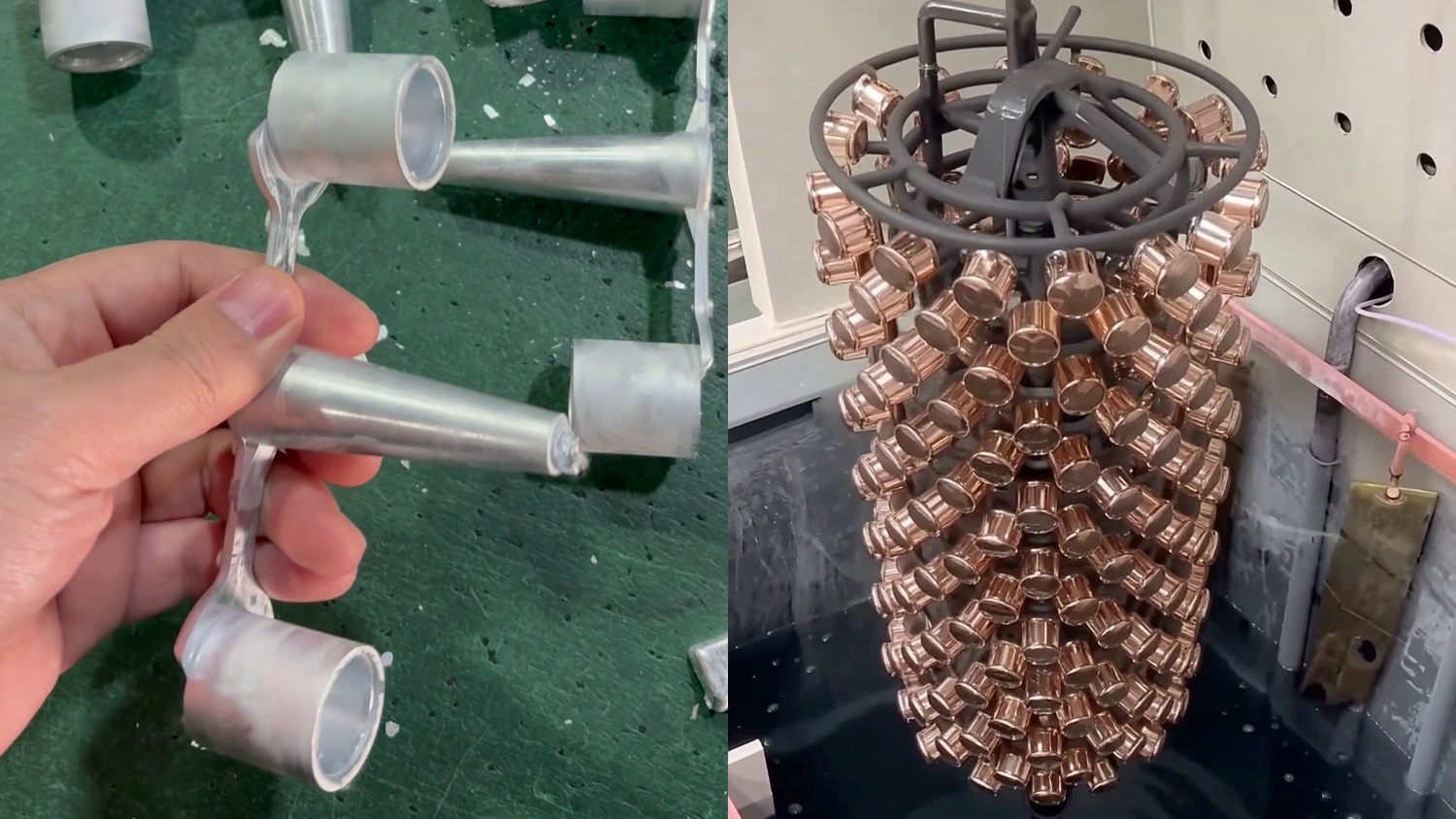
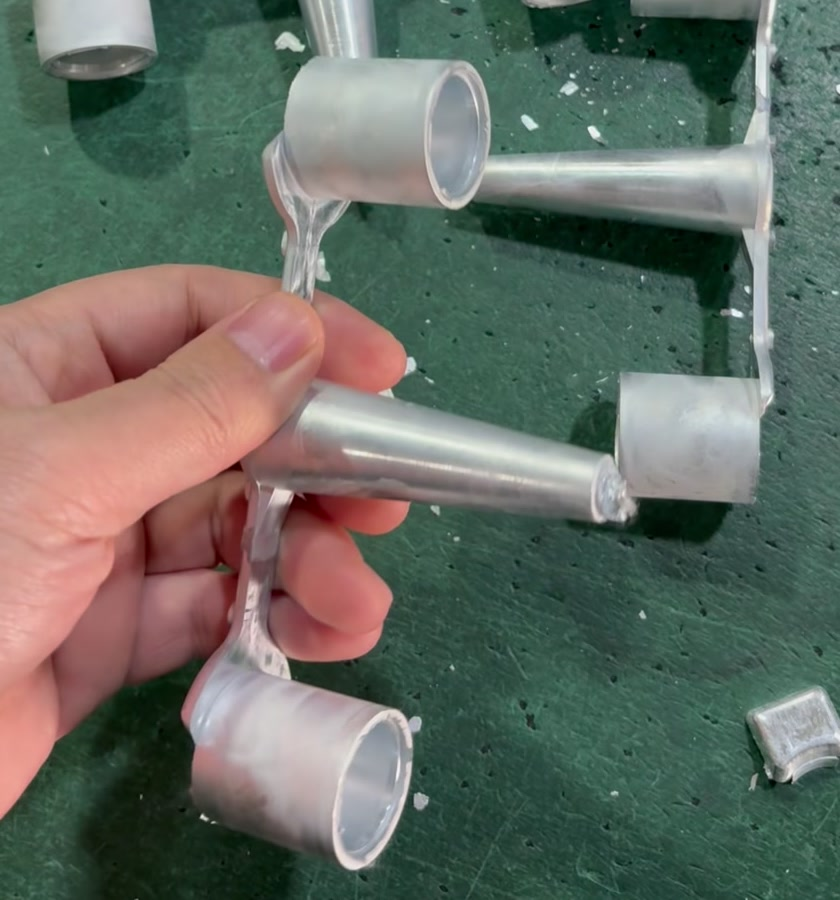
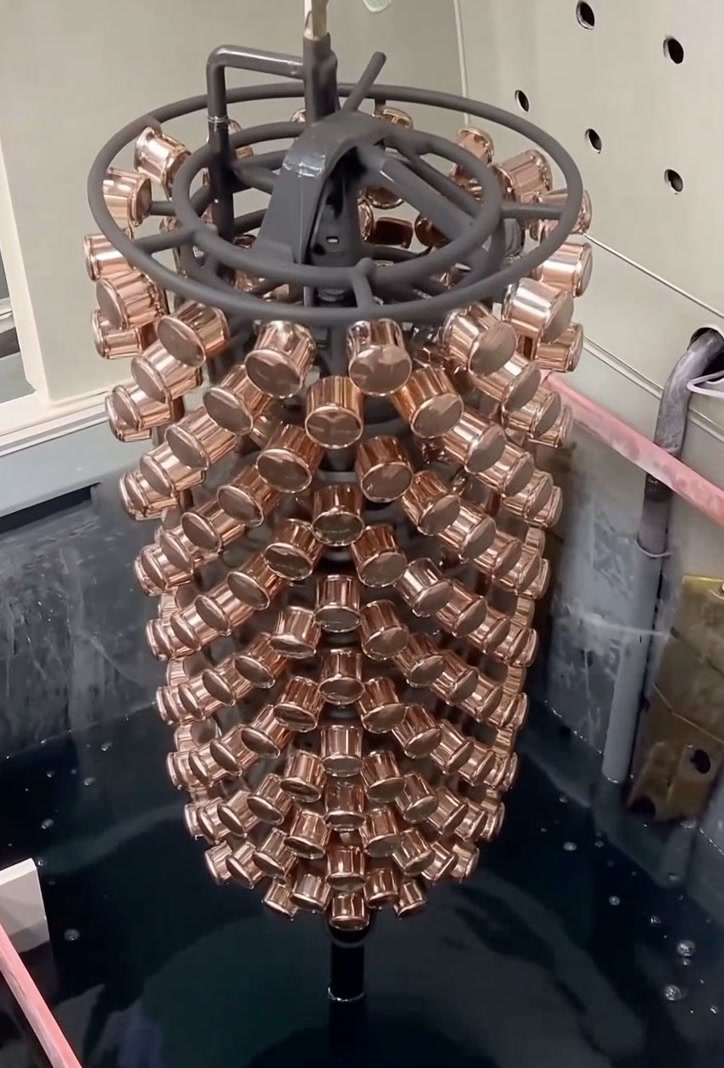
Left: raw zinc alloy cap castings. Right: cap shells on an electroplating rack.
How does a die-cast aluminum perfume cap go from a raw casting to the finish you have in mind? If you are considering anodizing, knowing what the cap goes through helps you decide what to look for when you get the samples.
We’ll start with the aluminum alloy, then look at how the oxide layer grows in the bath and when color is added. We’ll also look at documented examples of gray finishes, flow marks and uneven color to see where to start investigating.
What Alloy Is Used for Die-Cast Aluminum Perfume Caps?
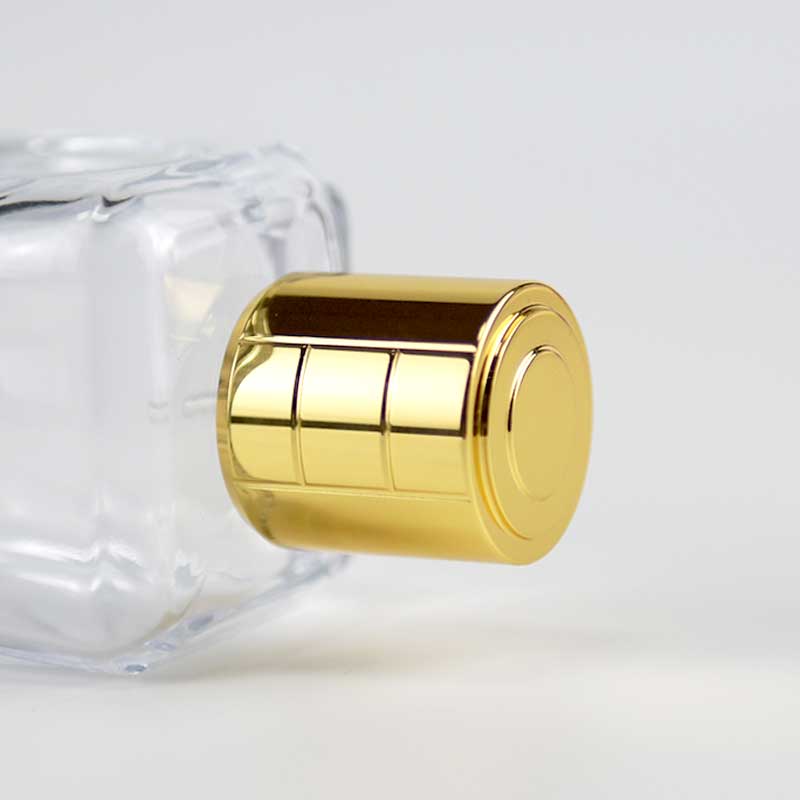
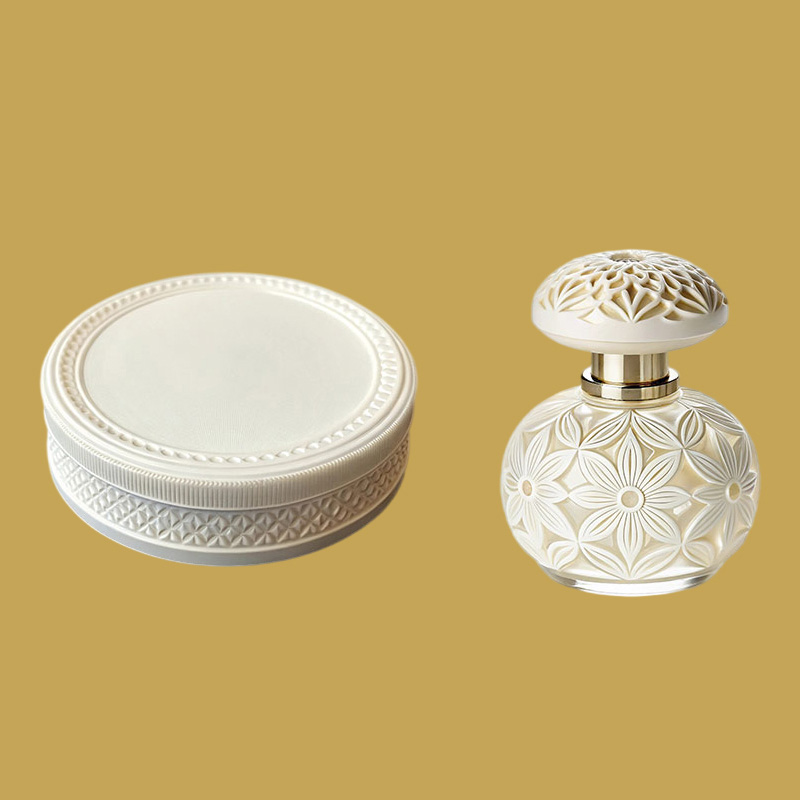
Turn over a cap with a plastic insert and you can see two parts. The metal shell is die-cast, and the plastic insert fits over the top of the bottle. Anodizing treats the aluminum shell. The insert is installed after surface finishing.
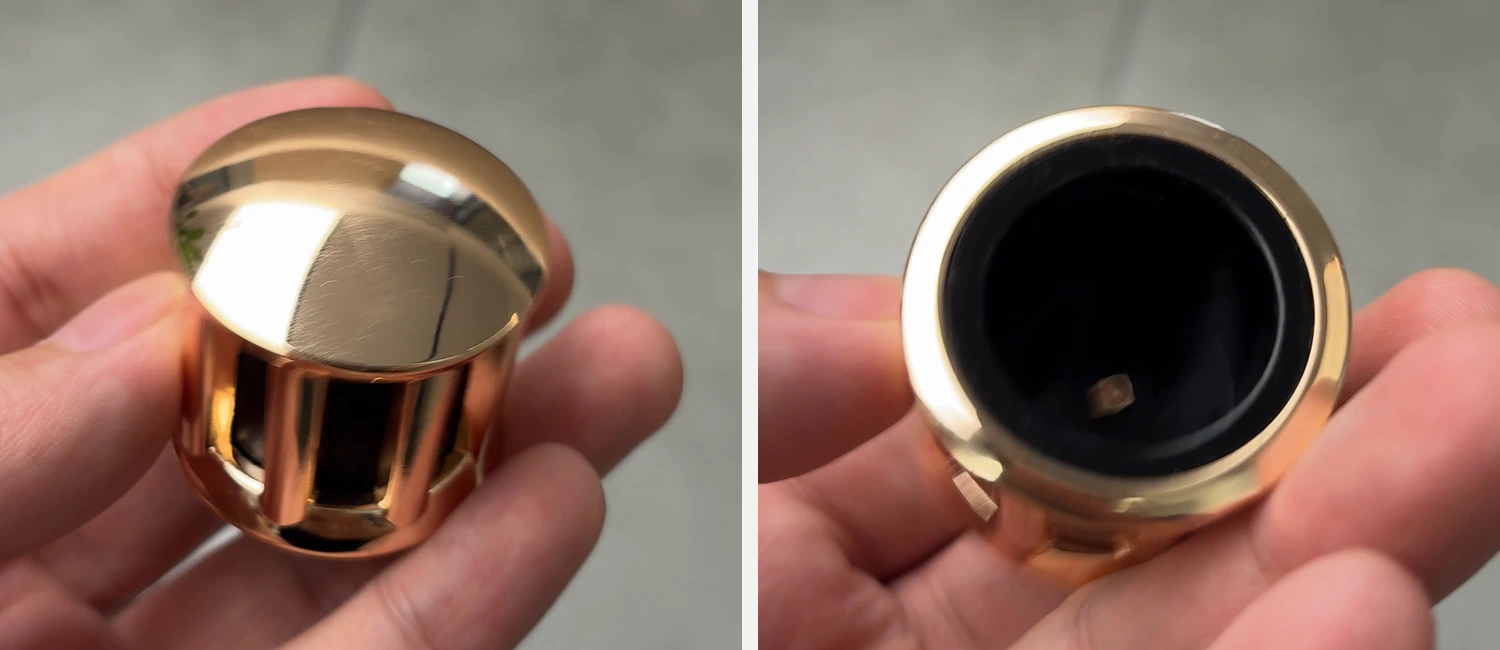
This example shows a zinc alloy perfume cap. The left image shows the metal shell, and the right image looks inside through the opening.
In die casting, molten aluminum alloy fills a mold under pressure. It cools to form the top, sidewalls and interior of the cap. Aluminum is the main constituent. Wbmetal lists ADC12 on its Custom Perfume Caps page. Compared with A380, another die-casting alloy, ADC12 has different silicon and copper ranges.
| Die-casting alloy | Silicon by mass | Copper by mass |
|---|---|---|
| A380 | 7.5%–9.5% | 3.0%–4.0% |
| ADC12 | 9.6%–12.0% | 1.5%–3.5% |
The ranges come from the North American Die Casting Association’s alloy data. Check the material record for the alloy used in a specific sample. Silicon improves the flow of the melt and helps it fill the mold cavity. During anodizing, silicon particles and the surrounding aluminum react differently. Published tests show that ADC12 can form an anodic oxide layer. To see whether it gives a uniform decorative finish on a particular cap, check a sample of the actual casting.
How Does the Oxide Layer Form on the Cap?
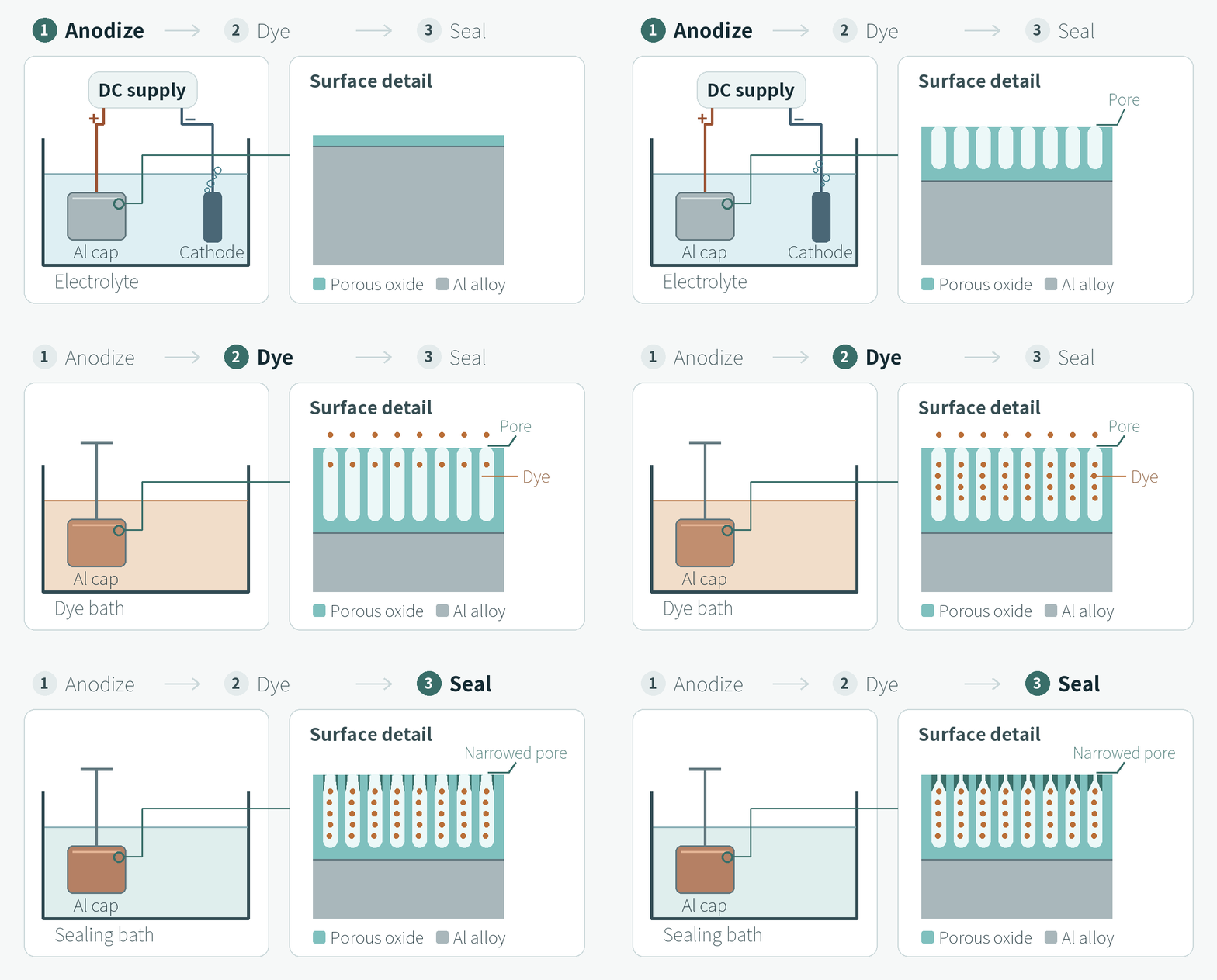
A conductive rack connects the aluminum cap to the positive terminal of a DC power supply. In the electrolyte, the cap is the anode. When current flows, aluminum at the surface loses electrons and reacts with oxygen-containing species from the electrolyte to form aluminum oxide. The oxide layer grows at the cap surface.
In conventional sulfuric acid anodizing, the oxide layer contains microscopic pores. A compact barrier layer separates the bottom of the pores from the metal. If a color is needed, dye enters the pores. During hot-water sealing, for example, the oxide near the pore walls hydrates and narrows the openings, helping retain the color.
What Are the Steps from Pretreatment to Sealing?
Finish the raw casting. Remove the gates and flash, then polish or blast the cap to achieve the required surface finish.

The metal branches between these zinc alloy cap shells are the casting runners. They are still attached after ejection and are removed during finishing.
Degrease and pretreat the shell. Remove oils and surface residues. Choose the cleaning process based on the alloy and surface condition so the shell enters the anodizing bath clean and uniform.
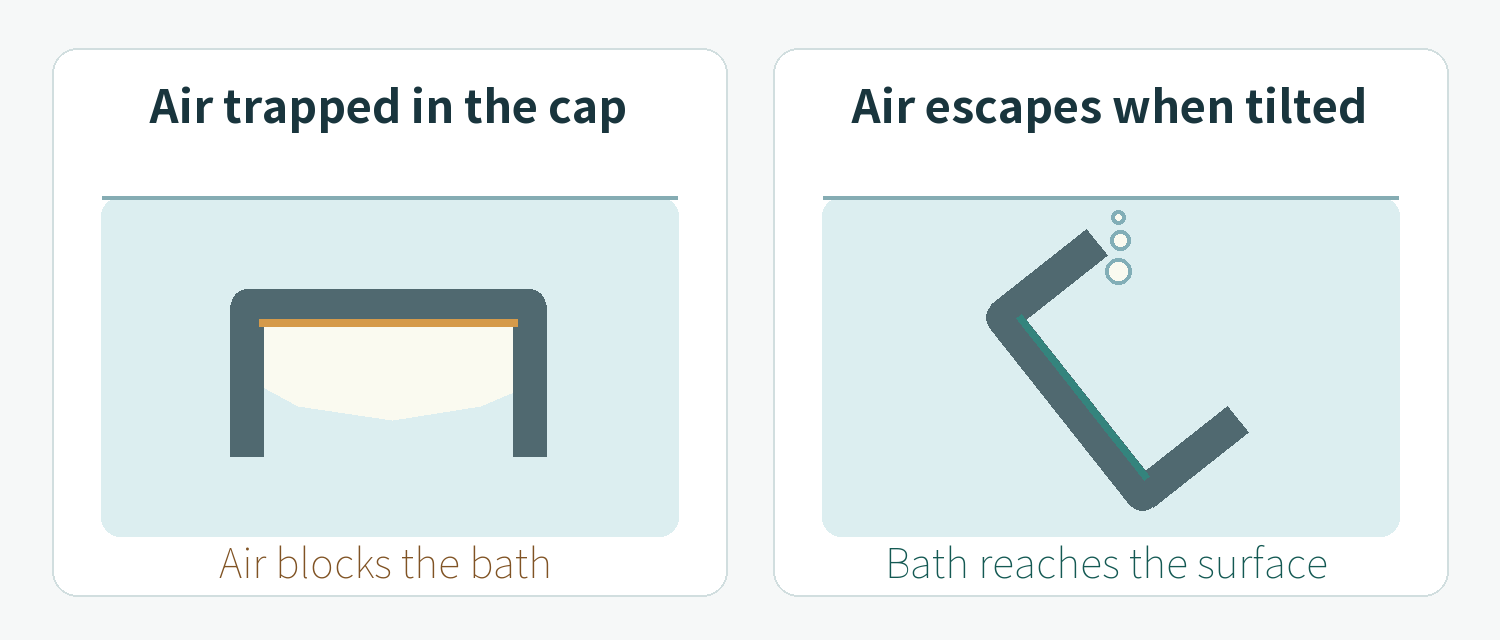
Rack the cap and anodize it. Choose the contact point and orient the opening so gas bubbles can escape. Immerse the cap shell and apply current to form an oxide layer on exposed surfaces.

This electroplating photo shows how cap shells can be arranged in tiers. For aluminum cap anodizing, the contact point and orientation depend on the shell geometry and how gas can escape.
Dye if needed. If a color is required, dye enters the pores. A Pantone reference can communicate the target color. Confirm the finish on a physical sample made from the same material with the same surface preparation.
Seal, rinse and dry. Seal the anodic layer, then inspect the cap top and sidewalls before assembly.
Rinses between wet process steps limit the carryover of chemicals from one bath to the next.
Common Appearance Problems After Anodizing
An overall gray finish. The Aluminum Anodizers Council notes that regions with higher silicon content are harder to anodize uniformly and can look dark or gray. If the entire cap looks gray, check the alloy first, then see whether the anodized sample was already dark before dyeing.
More visible casting flow marks. The North American Die Casting Association’s design guidance notes that anodizing can make existing casting flow marks easier to see. If a streak resembles a path of flowing water, compare the same area on an unfinished casting from the same batch.
Uneven color in one area. The QUALANOD defect guide documents cases where gas becomes trapped underneath a part. Bubbles that prevent bath contact during anodizing can leave a thinner oxide layer. Bubbles during dyeing can also cause color patches. If marks concentrate inside the cap or along one side of the opening, check how it was oriented and whether bubbles could escape.
Summary
Anodizing forms an oxide layer on a die-cast aluminum cap. Its color and appearance depend on the alloy, the casting surface and subsequent processing. When evaluating samples, keep one unfinished casting from the same batch and one anodized but undyed cap. They make it easier to see when flow marks or spots first appeared.
For die-cast alloys such as ADC12, which can have a dark base color after anodizing, black is a practical color to trial when the design calls for a dark finish. Use actual aluminum cap samples to check whether the color is even.