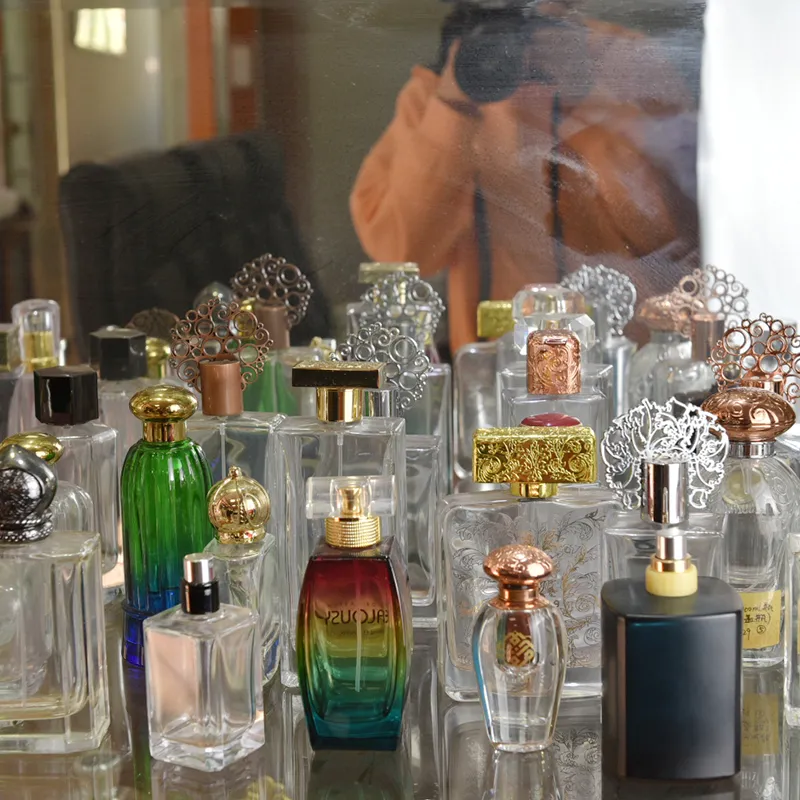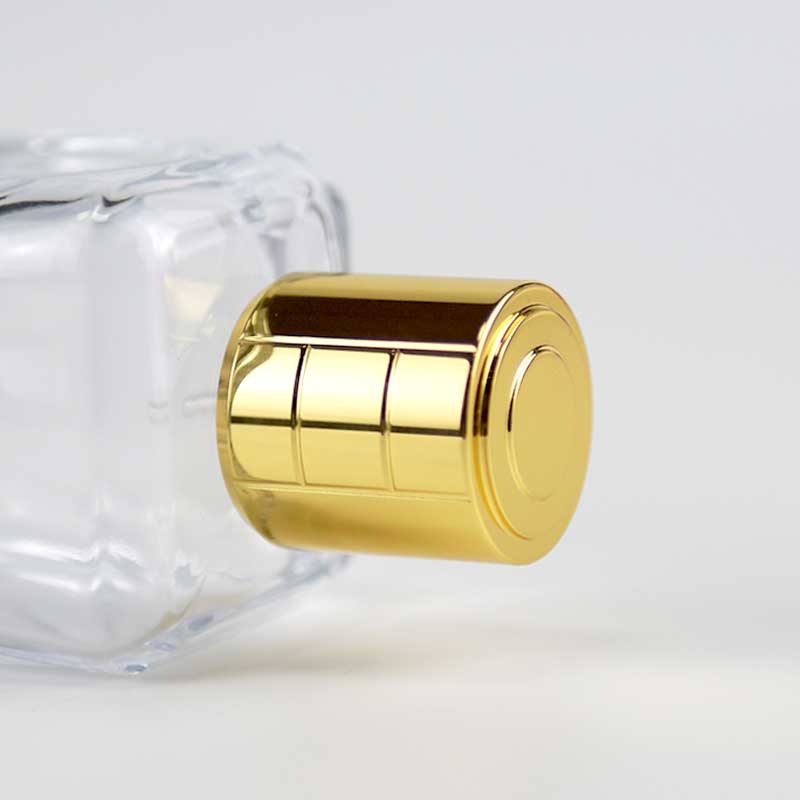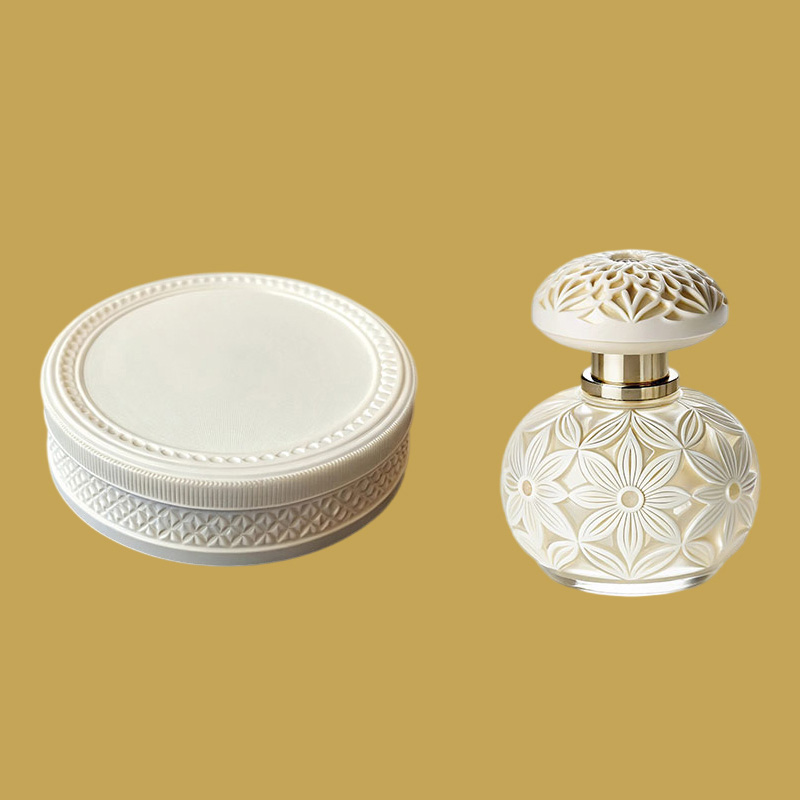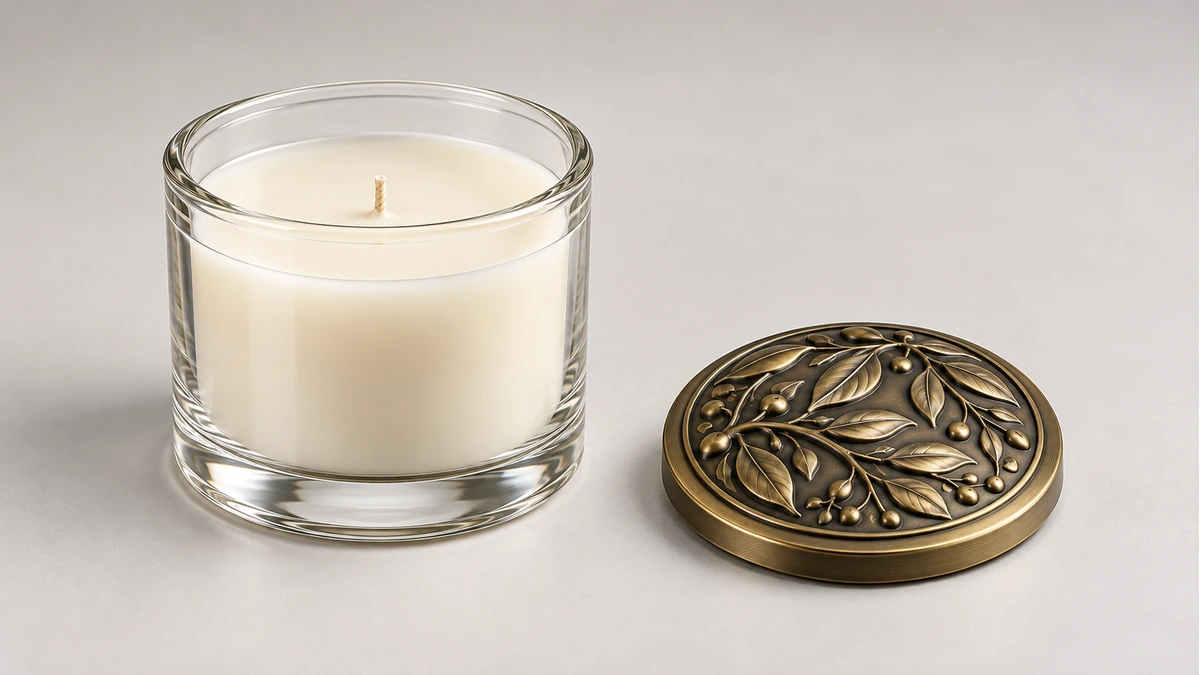
Image: The glass jar is the established container base, while the metal lid can become the visual entry point for the complete candle product. Sealing performance still depends on the actual jar rim and testing.
The capacity, opening diameter, and filling process of a glass jar are often already fixed. When a brand wants to make the same jar look different, the lid is typically the easiest place to start. A gift set needs visual weight, a seasonal line needs instant recognition, and a jar entering hotel, home-fragrance, or wedding-gifting channels needs a clear selling point. The metal lid does more than cover the jar. It is also the component that can be redesigned around the product line.
That is why buyers should not start with “How expensive is the tooling?” They should first define what value the lid must add for which customer and sales setting. Wbmetal can develop the lid shape, relief details, colors, and internal locating structure in the same round of work, then use the customer’s actual glass jar for sampling, trial fitting, and verification.
A Standard Glass Jar Does Not Mean a Standard Finished Product
Standard glass jars offer practical advantages: stable supply, predictable capacity planning, and mature filling and packaging processes. For candle manufacturers, glass-jar suppliers, fragrance brands, and gift-box buyers, reusing an established jar is usually easier to control than developing a new glass container for every product line.
But when many brands use similar jars, the first impression can easily become interchangeable. The lid is typically the module that can be redesigned to separate one product from another. One base jar can support several product routes:
| Product route | What the lid can contribute | Typical B2B setting |
|---|---|---|
| Gift sets and premium fragrance | Solid hand feel, relief branding, metallic finish, and coordination with other metal parts in the box | Holiday gift sets, hotel fragrance, brand collaborations |
| Home and refill lines | Quiet colors, resistance to daily handling, consistent opening feel, and continued container use | Home fragrance, membership refills, and refill systems |
| Seasonal and limited editions: | Seasonal symbols, botanical patterns, animal or architectural outlines, and limited colors | Christmas, weddings, regional themes, and collaborations |
| Men’s or functional fragrance | Dark tones, brushed finishes, gunmetal colors, geometric lines, and restrained logos | Men’s care, office spaces, and automotive fragrance |
| Multi-market collections | Changing colors, wording, or local patterns within the same decorative logic | New launches for different countries, channels, and audiences |
Here, “standard” describes the glass jar as a base condition. It does not mean the lid must be an anonymous flat cover. Once the jar interface is stable, the lid top, sidewall, texture, color, and selected structural details can be reorganized into a “same jar, different product line” system.
What Selling Points Can a Zinc Alloy Die-Cast Lid Deliver?
For product development, the value of a die-cast lid appears in four areas:
- Stronger visual recognition. The lid top can carry a wordmark, emblem, botanical pattern, architectural outline, or series number. The sidewall can use knurling, a tooth-like ring, shallow relief, or segmented colors. Buyers notice the lid’s outline and reflections before they see the wax color inside the jar.
- Weight and opening feel can support the product position. A solid lid, rounded edges, and surface finish change the feel of picking up, opening, and closing the product. This suits gift sets, display-led products, and unboxing experiences, but it does not mean every budget candle needs a heavy lid.
- One shape can support several finish levels. Polishing, electroplating, PVD, spray coating, matte finishes, brushing, antiquing, and selective color can all be compared on the same shape. Large mirror-like surfaces require extra attention to waviness and fingerprints. A slight curve, relief, or matte finish is often easier to maintain.
- The exterior and the internal structure can be developed in one die-cast part. An internal annular shoulder can locate the lid, while the exterior decoration does not need a separate plastic or metal trim piece. Silicone gaskets, liners, and other elastic parts usually provide the actual fragrance retention or airtight seal. A metal shoulder is not automatically a seal.
A die-cast zinc alloy blank will not come out of the mold with a mirror finish. It normally goes through deburring and rough polishing, then vibratory finishing with abrasive media, before electroplating or spray coating. When reviewing samples, check two questions separately: Was the shape made correctly, and can the surface finish be reproduced consistently?
Wbmetal’s existing zinc alloy die-casting experience in perfume caps and metal packaging allows the exterior decoration and internal locating structure to be developed as one metal part. A candle lid still has to be sampled against the customer’s actual glass jar rim, with fit and sealing tests carried out against the agreed requirements.
Creative Lid Directions for Different Buyers and Sales Settings
Do not start with “make the pattern more beautiful.” A B2B brief should first answer three questions: Who will buy it? Where will it be displayed? Why would the customer pay more? The lid’s shape, color, and opening action should support those answers.
Gift Sets and Premium Fragrance: Build the First Impression
These products depend heavily on display and unboxing. The lid top can use initials, a crest, an architectural line drawing, or a low-relief pattern. Its color can match the gift-box hardware, bottle plaque, or inner tray frame. A solid zinc alloy profile and metallic finish can create a substantial hand feel, but fingerprints, cleaning, and cosmetic defect limits on large mirror surfaces should be agreed in advance.
Hotels, Spas, and Home Spaces: Prioritize Easy Maintenance
Products in public spaces are touched repeatedly, so the lid must look good beyond the product photo. Matte black, gunmetal, satin, fine brushing, or low-contrast relief often maintains a steadier appearance than a full mirror finish. Include the cleaning method, handling frequency, and whether the inner fill will be replenished or replaced in the sample acceptance conditions.
Seasonal, Wedding, and Regional Themes: Create New Collections on One Jar
The glass jar can stay the same while the lid top and sidewall carry a new theme for a new SKU. Botanical motifs, stars and moons, architecture, seasonal symbols, or wedding dates can be expressed through relief, engraving, selective color, and texture. Confirm the draft angle, texture depth, definition, and post-processing limits before the tooling is completed. Otherwise, fine lines may disappear during polishing.
Reusable Containers and Refills: Design for Long-Term Use
If a brand wants customers to keep the glass jar, the lid’s durability and opening feel will affect the refill experience. The goal is not to make the lid as heavy as possible, but to make the lid, liner, jar rim, cleaning method, and refill action work together. A friction-fit silicone liner should not be treated as a handle. Whether the lid can be lifted by the liner and whether threads or another retaining feature is needed must be decided during product definition.
Structural Selling Points Start with the Glass Jar Rim
Even a distinctive lid must ultimately fit the jar rim. A lid that sits steadily is not necessarily airtight, and metal does not automatically compensate for variation in a glass opening.
An annular step near the jar rim inside the lid can set the landing position, limit the pressing depth, and prevent the lid from sitting crooked. This locating feature is commonly called a shoulder, and a lid built around it is often called a stepped lid. The actual seal and fragrance retention normally come from a silicone gasket or liner, which must be compressed at a defined contact area. Jar openings can vary in diameter, roundness, and local height between suppliers and batches. A rigid metal shoulder cannot replace an elastic part that absorbs all of that variation.
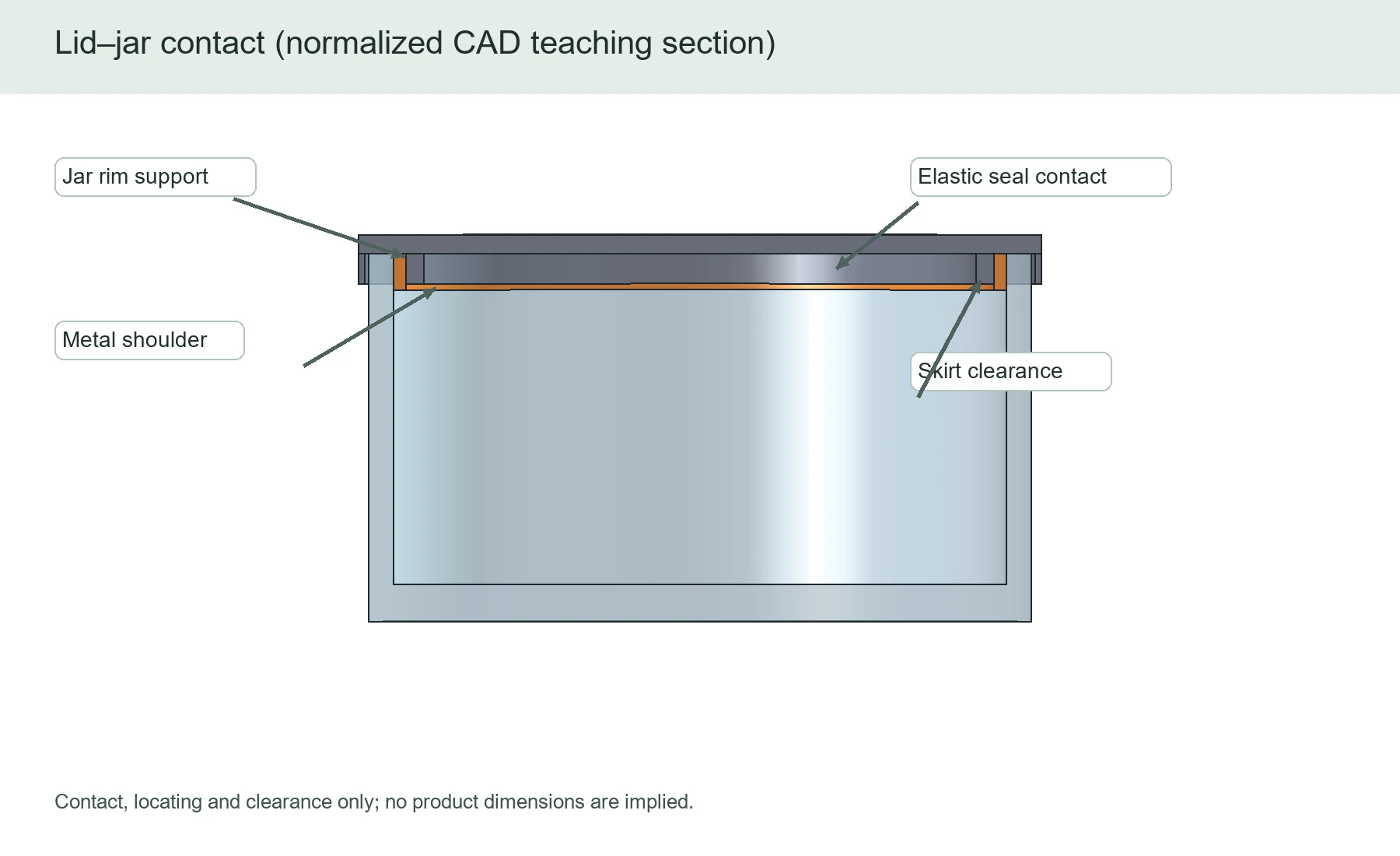
Image: This CAD teaching section separates support, locating, and elastic contact functions. It is not a direct design dimension for a specific candle jar.
In practice, three non-threaded fit arrangements are common. A flat lid uses a silicone part inside the lid to contact the inner wall of the jar. A stepped lid rests its edge on the top of the rim and uses an elastic part at another contact point. A plug-fit lid sends the elastic part down into the jar opening. The right choice is determined by the stable contact surfaces available on the glass jar, not by the words “zinc alloy” alone.
One publicly listed three-wick flat lid, for example, specifies a 105 mm lid diameter, an 88 mm silicone-ring inner diameter, and a 6.7 mm ring width. These figures describe the lid and cannot determine the compression on a particular jar because the matching jar’s measured inner diameter is not provided. B2B sampling must use the actual glass jar the customer plans to buy. Do not use a nominal drawing diameter to predict assembly results for an entire batch.
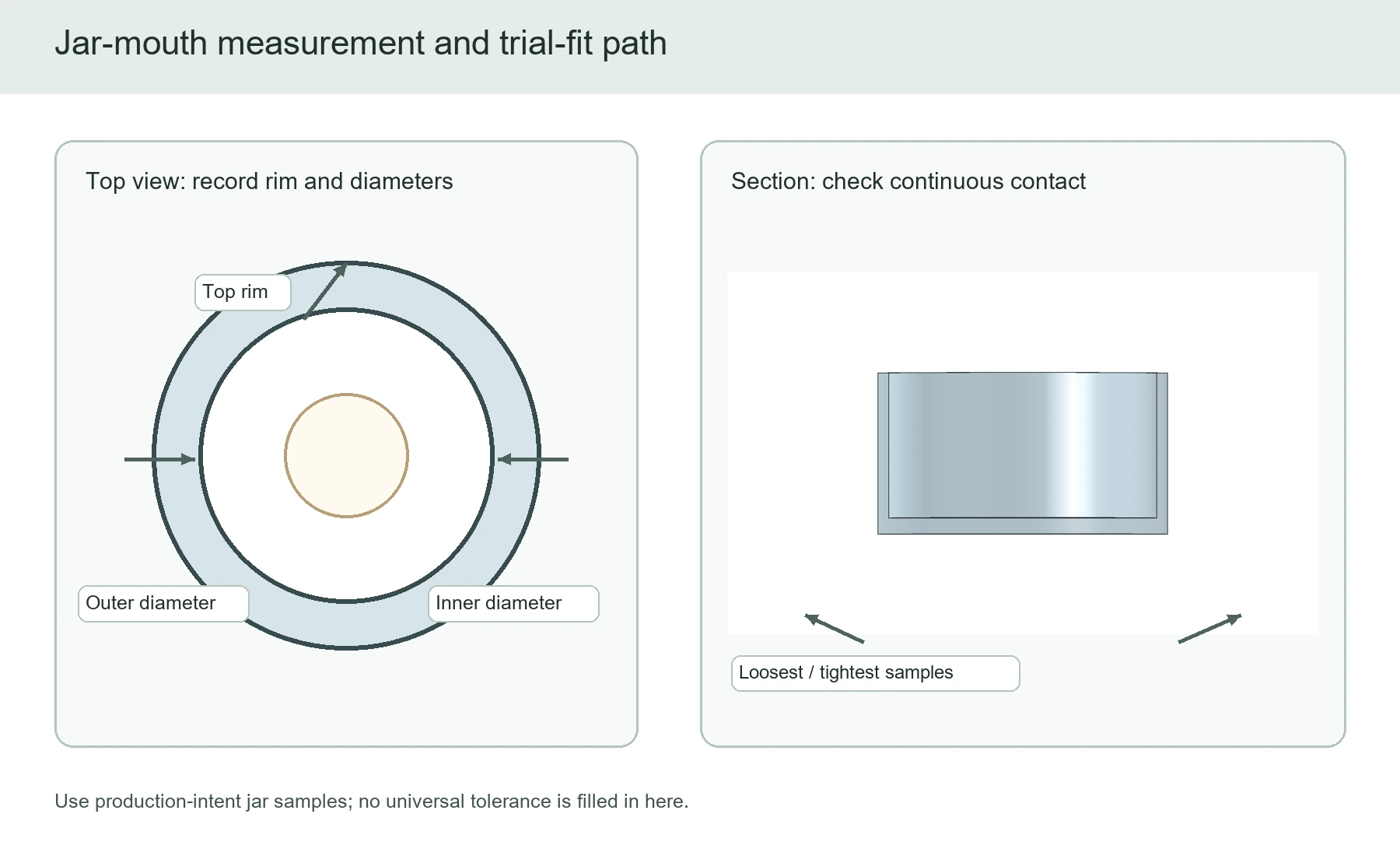
Image: The measurement view shows where to measure and what to compare. The loosest and tightest samples must come from the glass jars intended for production.
How to Turn a Creative Lid into a Quote-Ready B2B Project
When a customer says “make it more premium,” “create a seasonal edition,” or “give the lid more weight,” the factory has to turn those requests into requirements that can be drawn, sampled, and quoted. In practice, four steps keep the project on track.
Step 1: Define the Jar and Sales Setting
Confirm the glass-jar supplier, model, opening diameter, physical samples, and expected volume. Then state who will buy the product, where it will be displayed, whether it belongs in a gift set, and whether refilling or repeated use is required. Without this information, a creative lid can become a decorative part that only works in a rendering.
Step 2: Put the creative brief into Four Tables
At minimum, separate the brief into exterior profile, decorative pattern, surface finish, and internal fit. The exterior profile affects the die-casting tool and draft direction. The pattern determines whether relief, engraving, knurling, or secondary machining is needed. The finish determines color, gloss, fingerprint resistance, and cleaning requirements. The internal fit defines how the shoulder, guide section, silicone gasket, or liner will be locate.
Step 3: Let the Sample Pass Fit Checks before Discussing Mass-Production Cost
Do not review a sample only for whether the top pattern looks good. Check whether the lid seats fully, whether it rocks, whether the opening feel is consistent, and whether the silicone part is rolled or damaged. Test both the loosest and tightest jar samples. If one end rocks or the other will not fit, adjust the contact position, elastic-part section, or fit dimensions before the next sample round.
Step 4: Compare Quotes on the Same Terms
Do not compare an off-the-shelf thin stamped lid with a thick custom zinc alloy die-cast lid by unit price alone. Put the lid type, components, order volume, finish, packaging, freight, and acceptance standard in the same table. List tooling, tooling changes, and the tooling share assigned to the current batch separately.
The following is only a calculation example. If one set of die-casting tooling costs USD 5,000, a first order of 1,000 pieces carries USD 5 of tooling allocation per piece. After cumulative repeat orders reach 10,000 pieces, the tooling allocation drops to USD 0.50 per piece. This is not an actual quote for any specific lid and excludes the unit price and other components.
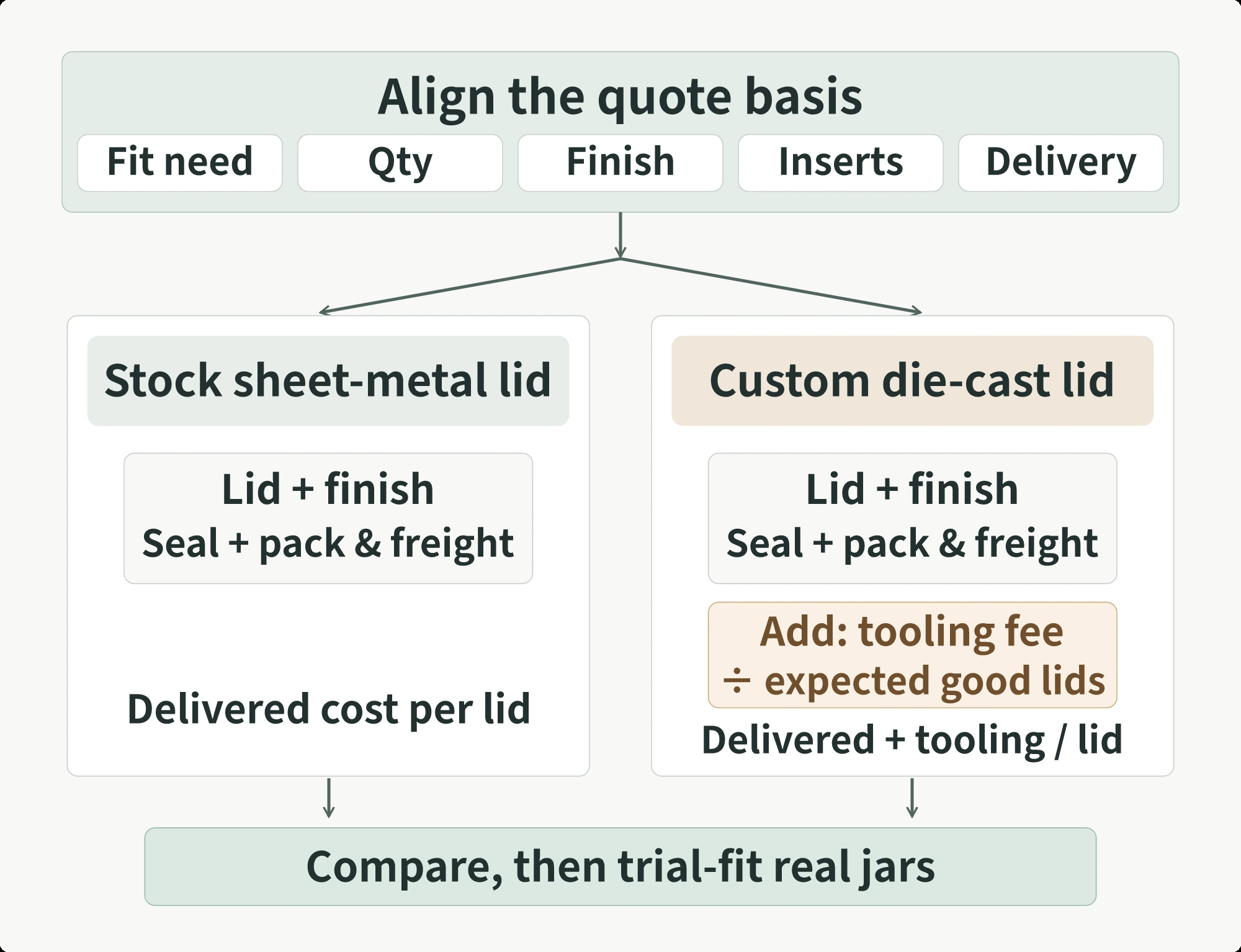
Image: Lock down the product position, physical jar, and delivery conditions before comparing stock and custom routes. Tooling allocation is only one part of the quote.
For this type of project, Wbmetal can continue from drawings or samples. The process can cover die-casting feasibility, tooling, die casting, CNC machining, polishing, surface finishing, and assembly, followed by a fit check with the jar sample. Current factory processes include design, tooling, die casting, CNC machining, polishing, assembly, electroplating, oxidation, spray coating, and PVD. The applicable process, minimum order quantity, lead time, and inspection items still need to be confirmed against the project drawings, samples, and quotation.
How Should a B2B Buyer Judge Whether the Lid Has a Marketable Selling Point?
For the first project review, ask four questions:
- Who is the lid for: gift buyers, home-fragrance users, hotel spaces, seasonal shoppers, or long-term refill and reuse customers?
- What value does it add: stronger brand recognition, a better gift-box appearance, a more substantial opening experience, or a family of designs that can be extended?
- Have the jar and lid passed a physical trial fit, with the shoulder, elastic part, and jar contact area clearly identified?
- Can the expected volume, number of jar sizes, and surface finish together carry the tooling and finishing cost?
If these four points are clear, a zinc alloy die-cast lid can become a product identifier, a gift-set selling point, and a platform for a collection rather than simply “a more expensive lid.” If the only goal is to add a metallic color to a standard candle and there is no defined audience, shape difference, or use setting, an off-the-shelf stamped lid is often the better choice. If the brand wants several themes, markets, or premium gifting routes on the same glass jar, a creative die-cast lid is worth putting into the product plan.
Before tooling starts, put the target audience, glass jar, lid structure, surface finish, and expected volume into one development brief. Define whose buying reason the lid is meant to strengthen, then use zinc alloy die casting to turn that reason into a stable, quote-ready product that fits the actual jar rim.