Solid perfume packaging instantly signals quality. In today’s market, packaging defines brand identity and value. Metal materials—such as stamped tinplate and die-cast zinc alloy—are now preferred choices for premium balm cases due to their feel, protection, and sustainability.
Tinplate and zinc alloy offer different textures, processes, costs, production scales, and market fits. Zinc alloy adds heft and enables intricate designs. Tinplate lowers costs and exploits a well-established supply chain. Your material choice defines your brand positioning and competitiveness. The Seebon Hardware team explains key selection factors in this guide.
Key Compositional Elements: Tinplate vs. Zinc Alloy
Tinplate
- Base Material: Primarily Fe (Iron) (>99%); low-carbon steel determines strength and formability.
- Coating: Sn (Tin) coating purity ≥99.9%, thickness approx. 0.5–2.8μm, providing corrosion resistance.
- Key Control Elements: C≤0.10%, Mn≤0.45%, Si≤0.03%, P≤0.025%, S≤0.025%.
- Migration Limits: Pb≤0.01mg/L, Cd≤0.005mg/L (GB 4806.9-2023), Hexavalent Chromium ≤0.1mg/L (RoHS).
Zinc Alloy Zamak 3
- Matrix: Zn approx. 95.5%–96.5%.
- Core Strengthening: Al 3.5%–4.3%, Mg 0.03%–0.08%.
- Impurity Control: Cu≤0.10%, Fe≤0.075%.
- Environmental Impurities: Pb≤0.004%, Cd≤0.003%, Sn≤0.001%.
Tinplate vs. Zamak 3: Performance and Process Adaptation Comparison
| Dimension | Tinplate (Stamping/Drawing) | Zinc Alloy Zamak 3 (Die Casting) | Difference Explanation |
|---|---|---|---|
| Hardness (HB) | T4: 85–95; T5: 100–110 (Adjustable via heat treatment) | 80–95 (Stable in as-cast state) | Tinplate is more flexible; Zamak 3 is stable and saves steps. |
| Strength (MPa) | Tensile 320–380 | ≥280 (Commonly 300–320) | Tinplate generally has higher overall strength. |
| Elongation | T4≥18%; T5≥12% | ≥10% (Commonly 10–15%) | Tinplate is more stable for deep cavities/high aspect ratio parts. |
| Corrosion Resistance | Relies on tin coating; coating damage requires painting/internal coating. | Moderate base resistance; improved by electroplating/spraying (must control porosity). | Both require internal coating assessment for balm formulas. |
| Forming Ability | Excels at thin walls and deep cavities; irregular shapes often need composite processes. | Excels at one-time molding of complex forms/textures; deep cavities are more difficult. | Complex appearance: Die casting wins; Thin/deep parts: Stamping wins. |
Manufacturing Process Flows
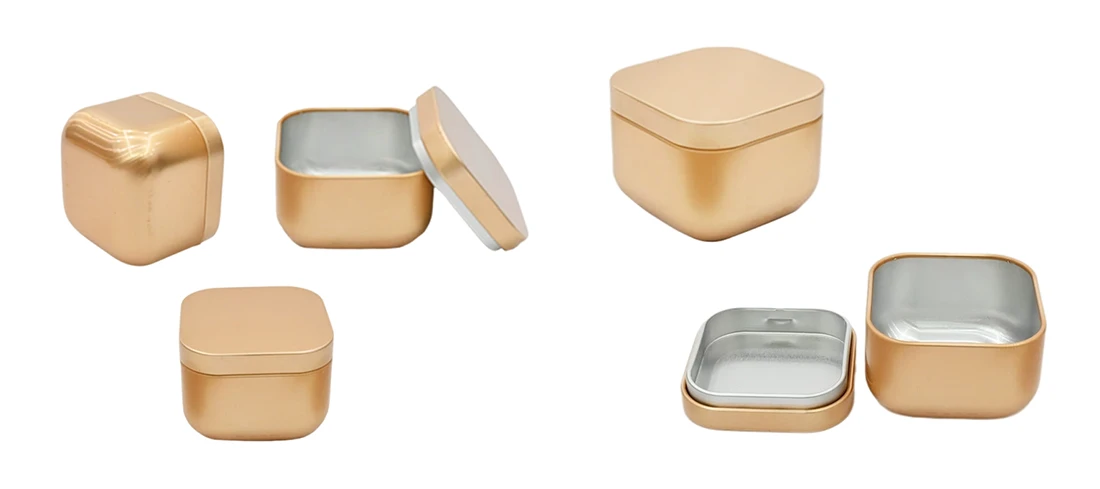
Tinplate (Stamping/Drawing)
- Cutting: Cutting sheets to size.
- Surface Treatment/Printing: Applied as needed.
- Stamping/Progressive Drawing: Shallow cases can be formed once; deep cases require multiple draws to prevent cracking.
- Joining: Assembly via welding or seaming.
- Trimming: Removing burrs and flash.
- QC: Dimensions, appearance, and joint strength.
Zinc Alloy Zamak 3 (Die Casting)
- Material Inspection & Proportioning: Prepare Zinc, Aluminum, and Magnesium; strictly control impurities.
- Melting: Melting at 390–410°C with degassing treatment.
- Mold Preparation: Preheating to 150–200°C and spraying release agent.
- Die Casting: High-speed filling → Pressure holding → Mold opening and removal.
- Deburring: Removing gates, overflow wells, and flash.
- Surface Treatment: Electroplating, painting, polishing, etc.
- QC: Dimensional accuracy, surface quality, and mechanical properties.
Comparison: Tooling, Cost, and Lead Time
| Dimension | Stamping/Drawing | Die Casting | Difference Summary |
|---|---|---|---|
| Tooling Investment | Relatively low investment and short cycle; easy to modify but wears quickly. | Relatively high investment and long cycle; complex structure with long life. | Choose stamping for rapid iteration; choose die casting for long-term stable high-volume orders. |
| Unit Cost | Usually lower; significant advantage for massive batches. | Usually higher; drops quickly with scale; complex parts save assembly costs. | Small batches favor stamping; complicated structures + large batches favor die casting. |
| Manufacturing Difficulty | High requirements for the deep drawing process and operator experience. | High initial requirements for mold/venting/defect control; more stable later. | Stamping relies on experience; die casting relies on engineering and defect control. |
| Lead Time & Changeover | Fast mold changeover; suitable for high variety and small batches. | Slow changeover; suitable for single-product high-volume production. | Multi-SKU fast delivery: Stamping is more friendly. |
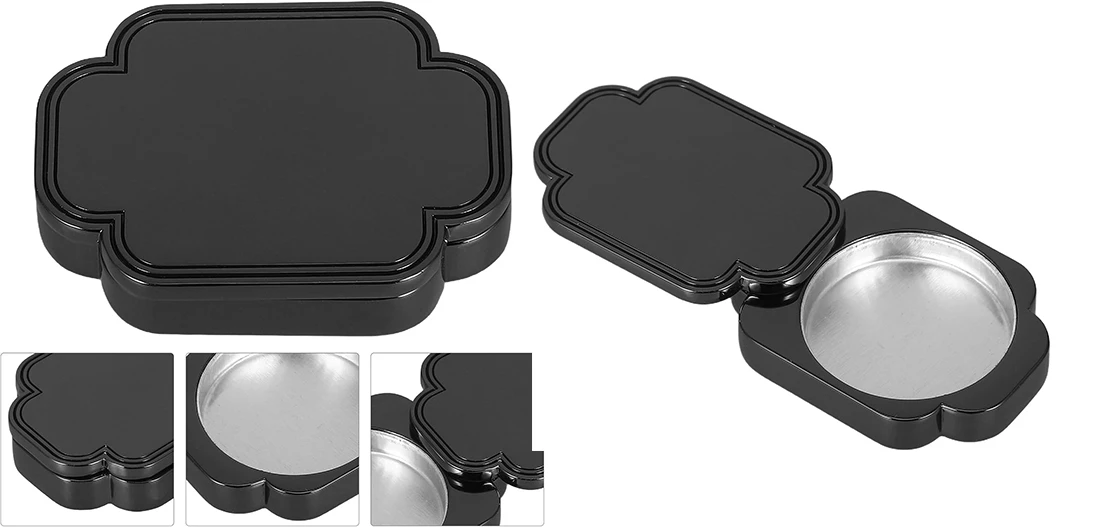
Zinc Alloy Die-Cast Balm Case Pros: Offers premium weight; enables fine molding and engraving; provides stronger sealing and impact resistance; delivers an outstanding tactile feel and opening ritual; permits diverse surface treatments with good batch consistency; remains recyclable. Cons: Demands a high material and tooling investment, making it less viable for small batches; adds weight, reducing portability and increasing shipping costs; shows sensitivity to plating or spraying defects, such as porosity; requires an internal coating to avoid odor or reaction risks; high thermal conductivity can soften the balm in hot environments.
Tinplate Stamped/Drawn Balm Case Pros: Creates a strong barrier and protection, which extends shelf life; allows efficient mass production; enables excellent print quality; adds rigidity that reduces transport damage; remains recyclable. Cons: Raises unit costs for small batches due to tooling and surface treatment; limits the extent and intricacy of shapes; requires an internal coating if formulas are sensitive or plating is damaged; develops fingerprints and scratches on the surface; prevents product transparency.
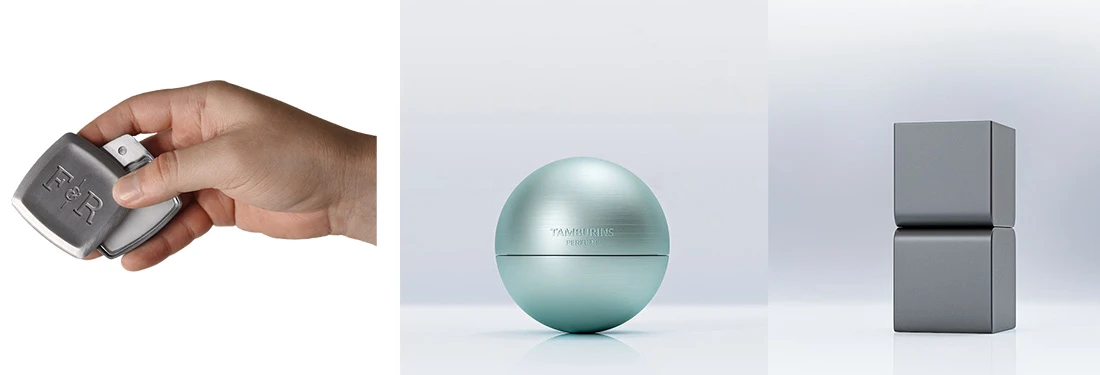
Choose die-cast zinc alloy cases when you want to create high-end, solid balm products that make a luxurious, premium impression. Select drawn stamping materials, such as tinplate or aluminum, for mid-range or mass-market applications. Regularly align your packaging material with the market segment you target for your balm product.
Among high-end solid balm products priced above $42.86, approximately 72% utilize the zinc alloy die-casting process, while only 28% use drawing and stamping. The weightiness, metallic luster, and refined surface treatment of zinc alloy fit better with the “luxury quality” perception of high-end consumers. Stamped products, due to their lightweight, thin texture, struggle to support premium positioning.
Zinc alloy die casting holds a distinct advantage in complex textures, fine engravings, 3D relief, and diverse surface finishes (e.g., electroplating, multi-color spraying). Stamping is limited by forming depth and process characteristics, bringing about visible disadvantages in design complexity and elaboration.
Top-tier luxury brands like Estée Lauder, Lancôme, and LVMH subsidiaries often use zinc alloy die-casting for their high-end balm lines. Popular mid-to-high-end brands also prefer zinc alloy for their premium lines, reserving stamped materials for promotional items or smaller trial sizes.
Core high-end markets like Europe and the US have a strong demand for die-cast zinc alloy balm cases. Although MOQ requirements are high, profit margins are 25-30% higher than stamped product lines. Stamped products primarily target the mass market or serve as promotional gifts, with limited profit margins.
68% of luxury buyers use the packaging’s feel and weight as a key basis for evaluating product quality. The weight and detail of zinc alloy better meet the expectations for high-end products.
Conclusion
Select tinplate or zinc alloy for balm cases based on your brand’s brand positioning, your target customers’ priorities, and your budget. Each material is optimal for a different product strategy, so base your decision on the recommendation that best aligns with your goals.
Brands positioned for high-end luxury, seeking ultimate texture and differentiated design with sufficient mass production budgets, ought to prioritize die-cast zinc alloy balm cases. Their heavy feel and fine craftsmanship meet high-end customer expectations and help build a premium brand image.
Brands targeting the mid-to-high-end mass market, focusing on cost-effectivBrands targeting the mid-to-high-end mass market, focusing on cost-effectiveness, safety compliance, or export needs, are better suited for stamped/drawn tinplate balm cases. Their protection, production efficiency, recyclability, and compliance advantages balance costs with market demand. Ultimately, brands have to weigh product formulation, design requirements, logistics, and strategy to make packaging a competitive asset. Which region is most suitable for sourcing solid balm case suppliers?
Prioritize industrial clusters in China, specifically the Pearl River Delta (Dongguan, Shenzhen) and the Yangtze River Delta (Ningbo, Suzhou). These areas offer mature supply chains, low logistics costs, and convenient communication for factory audits. For exports, choose suppliers near major ports. For cost control, you may compare inland suppliers in China, focusing on verifying their process and capacity stability.
2. What are the core factors to look for in a solid balm case supplier?
- Compliance: Food-contact grade qualifications, ISO9001 certification, and compliance with national/industry standards.
- Relevant Experience: A portfolio of balm cases or cosmetic metal packaging, with expertise in sealing and surface treatments.
- QC Capability: Full-process inspection with available testing reports.
- Capacity & Lead Time: Ability to match orders, backup lines, and willingness to sign lead-time agreements with penalties.
- Service: Proactive sampling and fast after-sales response.
3. How to quickly filter out traders and find real direct manufacturers?
- Request Factory Audits: Direct manufacturers in China can arrange workshop tours; traders often refuse.
- Ask Technical Details: Direct manufacturers offer clear technical answers, while traders are often vague.
- Verify Quote Breakdowns: Manufacturers can split costs; traders usually provide a bundled “all-in” price.
- Request Production Credentials: Manufacturers can directly provide licenses and ecological impact assessments.
4. How to successfully collaborate with a supplier without product drawings?
Explain to the supplier that the order is a firm project, providing estimated quantities and deadlines. State that you require design assistance and are willing to pay design fees. Send physical samples or visit the factory in China to discuss details in person with the project lead.