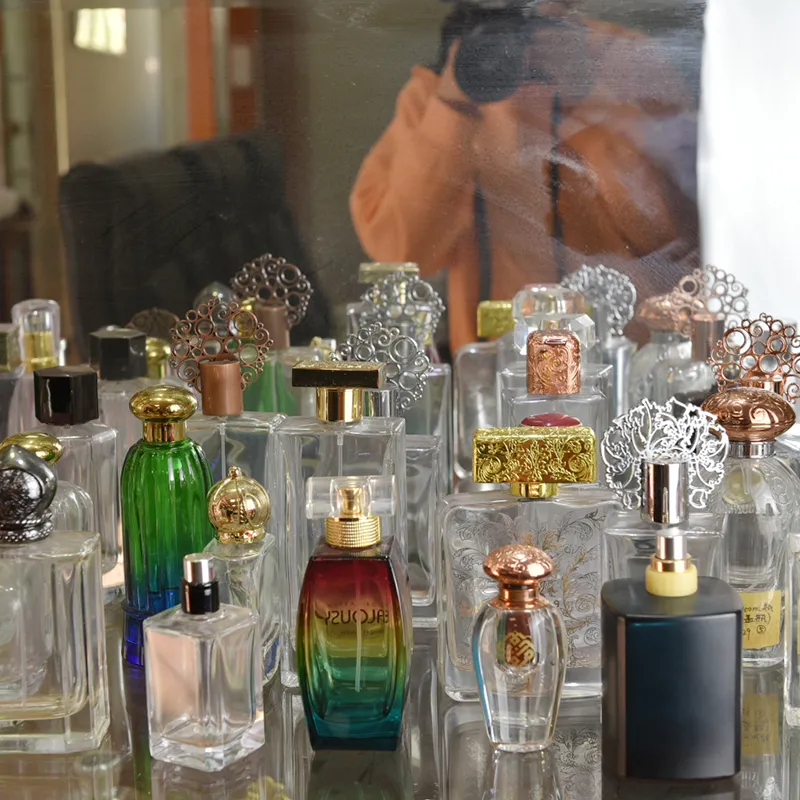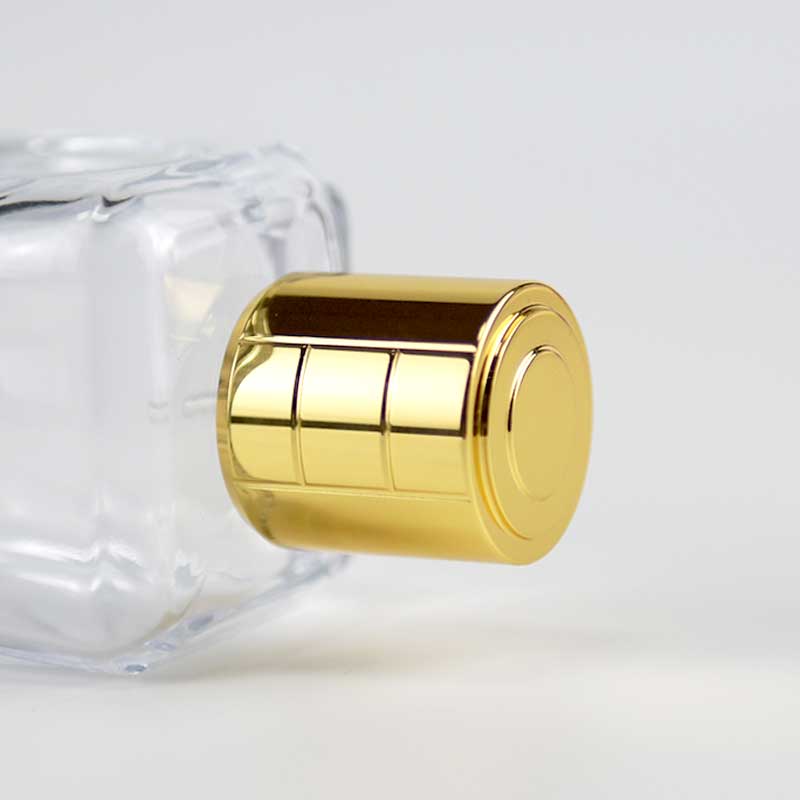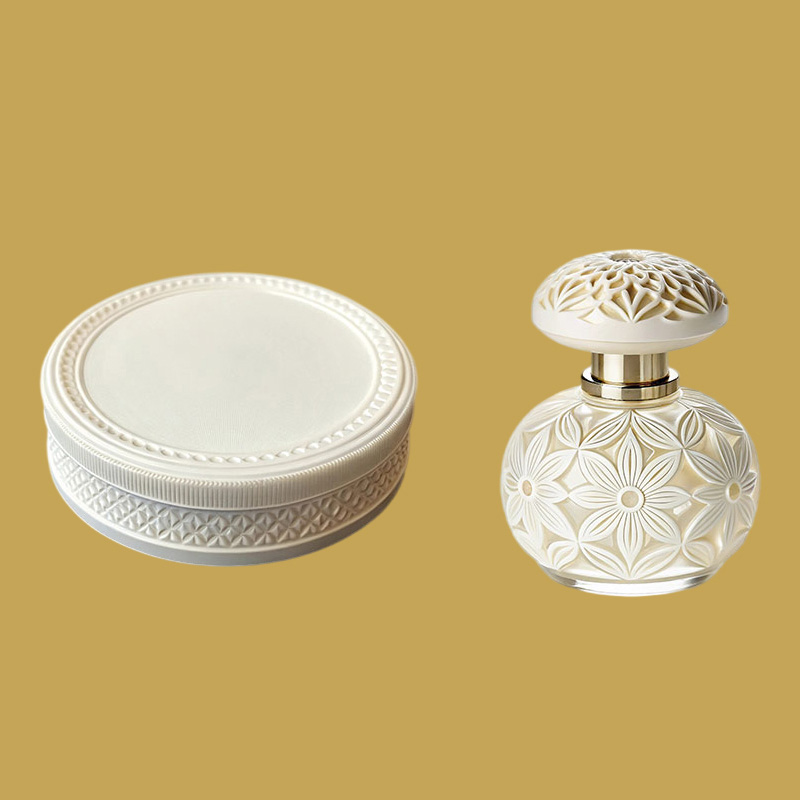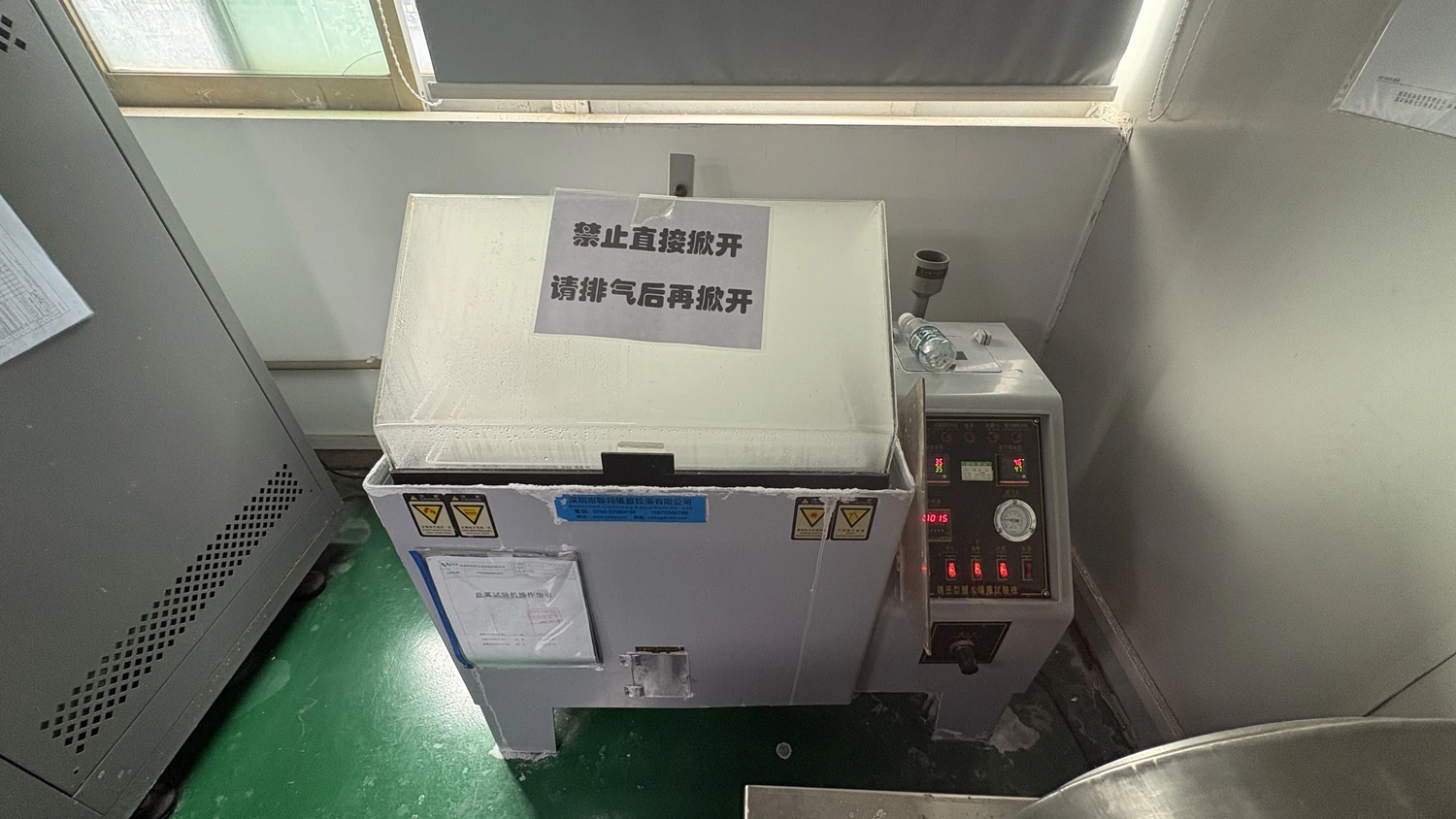
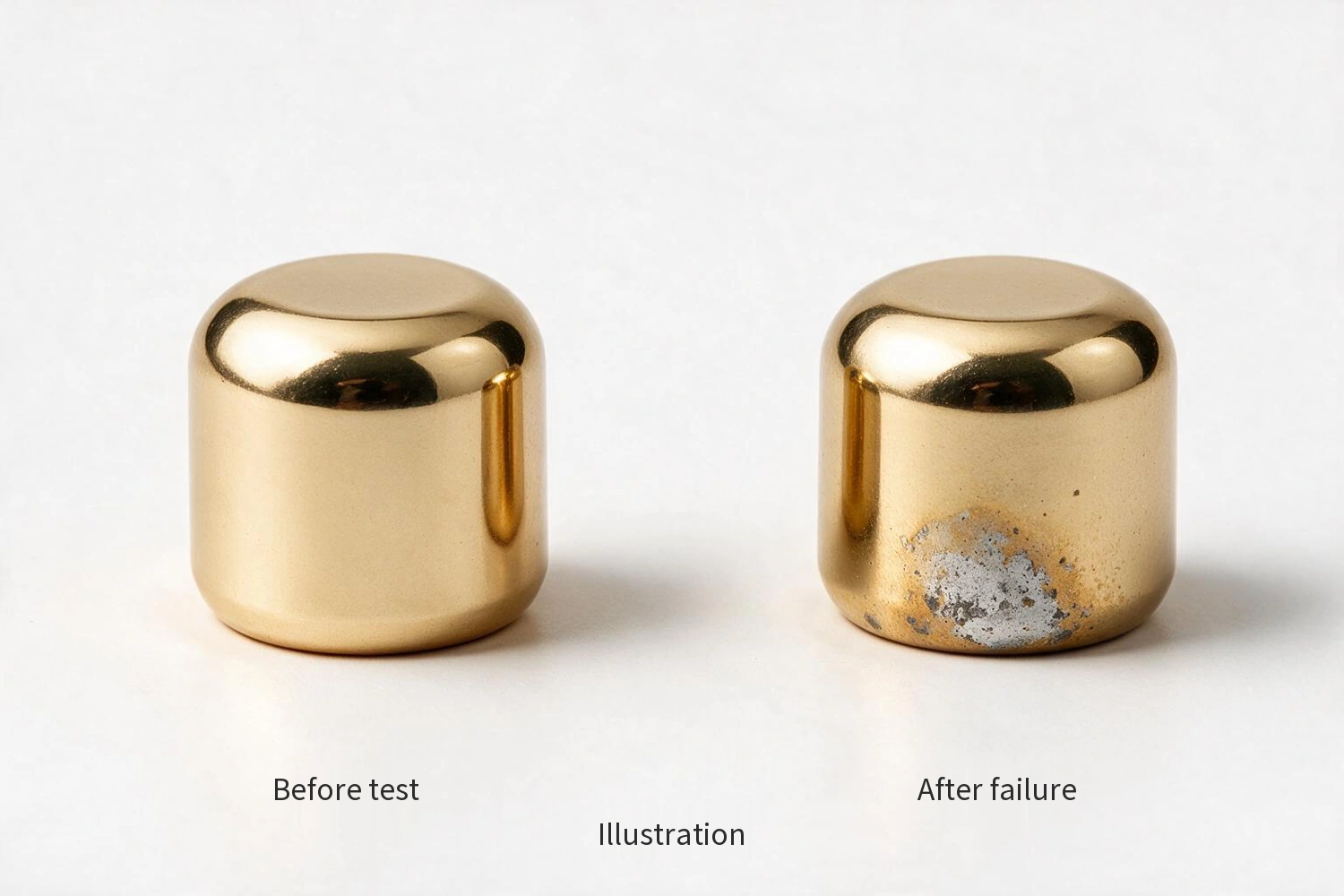
Salt spray testing evaluates the corrosion resistance of zinc alloy perfume caps. The chamber atomizes a salt solution under controlled conditions. After the agreed exposure time, the caps are checked for loss of gloss, blistering, or corrosion. The test helps reveal surface quality issues that may develop under harsh, humid, and salty conditions.
Which Materials and Finishes Can Be Salt Spray Tested?
Bare zinc alloy caps, nickel-plated or copper–nickel–chromium-plated caps, and caps with liquid paint or powder coating can all be tested. On bare caps, the main concern is corrosion of the exposed zinc alloy. On finished caps, inspectors look separately for loss of gloss, blistering, or peeling in the finish and for any corrosion of the underlying metal. Bare and anodized aluminum alloys can also be tested using an applicable method.
Flat test panels can show how the same finish changes during exposure. To evaluate the cap opening, corners, or assembly seams, use a cap body or finished assembly that includes those features.
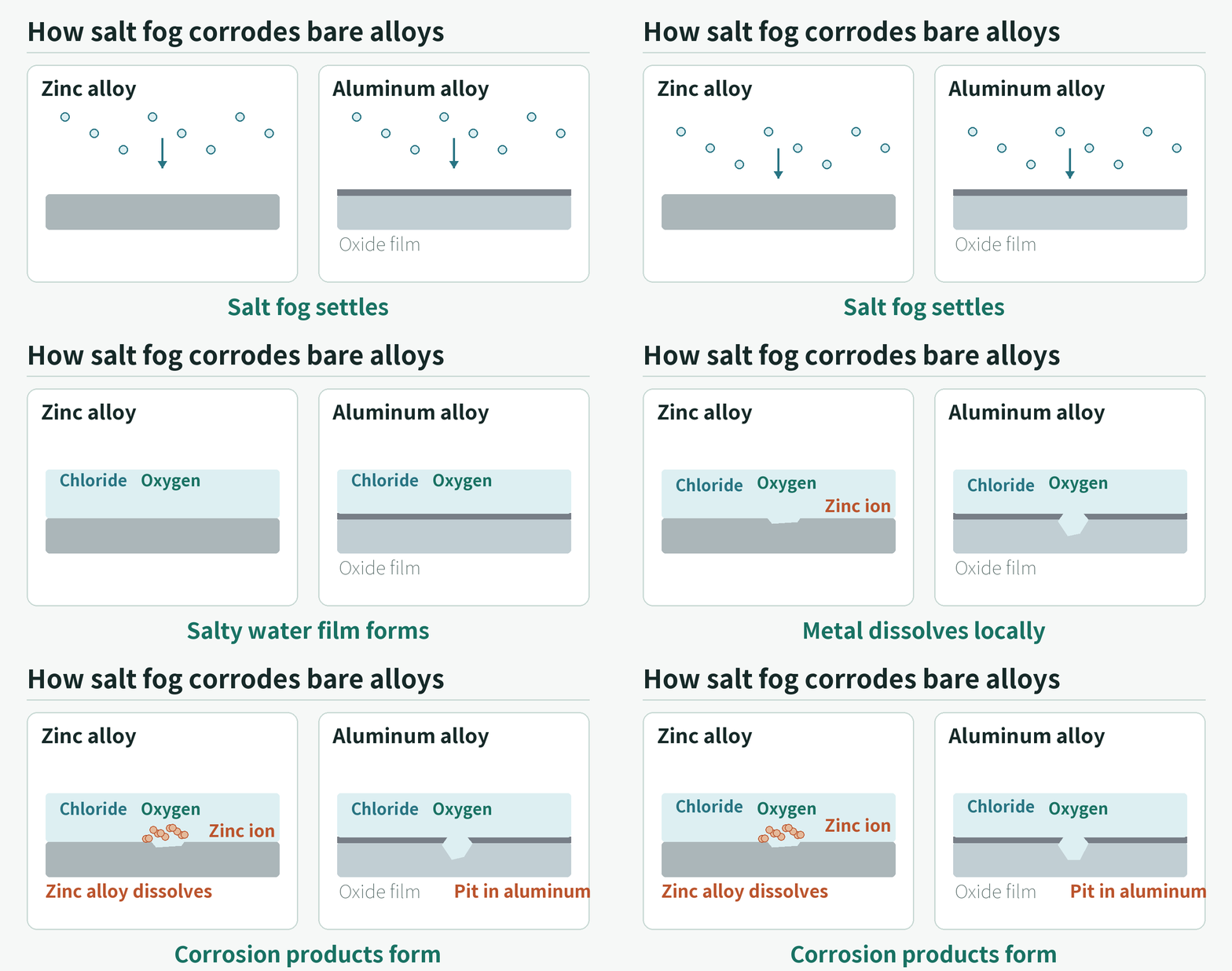
How Do Aluminum and Zinc Alloys Corrode in Salt Spray?
The droplets merge into a thin film of salt water. On bare zinc alloy, zinc can dissolve into the film as ions and form corrosion products that build up on the surface. On bare aluminum alloy, chloride in the film can disrupt the protective oxide layer in small areas. Corrosion can then eat into the metal, leaving small pits. The animation shows deposits on zinc on the left and pits in aluminum on the right.
If you see a white patch near the cap opening, remove any residual salt as specified by the test method. Then check the same area for remaining deposits, corrosion marks, or pits. The color tells you where to look. Examine the surface after this step before deciding what the patch is.
Where Does Corrosion Start on Plated or Coated Caps?
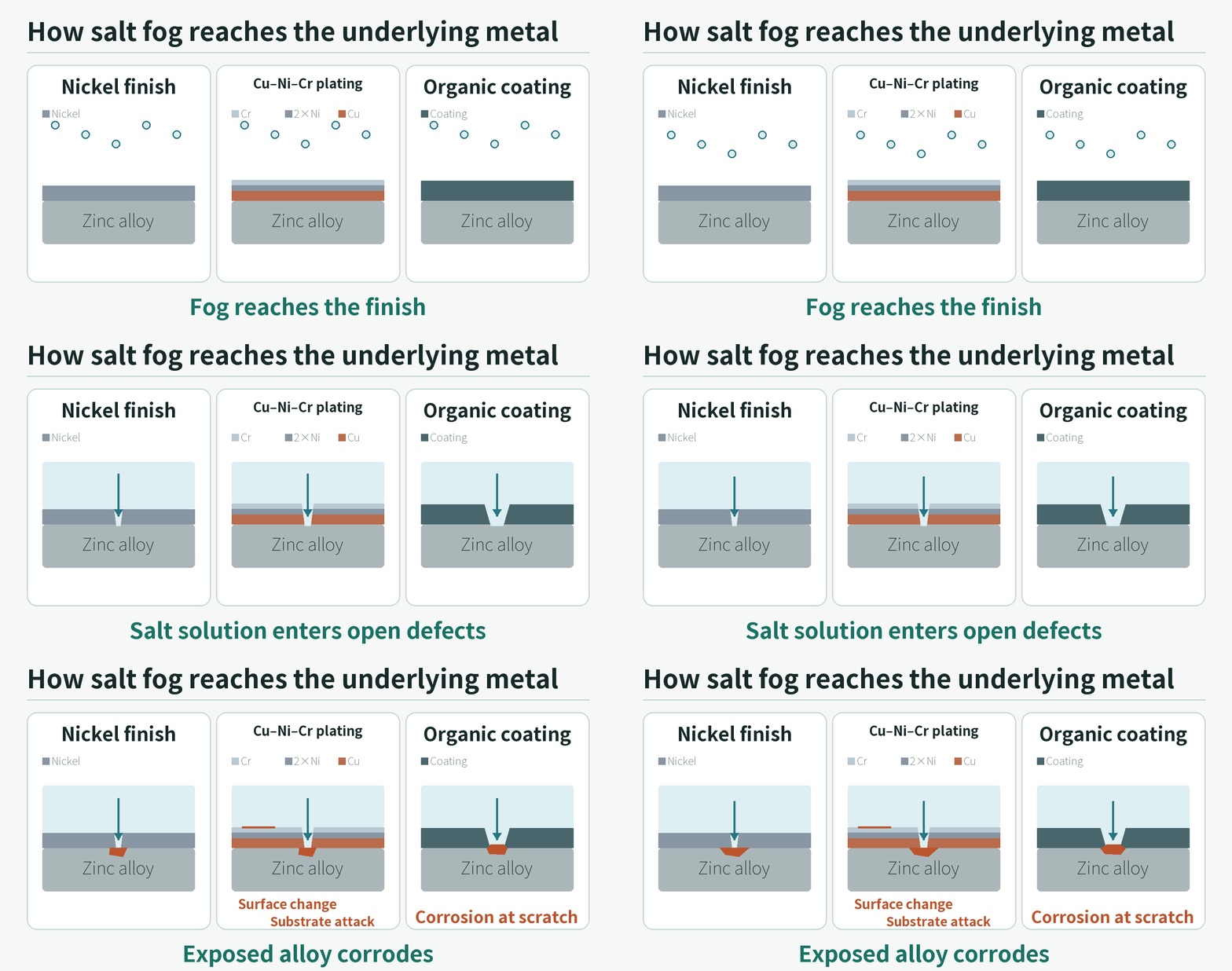
On a nickel-plated cap, the spray first reaches the nickel layer. A pore that extends through the plating can let salt water reach the zinc alloy beneath. If the nickel layer and zinc substrate are electrically connected and the same film of salt water contacts both, galvanic corrosion can accelerate the attack on the exposed zinc at the bottom of the pore.
On a copper–nickel–chromium-plated cap, chromium is the outermost layer. If the top loses gloss, record the affected area, then look for exposed base metal or signs of substrate corrosion. See how the copper, nickel, and chromium layers work for the role of each layer.
On a painted or powder-coated cap, a scratch that exposes bare metal can let salt water reach the substrate. If corrosion spreads along the interface between the coating and the metal, the coating edges may lift. Check for corrosion inside the scratch first, then look for changes along both edges.
In the animation below, follow the pore or scratch down to where the salt water reaches the zinc alloy.
Salt Spray Chambers and Common Test Methods
The caps sit on a specimen rack. Compressed air atomizes the test solution at the nozzle, and the droplets settle on the caps. Collectors inside the chamber measure how much spray settles over time.
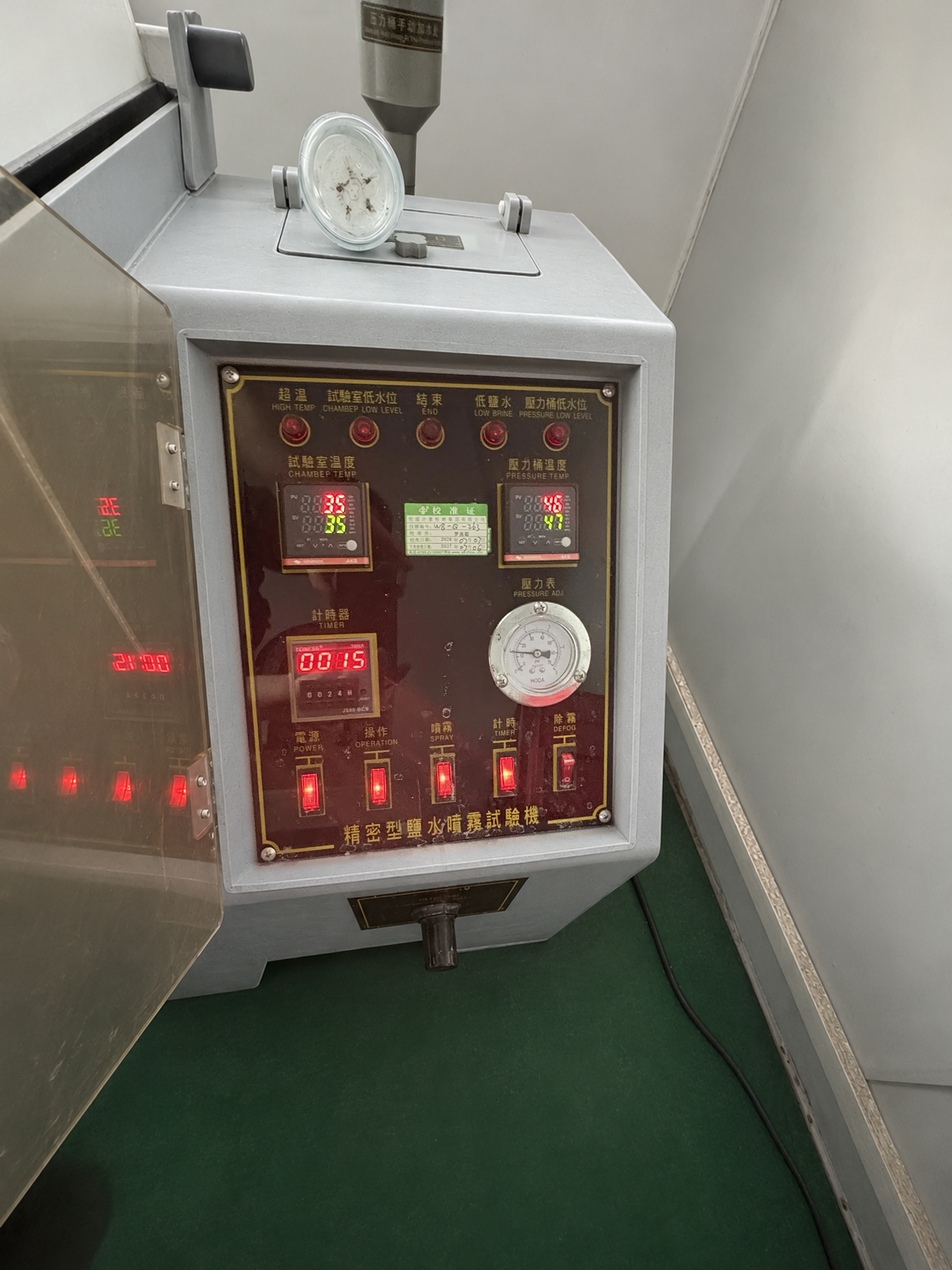
The three methods in ISO 9227 use different test solutions.
| Method | Test solution | Example specimens |
|---|---|---|
| Neutral salt spray (NSS) | Sodium chloride solution in the neutral pH range | Bare metals, metallic coatings, or organic coatings |
| Acetic acid salt spray (AASS) | Sodium chloride solution acidified with acetic acid | Decorative copper–nickel–chromium or nickel–chromium plating |
| Copper-accelerated acetic acid salt spray (CASS) | Acidified sodium chloride solution with added copper(II) chloride | Decorative copper–nickel–chromium or nickel–chromium plating |
The method also specifies controls for chamber temperature, solution concentration, and pH. When reading the exposure time in a report, check which method was used.
Does Slight Gloss Loss Mean the Cap Fails?
Suppose a nickel-plated zinc alloy perfume cap undergoes 48 hours of neutral salt spray. The top and visible sides show slight gloss loss, with no visible blistering or substrate corrosion.
If the agreed criteria prohibit visible blistering and substrate corrosion in the inspection area, the cap passes, and the gloss loss can still be recorded. If the criteria also prohibit visible gloss loss on decorative surfaces, the same cap fails.
ISO 9227 specifies how to conduct the test. The product specification or agreed acceptance criteria determine how long to test the cap, which surfaces to inspect, and which changes are acceptable.
How to Read a Salt Spray Test Report
Start with the specimen photos. Then check the test conditions, observations, and acceptance criteria for that same cap.
| Report entry | What to check |
|---|---|
| Specimen description and pre-test photos | Whether the base metal, finish, and assembly condition match the cap being evaluated. |
| Test method and conditions | The method and edition, actual exposure time, chamber temperature, pH, and collected spray rate. |
| Observations and post-test photos | Whether the change is on the top, side, or near the opening. For pre-scribed specimens, identify the location of the scribe. |
| Acceptance criteria and result | Which criteria apply, and whether the recorded gloss loss, blistering, or substrate corrosion exceeds what they allow. |
Summary
Check gloss loss on the cap top and corrosion near the opening separately. Identify the finish on the submitted cap, then match the post-test photos to the inspection areas and the applicable acceptance criteria.